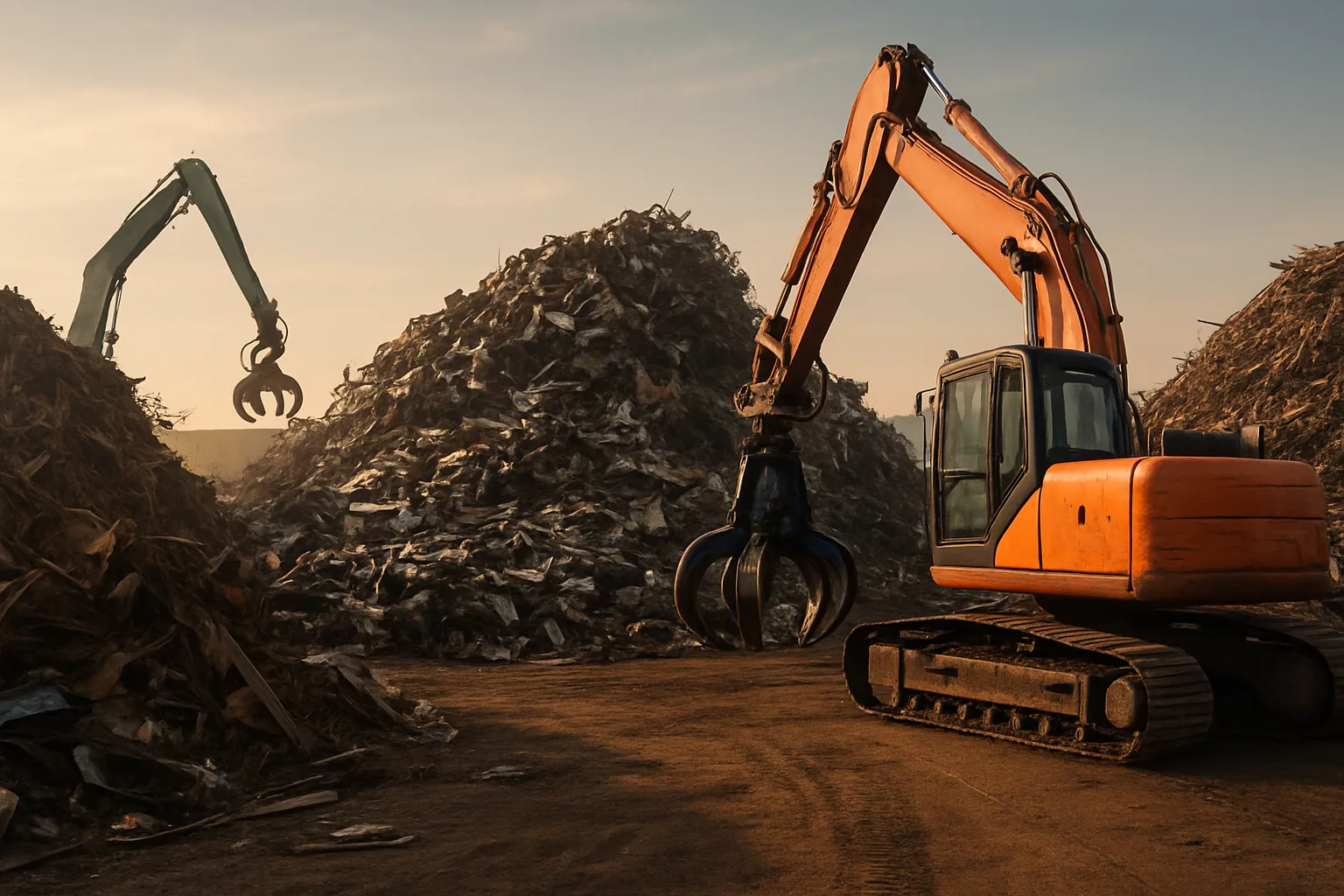
Auto Recycling Yards vs. General Scrap Metal Yards: What Houston Sellers Need to Know
You pulled the engine. Stripped the catalytic converter. Now you're staring at a shell of a Silverado and wondering — do I call a junkyard or a scrap yard? Most people use those terms interchangeably. That's a mistake that costs them money. In Houston, where auto recycling and metal recycling are both big business, knowing which facility to use — and when — is the difference between getting paid well and getting lowballed.
This isn't a story about theory. It's a breakdown of how two different types of yards operate, what they want from you, and how sellers in this city are using smarter tools to stop leaving money on the table when they need metal recycling near me Houston.
What Auto Recycling Yards Actually Do (And Why It Matters)
Auto recycling yards — often called junkyards or salvage yards — specialize in end-of-life vehicles. Their business model is built around parts, not bulk metal. They pull usable components, catalog them, and resell them to mechanics, body shops, and DIY repair folks. The hulk left behind eventually gets crushed and sold as shred to a mill.
That layered approach means they evaluate your vehicle differently than a general scrap yard does. A 2018 F-150 with a good transmission is worth significantly more to an auto recycler than raw steel weight suggests. They're pricing the parts. The alternator, the mirrors, the ABS module — all of it gets factored in before they quote you.
- What they typically accept: Complete or partial vehicles, engines, transmissions, catalytic converters, cores
- How they pay: Based on parts value, demand for that make/model, and eventual scrap weight
- What they need from you: VIN, title or ownership documentation, condition details
- Turnaround: Many will tow your vehicle for free if the parts value justifies it
In Houston, demand for used auto parts is strong. The city's sprawl means more vehicles on the road, more wear and tear, and more mechanics looking for affordable OEM alternatives. If you've got a vehicle — even a heavily damaged one — an auto recycler may see value a general scrap yard simply won't.
How General Scrap Metal Yards Operate Differently
A general scrap metal yard isn't in the parts business. They move bulk material — ferrous metals like steel and iron, and non-ferrous metals like copper, aluminum, brass, and stainless. They buy by the pound, sort by grade, and sell to mills and smelters. Volume is the game. Speed is the goal.
If you show up with loose auto parts — a stripped alternator, a few copper-wound motors, a pile of aluminum rims — a general scrap yard is exactly where you want to be. They'll weigh it, grade it, and hand you a check. No conversation about parts availability. No VIN lookup. Just metal by the pound.
- What they typically accept: Mixed metals, non-ferrous loads, steel, appliances, wire, structural scrap
- How they pay: Live or posted price per pound or ton, based on commodity grade
- What they need from you: ID, sometimes proof of ownership depending on material type
- Best for: Stripped parts, non-ferrous material, demolished equipment, mixed loads
The challenge at a general scrap yard is price transparency. Posted prices exist, but they fluctuate. And if you're walking in without knowing current rates, you're negotiating blind. That's where most sellers lose money — not through dishonesty, but through information gaps. Platforms like SMASH exist specifically to close that gap, helping sellers get competitive bids for your scrap metal before they commit to a buyer.
The Real Difference: Parts Value vs. Commodity Value
Here's the core distinction that drives everything else. Auto recyclers extract parts value first, then commodity value at the end. General scrap yards only deal in commodity value. Understanding which applies to your material — and in what proportion — determines where you should go.
Consider a common Houston scenario: a rear-end collision totals a 2020 Honda Accord. The engine runs. Airbags deployed. Frame is bent. An auto recycler sees a good engine, a usable transmission, intact interior trim, and working electronics. They'll pull what they can and quote you accordingly. A general scrap yard sees roughly 3,000 pounds of mixed steel and aluminum.
Those two quotes will not be close to each other.
But flip the scenario. You've already stripped everything of value. You've got a bare shell, four bald tires, and a blown engine. Now the auto recycler's math changes. There's less to pull. At that point, a general scrap yard or shredder yard may be your better move — they just want the metal, and they'll process it fast.
Sellers who understand this timing — when to call the auto recycler versus when to go straight to scrap — consistently do better. If you're not sure where to start, find a scrap yard near you and ask directly what they specialize in. Most facilities are upfront about it.
What Houston Sellers Are Doing Smarter in 2026
The old move was to call one yard, get one number, and take it or leave it. Sellers in Houston who deal in volume — auto recyclers themselves, fleet operators, dismantlers — figured out a long time ago that one bid isn't a price. It's an opening offer.
In 2026, the smarter approach combines local market knowledge with digital tools that bring competition to the seller. Whether you're moving a load of stripped catalytic converter cores, a pile of non-ferrous from a vehicle teardown, or a bulk lot of aluminum wheels, running those materials through an auction-style platform exposes them to vetted buyers across a wider network. More buyers means better price discovery. That's not a promise of higher prices — it's just math.
SMASH is built for exactly this workflow. Sellers document their load — photos, weights, grades, serial tracking where applicable — and buyers compete. No guessing what the market will bear. No taking one yard's word for it. For Houston scrap metal services, this model is catching on fast, especially among yards and dismantlers moving consistent volume.
For individual sellers and first-timers, the lesson is simpler: don't assume any one yard is your only option. Whether it's a scrap metal buyer near me Houston or a national buyer bidding on your load remotely, competition is always your friend. You can also read scrap yard guides and tips to get up to speed on how the process works before you make your first call.
Choosing the Right Yard for Car Parts vs. Bulk Scrap Metal in Texas
Texas is a large state with a large appetite for both auto parts and raw metal. Houston alone supports dozens of active auto recyclers, general scrap yards, and specialty buyers for non-ferrous material. Knowing which door to knock on isn't just about getting paid more — it also saves time. The wrong yard will turn you away or lowball you because your material isn't their core business.
Here's a quick framework for deciding:
- If the vehicle still has significant usable parts: Start with an auto recycler. They'll pay for parts value, not just weight.
- If the vehicle is stripped bare or heavily damaged with no salvageable components: Go straight to a general scrap or shredder yard.
- If you have loose non-ferrous material — copper wire, aluminum, brass, stainless: A general scrap yard or non-ferrous specialty buyer is your best bet.
- If you have catalytic converter cores or high-value items: These deserve their own conversation. Serial tracking and documentation matter. Use a platform that handles this properly.
- If you're not sure what you have or what it's worth: Locate the closest scrap yard and get a walk-in assessment before committing anywhere.
One more thing worth knowing for Texas sellers: metal recycling regulations around catalytic converters and copper wire have tightened in recent years. Yards in Texas require ID and documentation on regulated materials. Bring your paperwork. It speeds everything up and keeps you on the right side of the rules.
If you want to go beyond local walk-in options and sell scrap metal online, SMASH gives you a documented, competitive process that holds up to scrutiny — no awkward negotiations, no single-buyer guessing games.
The Bottom Line for Houston Metal Recyclers
Auto recycling yards and general scrap metal yards serve different purposes. Treating them as interchangeable is one of the most common — and most costly — mistakes sellers make. Know what you have. Know what type of yard wants it. And know that one bid is not the market.
Houston has the infrastructure for both. Use it strategically. Whether you're a first-timer dropping off a stripped car or an operator moving loads of metal recycling Texas-wide, the information advantage is yours if you take it seriously.
Ready to put your material in front of the right buyers? Start by finding the right facility for your load — check locations and options at scrap-yard-near-me.com and make sure you're walking in the right door.
Frequently Asked Questions
Q: What's the difference between a junkyard and a scrap metal yard in Houston?
A junkyard — also called an auto recycler or salvage yard — focuses on pulling usable parts from end-of-life vehicles before selling the remaining metal as scrap. A general scrap metal yard buys metal by weight and grade, regardless of whether it came from a vehicle. In Houston, both types operate widely, but they serve different needs depending on what condition your material is in.
Q: Can I sell individual car parts at a general scrap yard near me in Houston?
Yes — stripped parts like aluminum rims, copper wiring, stainless steel exhaust components, and cast iron rotors are common at general scrap yards. They pay by commodity grade and weight. If your parts still have resale value as working components, an auto recycler will typically pay more than scrap weight alone.
Q: How do I find a scrap metal buyer near me in Houston for a large load?
For large or mixed loads, your best move is to document your material thoroughly — weights, grades, photos — and get multiple quotes. Platforms like SMASH let you put your load in front of vetted buyers who compete on price rather than relying on a single walk-in quote. For local drop-off options, check facilities on scrap-yard-near-me.com.
Q: Do Houston scrap yards accept catalytic converters?
Most do, but Texas regulations require sellers to provide valid ID and documentation proving ownership or origin. Serial tracking is increasingly standard for cats. Make sure you have your paperwork in order before showing up — yards can and will turn away undocumented material.
Q: Is it worth selling scrap metal online instead of going to a local yard in Texas?
For high-value or bulk loads, selling through an online auction platform can expose your material to more buyers and create competitive bidding. For small mixed loads or quick same-day cash, a local scrap yard is usually faster and more practical. Many experienced sellers in Texas use both approaches depending on the size and type of material they're moving.
Scrap metal prices fluctuate with commodity markets. Always verify current rates directly with buyers before selling. Pricing referenced in general terms only.
Stay current on scrap metal market trends and industry insights — follow SMASH on LinkedIn for regular updates from inside the recycling industry.