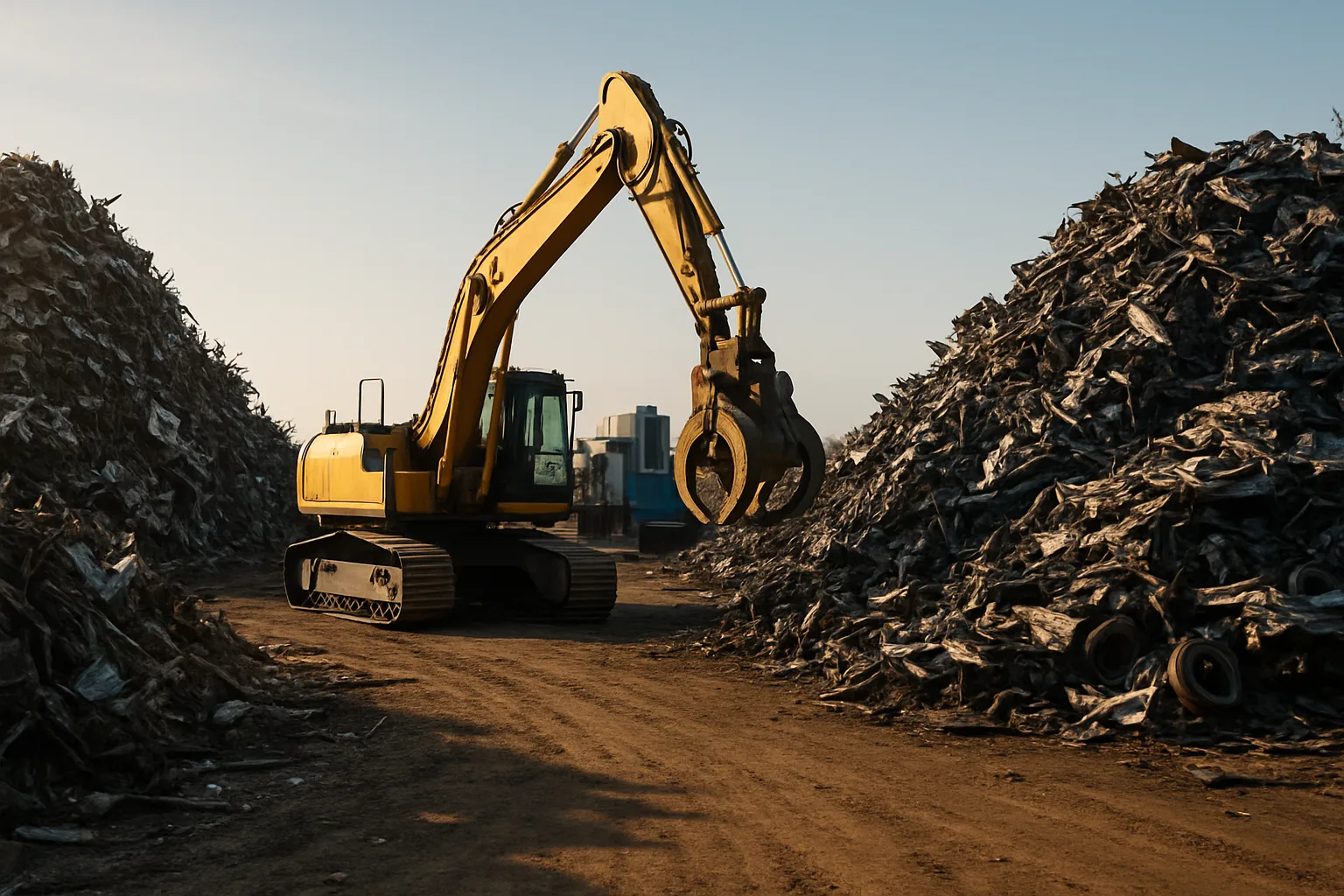
Most people pull up to a scrap yard, hand over their metal, watch it go on a scale, and walk away with cash — never fully understanding how that number was calculated. If that sounds familiar, you're leaving money on the table. Knowing how an auto recycling yard in Savannah or anywhere else in the country actually weighs and prices your material can mean the difference between a fair payout and getting shortchanged on a load you worked hard to collect.
This isn't complicated once you understand the mechanics. Let's break down exactly what happens from the moment you drive in to the moment cash hits your hand.
---How Scrap Yards Actually Weigh Your Metal
Every licensed scrap yard uses a certified scale — usually a large drive-on platform scale called a truck scale or pit scale. When you pull in with a load, your vehicle gets weighed fully loaded. Then, after you've unloaded, your empty vehicle gets weighed again. The difference between those two numbers is your net material weight. This process is called a tare weight deduction, and it's standard at every legitimate yard in Georgia and across North America.
What many sellers don't realize is that dirt, moisture, and attached non-metal components can inflate your gross weight — but the yard will often discount for these. Wet copper wire, for example, may be tested on-site with a moisture meter. A bundle of steel with chunks of concrete still attached won't weigh the same in payable metal as clean prepared steel. Understanding this upfront prevents surprise deductions at the window.
- Drive-on scale: Most common for vehicles and large loads
- Floor scale: Used for smaller loads brought in by hand or cart
- Hanging scale: Sometimes used for individual cores or small non-ferrous items
- XRF analyzer: Used at higher-end yards to test alloy composition, especially for stainless steel, aluminum, and exotic metals
If a yard can't show you its scale certification or won't let you watch the weigh-in process, that's a red flag. Legitimate operations post their scale certifications and give you a printed ticket with your weights. Don't accept verbal quotes only.
---How Scrap Metal Prices Are Set — and Why They Change Daily
Scrap metal prices are not arbitrary. They're tied to commodity markets — specifically the London Metal Exchange (LME) for non-ferrous metals like copper, aluminum, and brass, and the AMM (American Metal Market) for ferrous (iron and steel) pricing. Yards pull these benchmarks daily and apply their own margin on top. That margin covers operating costs, transportation to mills and smelters, sorting labor, and profit.
The practical result: prices change every weekday, sometimes multiple times in a single day for volatile metals like copper. A yard in Savannah might pay slightly different rates than a yard in Atlanta or Chicago — not because anyone is dishonest, but because local supply, transportation costs, and buyer demand all vary by region. Find a scrap yard near you and always call ahead to confirm current pricing before you load up your truck.
Here's a rough framework for how yards categorize and price common materials:
- Ferrous metals (iron, steel, cast iron): Priced per gross ton or hundredweight (CWT). Lower per-pound value but high volume.
- Non-ferrous metals (copper, aluminum, brass, stainless): Priced per pound. Higher value, stricter grading.
- Catalytic converters (cats): Priced by unit based on precious metal content — platinum, palladium, rhodium. Values vary widely by make, model, and converter type.
- Auto cores (alternators, starters, AC compressors): Priced per unit or per pound depending on the yard.
- E-scrap (circuit boards, wire): Specialized grading, often requires separate processing.
Disclaimer: Scrap metal prices fluctuate daily based on global commodity markets. Always check current rates directly with your local yard or a verified pricing source before selling.
---Understanding Grading: Why Two Pieces of Copper Aren't Worth the Same
Grading is where sellers often get confused — and where yards can make significant pricing decisions that feel opaque. Every metal category has grades, and the grade determines the price per pound. For copper alone, there are at least four common grades: #1 bare bright copper wire, #1 copper, #2 copper, and light copper. A load of mixed wire with insulation still on it grades lower than bare, clean, uncoated copper. The difference can be significant per pound.
The same logic applies to aluminum. Clean cast aluminum, extrusions, sheet, and irony aluminum all carry different prices. A yard won't pay cast aluminum prices for a bent piece of aluminum with steel bolts still attached — they'll grade it down or ask you to prep it first. Prepping your material before you show up — removing attachments, sorting by type, keeping grades separate — almost always results in a better payout.
For sellers at an auto recycling yard in Savannah dealing with vehicle parts specifically, this matters a lot. A radiator with a copper core grades differently than an aluminum radiator. A steel rim is not the same as a chrome-coated or stainless rim. If you're pulling parts from vehicles regularly, learn the grades for your most common materials — it's worth the time.
---Selling Catalytic Converters: The Most Misunderstood Category in Metal Recycling Georgia
Cats are in a category of their own. No other scrap item has as much price variance or as many regulations attached to it. The precious metals inside a catalytic converter — primarily platinum, palladium, and rhodium — fluctuate with their own commodity markets, completely separate from base metal pricing. A converter that was worth $200 last year might be worth more or less today depending on those markets alone.
Most scrap yards do not process cats in-house. They aggregate them and sell to a converter processor who assays the material. This means the price a yard quotes you today is based on their current buy rate from their processor — which may or may not reflect spot market conditions accurately. If you're moving volume, the difference between a well-connected yard and an underpaying one can be significant per unit.
This is exactly where platforms like SMASH help you get competitive bids for your scrap metal — especially for high-value, high-variance items like cats. Instead of calling one yard, waiting for one quote, and hoping it's fair, you put your load in front of multiple vetted buyers. Competition can help reveal the market. More buyers means better price discovery — especially for converters, cores, and non-ferrous loads where pricing opacity is highest.
Regulations around catalytic converter sales in Georgia have tightened in recent years. Sellers are typically required to show ID, sign documentation, and in some cases provide proof of ownership or a vehicle title. Laws vary by state and municipality, but the trend in 2026 is toward stricter documentation requirements across the board. Know what your local yard requires before you show up with a load of cats.
---Red Flags at the Scale Window — and How to Protect Yourself
Not every yard operates the same way. The vast majority are legitimate businesses, but knowing what to watch for protects you regardless of where you sell. Here's what to look out for when you locate the closest scrap yard and decide whether to do business there.
- No printed weight ticket: You should always receive a written record of your weights and material grades. Verbal-only transactions are a problem.
- Prices quoted only verbally at the window: Ask for a posted price sheet or confirm prices before unloading. A yard that won't show pricing until your material is already on the ground puts you at a disadvantage.
- Excessive downgrading without explanation: A yard can legitimately downgrade material, but they should be able to tell you exactly why — what contaminant, what attachment, what moisture content affected your grade.
- No scale certification visible: Ask to see it. It should be current and posted.
- Cash-only with no receipt: Reputable yards provide transaction receipts. This protects both parties.
If something feels off, trust that instinct. The best protection against a bad transaction is showing up informed — and having options. When you know what multiple buyers are paying for your material, you can't be low-balled by just one. Platforms like SMASH exist specifically to solve this problem by putting your load in front of vetted buyers who compete for it. No subscription fees. No guesswork.
For those in the Savannah area dealing in vehicles, heavy iron, or non-ferrous loads, read scrap yard guides and tips to stay current on what to expect from yards in your region before your next trip.
---How to Get the Best Price When You Sell: Practical Steps
Knowing how yards weigh and price metal is half the battle. The other half is showing up prepared. These steps apply whether you're dropping off a small load of aluminum or rolling in with a full truckload of auto parts.
- Sort your material before you go. Keep ferrous separate from non-ferrous. Separate copper grades. Don't mix aluminum types. Sorted loads grade better.
- Remove attachments where possible. Steel bolts on aluminum, insulation on wire, rubber on copper — all of these pull your grade down. Even five minutes of prep can change your payout.
- Call ahead for pricing. Metal prices change daily. What the yard paid last week may not be what they pay today.
- Know your material. Identify what you have before you arrive. A yard employee grades fast and won't always catch a high-value piece you've missed.
- Get multiple quotes. For larger loads — especially cats, non-ferrous, or vehicle parts — don't accept the first number you hear. Competition reveals the true market price.
- Document everything. Keep your weight tickets, receipts, and transaction records. This matters for your business accounting and, in regulated categories like cats, for legal compliance.
Frequently Asked Questions
Q: How does an auto recycling yard in Savannah determine what they'll pay for my vehicle parts?
Yards use current commodity pricing for the metals in your parts, then apply their own margin based on processing and transportation costs. For high-value items like catalytic converters, pricing is tied to precious metal spot markets. For bulk steel and iron, pricing follows ferrous market benchmarks. Always call ahead to get current rates before hauling a load in.
Q: Are scrap metal prices the same at every yard in Savannah, Georgia?
No. Prices vary by yard based on their current buyer relationships, transportation costs to mills and processors, and how much of a given material they already have on hand. Calling two or three yards — or using a platform like SMASH to get competitive bids — gives you a real picture of the market in your area.
Q: What ID or paperwork do I need to sell catalytic converters at a scrap yard in Georgia?
Georgia requires sellers to provide government-issued ID for catalytic converter transactions. Many yards also require documentation of ownership, especially if you're selling vehicle-removed parts in volume. Requirements have tightened across the state in recent years, so confirm what your specific yard needs before you arrive.
Q: What does "tare weight" mean at a scrap yard?
Tare weight is the weight of your empty vehicle or container. The yard weighs you loaded, then weighs your empty vehicle after unloading. The difference is your net material weight — what you actually get paid on. This is standard practice at all legitimate yards.
Q: Can I sell scrap metal online instead of going to a physical yard?
For certain high-value materials — especially catalytic converters, non-ferrous loads, and auto cores — yes. Platforms like SMASH connect sellers with vetted buyers across North America through a competitive auction format. This works particularly well for loads large enough that the difference between one buyer's price and the best market price is meaningful.
---Understanding how scrap yards weigh and price your metals puts you in the driver's seat — whether you're selling a small non-ferrous load or a truck full of auto parts. If you're in the Savannah area or anywhere else in the country, being informed means more money in your pocket and fewer surprises at the scale window. Ready to find a facility you can trust? Find the best scrap yard near you — check locations at scrap-yard-near-me.com.
Stay sharp on scrap metal market trends and industry updates by following SMASH on LinkedIn — practical insights for yards and sellers who want to stay ahead of the market.