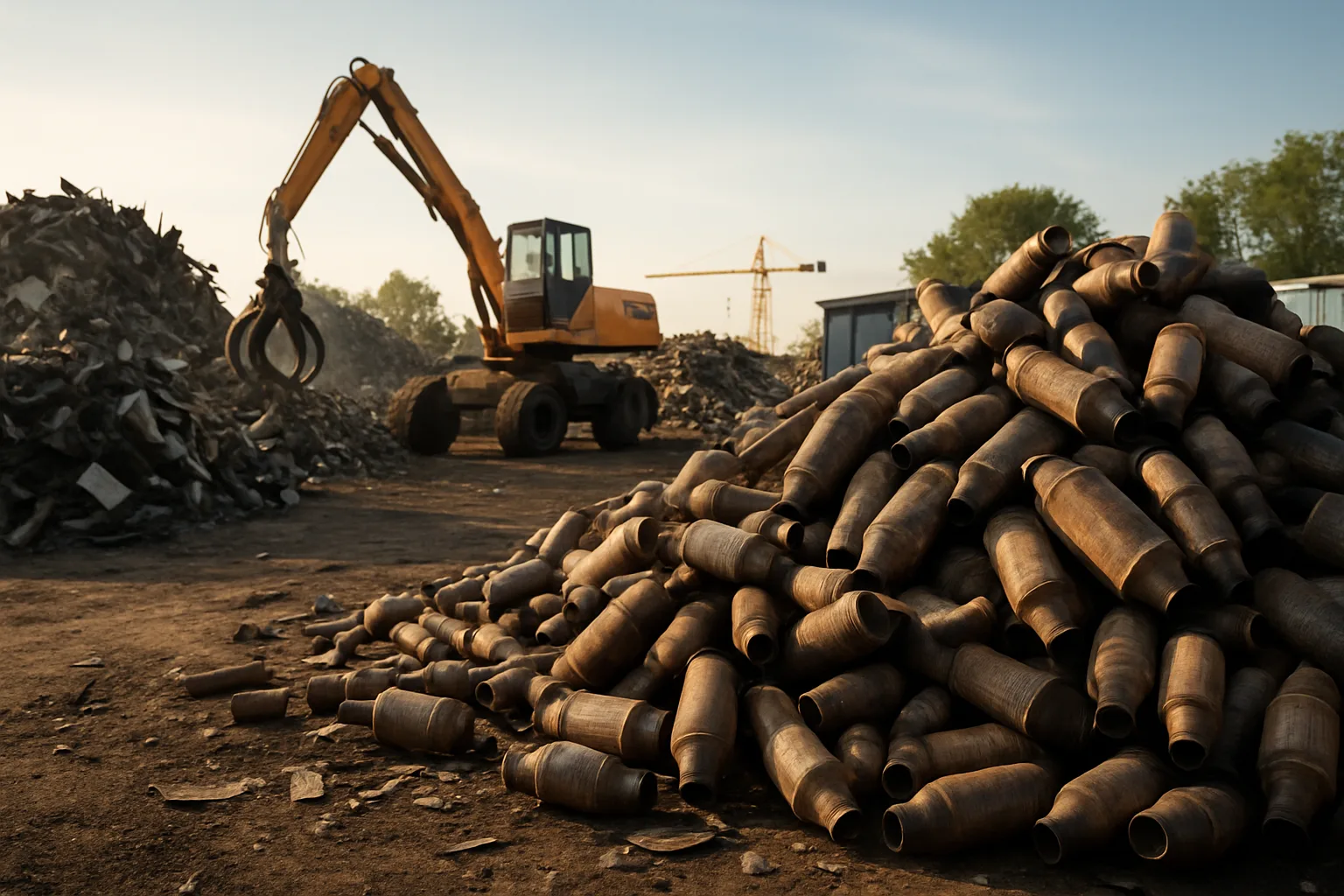
Catalytic Converters Are the Most Misunderstood Item at Any Scrap Yard — Here's What You Need to Know
Most people selling scrap metal think aluminum and copper are where the real money is. They're wrong. Catalytic converters contain platinum, palladium, and rhodium — precious metals that can make a single "cat" worth more than an entire trunk of mixed copper wire. But here's the catch: most scrap yards handle cats completely differently than they handle bulk ferrous or non-ferrous metal. If you walk in without knowing the rules, you'll leave money on the table.
Whether you're cleaning out a shop in Fort Lauderdale, running a dismantling operation, or just pulled an old cat off your vehicle, this guide breaks down exactly how scrap yards handle catalytic converters and precious metals — and how to get a fair price for them. If you're ready to start, find a scrap yard near you and ask the right questions before you pull up.
Why Catalytic Converters Get Treated Differently at Scrap Yards
A standard scrap yard transaction is simple: you bring in your load, they weigh it, they pay you based on the current commodity price. Catalytic converters don't work that way. The precious metals inside — platinum group metals, or PGMs — aren't priced by weight alone. They're priced by assay, meaning the yard (or a refinery they work with) has to analyze the actual PGM content before a final value is determined.
This creates a two-stage process that surprises a lot of first-time sellers. You bring in your cats, the yard either quotes you a street price (an immediate offer based on the cat's make, model, and serial number) or sends them for toll refining (you wait for assay results and get paid based on actual metal content). Each approach has tradeoffs.
- Street price / immediate buy: You get paid on the spot. The yard takes on the price risk. This is faster but often pays less than assay value.
- Toll refining / assay-based pay: You wait — sometimes weeks — for results. But if your cats are high-grade, you can earn significantly more.
- Consignment programs: Some larger buyers pool catalytic converters and split refinery returns with sellers. These programs are common with high-volume dismantlers.
The method a yard uses depends heavily on their volume, their relationships with refiners, and what they think your cats are worth. Always ask which method applies to your load before you hand anything over. In Florida, most active scrap yards have access to regional catalytic converter buyers or direct refinery relationships — but not all of them do.
How Scrap Yards Actually Identify and Price Catalytic Converters
This is where the gap between informed sellers and everyone else gets expensive. Experienced yards use serial number databases to identify cats. The serial or part number stamped on the converter shell links to a database entry that shows the vehicle it came from, its approximate PGM content, and the current market value.
High-volume buyers often use VIN lookup tools and serial tracking to match cats to their source vehicles — a process that helps them spot inconsistencies and price accurately. If you're selling a mixed load with no documentation, you're at the mercy of a visual estimate. That estimate rarely favors the seller.
Here's what matters most when selling cats to a scrap metal buyer near me Fort Lauderdale:
- Keep the serial number visible. Don't grind, paint over, or damage the code stamped on the shell. Yards use this to price. Without it, your cat becomes a mystery unit — priced low by default.
- Know what vehicle it came from. Cats from hybrid vehicles, larger trucks, and certain foreign makes carry significantly higher PGM loads. A Toyota Prius cat is not the same as a generic domestic economy car cat.
- Document everything before you go. Photos of each unit, the serial numbers visible, and any vehicle information you have. This protects you and gives buyers more confidence.
- Ask the yard their pricing method upfront. Street buy or assay? Immediate pay or toll refining? Don't assume.
- Compare at least two buyers. Catalytic converter prices vary more between buyers than almost any other scrap category. Getting a single quote is leaving money on the table.
Platforms like find the best price for your scrap on SMASH exist precisely because of this pricing variability. When buyers compete, price discovery gets a lot more honest.
The Difference Between Street Cats, Foil Cats, and Diesel Cats — and Why It Matters for Pricing
Not all catalytic converters are equal, and treating them as a single category is a common seller mistake. Scrap yards categorize cats by their internal substrate type — the material that actually holds the precious metals. Your price changes dramatically based on which type you have.
- Ceramic (honeycomb) cats: The most common type. Used in most gasoline-powered passenger vehicles. PGM content varies widely by vehicle and year. These are the standard unit most yards quote on a per-piece basis.
- Foil (metallic substrate) cats: Found in some European and performance vehicles. They process differently and are often valued higher per unit. Not all yards are set up to handle them properly.
- Diesel oxidation catalysts (DOCs) and diesel particulate filters (DPFs): Common on trucks and heavy equipment. DPFs in particular can hold significant platinum content. They're bulkier and require different assay processes. If you're in a market like Fort Lauderdale with commercial fleets and heavy construction equipment, DPFs are worth knowing about.
- Small and large domestic cats: Even within ceramic cats, size and origin matter. Large domestic cats (full-size trucks, SUVs) carry more substrate volume and more PGMs than small foreign economy units.
Ask the yard how they categorize your specific units. If they lump everything into one price tier without sorting by type, that's a signal to look for another buyer. For a better benchmark, read scrap yard guides and tips to understand what pricing frameworks look like for different cat types.
Florida Scrap Yard Regulations: What Sellers Need to Know Before They Go
Catalytic converter theft is a serious issue across the U.S., and Florida has enacted seller verification requirements that affect how yards process cats. If you're selling converters — even legitimately — you need to be prepared.
Florida requires scrap metal dealers to record seller identification for catalytic converter transactions. Most yards will ask for:
- A valid government-issued photo ID
- Vehicle title or documentation showing ownership of the vehicle the cat came from
- In some cases, a signed seller declaration confirming the cats are not stolen property
These aren't bureaucratic annoyances — they protect legitimate sellers by creating a paper trail. If a yard doesn't ask for any documentation on a catalytic converter sale, consider that a red flag. Compliance matters both to you and to the buyer. Yards that skip it can face serious penalties, and you don't want your name associated with a non-compliant transaction.
If you're operating a dismantling shop, an auto salvage operation, or a repair facility that accumulates cats over time, it's worth keeping an organized inventory log — unit by unit, with vehicle source info where available. That documentation makes your load more attractive to serious buyers and speeds up the transaction. To locate the closest scrap yard that handles catalytic converters compliantly, check yards that specifically list converter buying as a service.
How SMASH Changes the Game for High-Value Scrap Loads
Here's the honest problem with selling catalytic converters locally: the price you get depends almost entirely on which buyer you happened to call. One buyer might quote you $80 on a specific unit. Another quotes $135. Both are "market price" according to whoever's answering the phone. That spread is real, and it's common.
SMASH is a scrap metal auction platform built to solve exactly that problem. Instead of calling one yard, documenting your load through SMASH's inventory tool — with photo documentation and serial tracking — puts your cats in front of vetted buyers who compete on price. More buyers means better price discovery. That's not a promise of the highest price every time. It's just how competition works.
For high-volume sellers — dismantlers, recycling yards, fleet operators — this matters a lot. A load of 50 cats priced $20 better per unit is a $1,000 difference. Multiply that across a month of inventory, and the math gets serious fast. No subscription fees. SMASH only wins when you win.
If you're in Fort Lauderdale or anywhere across Florida running volume on cats, precious metals, or non-ferrous loads, it's worth understanding what competitive bidding actually looks like on your inventory before you commit to a single buyer's quote.
Frequently Asked Questions
Q: How do I find a scrap yard near me in Fort Lauderdale that buys catalytic converters?
Search specifically for yards that list catalytic converter buying as a service — not every general scrap yard handles them. Call ahead, ask whether they do street buys or assay-based pricing, and confirm they're compliant with Florida's seller verification requirements. You can also find a scrap yard near you using our locator tool.
Q: What documents do I need to sell a catalytic converter at a scrap yard in Florida?
Florida law requires scrap yards to collect valid photo ID from catalytic converter sellers. Many yards also ask for vehicle title or proof of ownership for the vehicle the converter came from. Having documentation ready speeds up the process and protects you legally.
Q: Is it worth waiting for assay-based pricing instead of taking a street price?
It depends on your volume and how confident you are in the quality of your cats. High-grade units — especially from hybrids, luxury vehicles, or diesel equipment — often return more through assay than a street quote. For small quantities or mixed unknown units, the immediate street price may be the more practical choice.
Q: How do scrap yards price precious metals like platinum and rhodium inside cats?
Precious metals inside catalytic converters are priced based on current commodity spot prices for platinum, palladium, and rhodium — all of which fluctuate daily. Yards either apply a database-driven street price based on the cat's serial number, or send units to a refinery for assay and pay based on actual recovered metal content.
Q: Can I sell catalytic converters through an auction platform instead of going directly to a yard?
Yes. Platforms like SMASH allow sellers to document their inventory — including photo documentation and serial tracking — and put loads in front of multiple vetted buyers. This creates competition that can help reveal the real market value of your load rather than relying on a single buyer's quote.
Whether you're sitting on a few cats from a shop cleanout or running weekly loads from a dismantling operation, the process matters as much as the product. Know your cat types, keep your serial numbers clean, get your documentation in order, and don't settle for one quote. If you want to see what competitive bidding looks like on a real load, check out find the best price for your scrap on SMASH. And when you're ready to find a buyer in your area, start by checking locations at scrap-yard-near-me.com — because the right yard makes a real difference on high-value metal.
Stay current on scrap metal market movements and platform updates — follow SMASH on LinkedIn for industry insights and pricing trends worth knowing.
Disclaimer: Catalytic converter prices and precious metal commodity values fluctuate daily based on market conditions. Always verify current rates directly with buyers before making selling decisions.