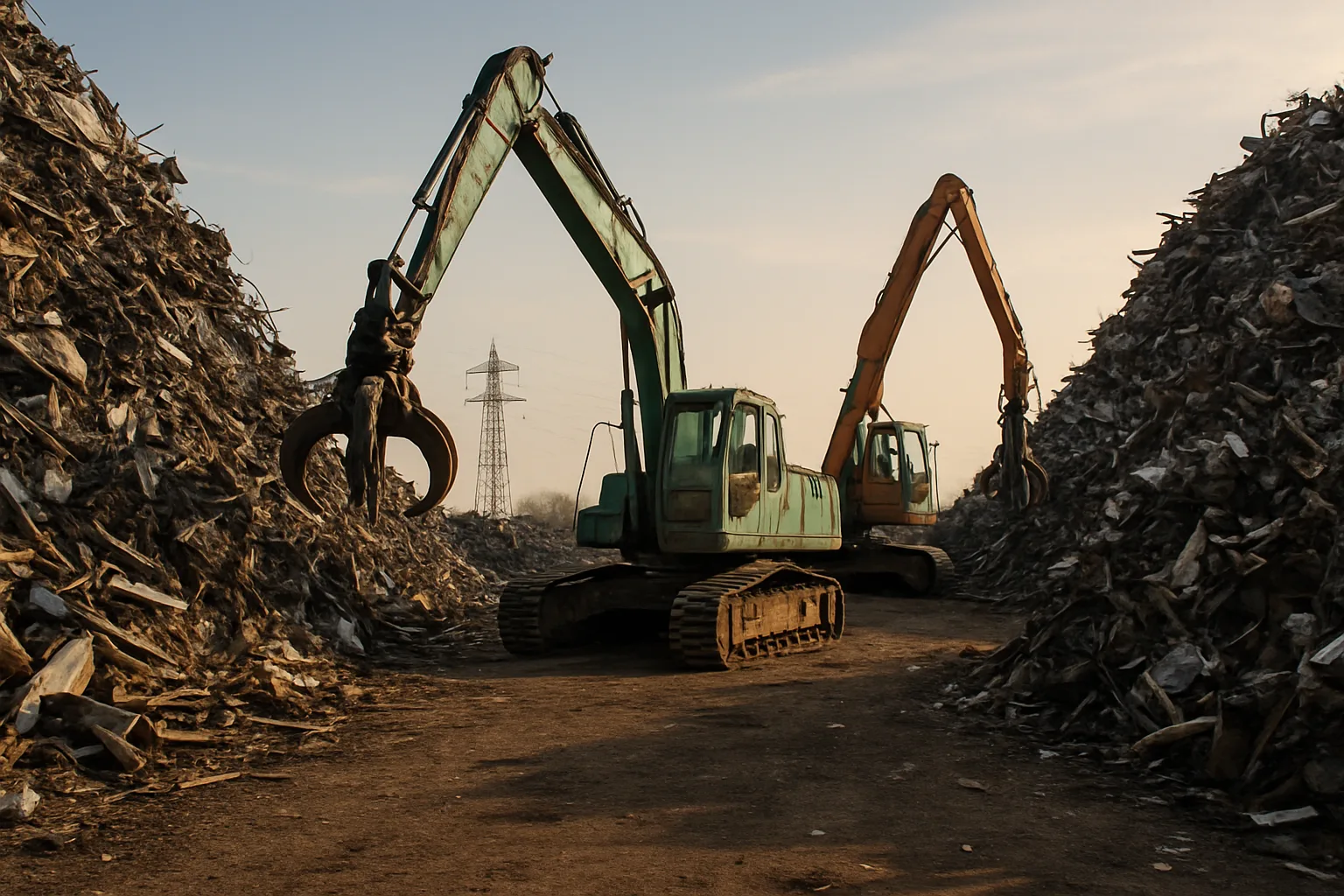
Full-Service vs. Self-Service Auto Recycling Yards: Which One Actually Puts More Cash in Your Pocket?
Most people pulling into an auto recycling yard in Colorado Springs for the first time don't realize they have a choice — and that choice can mean the difference between a smooth transaction and a frustrating afternoon in the heat. Full-service yards and self-service (pull-it-yourself) yards operate on completely different models. Knowing which one fits your situation isn't just convenient. It can directly affect how much you walk away with.
This isn't a one-size-fits-all answer. It depends on what you're selling, how much time you have, what tools you own, and whether you know your way around an engine bay. Let's break it down so you can make a smart call before you load up the truck.
What Is a Full-Service Scrap Yard — and Who Is It For?
A full-service yard does exactly what the name says. You bring in your vehicle, your catalytic converters, your non-ferrous load, or your mixed metal — and their staff handles the dismantling, sorting, and evaluation. You don't pull your own parts. You don't need tools. You show up, they assess the material, and you get paid.
Full-service yards typically pay higher per-pound rates on clean, sorted metal loads. If you're a contractor dropping off copper wire, aluminum extrusion, or a load of prepared steel, a full-service facility is built for you. They have drive-on scales, certified weighmasters, and buyers who know what clean non-ferrous is worth versus contaminated mixed scrap.
Full-service yards are also the right call when:
- You're selling a complete junk vehicle and don't have time to strip it
- Your load includes hazardous fluids that need proper draining
- You're dealing with large volumes — multiple loads, full trailers, or commercial quantities
- You want a fast transaction with a bill of lading, auto-invoicing, and documentation
- You're a recycling yard or dealer looking for competitive pricing on your inventory
The trade-off? You're accepting their assessed value on the vehicle or load. You're not hand-picking the valuable components first. That's fine if convenience and speed matter more than maximum extraction — but if you know the car has a good transmission, a clean cat, or a set of aluminum wheels worth pulling, you may be leaving money on the table.
What Is a Self-Service (Pull-It-Yourself) Yard — and When Does It Win?
Self-service yards, sometimes called U-Pull-It or pick-n-pull operations, charge you a small entry fee — usually a few dollars — and let you walk the lot with your own tools. You find the vehicle you want, pull the parts yourself, and pay a set price per part at the exit. The yard sets the parts pricing, not the individual car's condition.
If you know what you're doing, this model can be extremely profitable — especially if you're reselling parts or doing your own repairs. A used alternator at a self-service yard might cost you $30 when the same part at an auto parts store runs $180 remanufactured. For DIY mechanics and small repair shops in Colorado Springs, this is a legitimate sourcing strategy.
Self-service yards make the most sense when:
- You need a specific used part for a repair at a fraction of retail cost
- You're comfortable with hand tools and know how to safely work around vehicles
- You're looking for older model parts that are discontinued or hard to find
- You want to pull catalytic converters, starters, or alternators and resell them
- You're on a tight budget and time is your trade-off for savings
The downside is real, though. You're doing physical labor — sometimes in Colorado heat or cold — with no guarantee the part you need is on the lot or in usable condition. You may drive 45 minutes to find the car already stripped. And if you're not mechanically inclined, you risk wasting your time or pulling the wrong component entirely.
Side-by-Side: Full-Service vs. Self-Service at a Glance
Here's a direct comparison to make the decision easier. Neither model is universally better — it depends entirely on what you're trying to accomplish.
Factor Full-Service Yard Self-Service Yard Labor required from you None High — you pull everything Best for selling metal Yes — sorted loads, vehicles Rarely Best for buying used parts Sometimes Yes — lowest cost per part Transaction speed Fast Slow — time on lot required Price transparency Negotiable / market-based Fixed per part Documentation provided Yes — invoices, BOLs Basic receipt only Commercial / volume use Yes NoThe bottom line: if you're selling metal or a whole vehicle, go full-service. If you're sourcing cheap parts and willing to put in the work, self-service is your lane.
Can You Sell Scrap Metal for Cash — and Which Yard Type Pays Better?
Can you sell scrap metal for cash? Yes — and in Colorado Springs, both yard types can pay cash depending on state regulations, transaction size, and the facility's policy. However, full-service yards are overwhelmingly better for cash payouts on metal loads. They have certified scales, real-time commodity pricing, and the infrastructure to handle commercial transactions properly.
Self-service yards aren't really designed to buy your scrap. They're designed to sell you used parts. If you walk into a pull-it-yourself operation trying to sell a pile of copper wire or a load of aluminum rims, you're at the wrong place. You want a full-service metal recycler or a commodity buyer who's set up to weigh, grade, and price your material accurately.
This is where digital platforms change the game. Instead of calling one buyer and accepting whatever number they quote, platforms like SMASH let you compare scrap metal bids from verified buyers across multiple markets. More buyers competing for your load means better price discovery. You're not guessing what your non-ferrous is worth — you're seeing what the market will actually pay.
If you're a yard operator in Colorado or a dealer moving volume, this matters. A single-buyer relationship might feel comfortable. But comfort doesn't always mean competitive. SMASH operates on no subscription fees — they only make money when you do.
How to Find the Best Scrap Yard in Colorado Springs for Your Situation
Finding the best scrap yard in Colorado Springs starts with knowing what you actually need. Are you selling a complete vehicle? Dropping off a non-ferrous load? Looking for a used engine? Each goal points to a different type of facility — and showing up at the wrong one wastes everyone's time.
Here's how to narrow it down fast:
- Identify your material. Whole car, mixed metal, clean copper, catalytic converters, aluminum? Different yards specialize in different materials.
- Check hours before you drive. Many yards in Colorado Springs have limited Saturday hours and are closed Sundays. If you need a scrap yard near me open today, verify hours directly — don't assume.
- Ask about documentation requirements. Colorado law requires valid ID and vehicle title for junk car transactions. Have your paperwork ready.
- Get a quote before you go. Full-service yards will often give you an estimate over the phone or online if you describe your load accurately.
- Compare before you commit. One phone call to one yard is the old way. Use tools that put multiple buyers in competition for your material.
You can also find a scrap yard near you using our location tool — it's built specifically to surface verified recycling facilities across the U.S., including the Colorado Springs area. No guesswork, no outdated listings.
And if you want to go deeper on how the scrap industry actually works, read our scrap yard guides and tips — we break down pricing, documentation, vehicle titles, metal grades, and more in plain language.
Making the Final Call: Which Yard Type Wins for You?
Stop overthinking it. The right yard type comes down to one question: are you selling or sourcing?
If you're selling — a junk car, a load of copper, a pallet of catalytic converters, a trailer of mixed scrap — go full-service. Get a proper weigh-out. Get documentation. And if you're moving any real volume, don't accept the first number you're given. Use a platform that helps you locate the closest scrap yard with competitive buyers already in the network.
If you're sourcing — a used alternator, a door panel for a 2019 Silverado, a set of take-off wheels — self-service is exactly what it sounds like. Bring your tools, bring your patience, and bring cash for the entry fee. The savings are real if you do the work.
Either way, don't walk into any yard blind. Know your material. Know the market. And know that metal recycling in Colorado is a competitive space — which means the yard across town might be paying more than the one you always use. The best way to find out is to stop relying on habit and start using data.
Ready to stop guessing and start getting competitive offers on your scrap? Head to scrap-yard-near-me.com to find verified recycling facilities near you and make your next transaction count.
Frequently Asked Questions
Q: What's the difference between a full-service and a self-service auto recycling yard in Colorado Springs?
A full-service yard handles all the dismantling and sorting — you drop off your vehicle or material and get paid based on their assessment. A self-service yard lets you walk the lot with your own tools and pull parts yourself at a fixed per-part price. Full-service is better for selling; self-service is better for sourcing cheap used parts.
Q: Can you sell scrap metal for cash at a junkyard in Colorado Springs?
Yes, most full-service scrap and recycling yards in Colorado Springs pay cash or check for metal loads and junk vehicles. Colorado has regulations around scrap metal transactions — you'll typically need a valid ID, and larger transactions may require additional documentation. Call ahead to confirm the yard's payment policy before you haul your load.
Q: How do I find the best scrap yard in Colorado Springs that's open today?
Hours vary widely by facility, and many yards in Colorado Springs have reduced weekend hours. Use a location tool like the one at scrap-yard-near-me.com to find verified, up-to-date listings near you. Always confirm hours by phone before making the trip — especially on holidays and Saturdays.
Q: Do I need a title to sell a junk car at an auto recycling yard in Colorado?
In most cases, yes. Colorado requires a signed title to transfer ownership of a junk vehicle to a recycling yard. If you've lost your title, you can apply for a duplicate through the Colorado DMV before proceeding. Some yards may have limited options for title-less vehicles — ask directly before assuming they'll accept it.
Q: Is it worth selling scrap metal online instead of going directly to a yard?
For individual loads, driving to a local full-service yard is usually the fastest option. But if you're moving significant volume — multiple loads, recurring material, or specialty commodities like cats or non-ferrous — selling through a platform like SMASH puts multiple vetted buyers in competition for your material. That competition is how you find out what your load is actually worth, not just what one buyer decides to offer.
Stay sharp on scrap metal markets and industry news — follow SMASH on LinkedIn for regular updates, pricing insights, and tips from inside the recycling industry.