From Dirty Load to Finished Commodity: How Scrap Yards Sort and Process Metal
Most people drop off a load and drive away. What happens next — between your tailgate and the commodities market — is a process most sellers never see. Understanding how scrap yards sort and process metal isn't just interesting. It directly affects scrap yard prices Tampa sellers receive, and knowing the basics helps you deliver cleaner loads that command better payouts.
Metal recycling is one of the most materials-intensive supply chains in North America. A single mid-size yard might process dozens of material grades in a single shift — from bare bright copper to shredder-ready auto bodies to catalytic converters headed for a specialized processor. Each material travels a different path. Each path has a cost. And that cost gets factored into the price offered at the scale.
Why Sorting Accuracy Matters More Than Volume
A yard's ability to accurately sort and grade material is what separates a profitable operation from a losing one. Buyers on the commodity side pay for grade. If a yard ships a bundle of #1 copper that contains insulated wire, they get a chargeback — or lose the account. The pressure to sort correctly starts at intake and never stops.
When you pull up to a find a scrap yard near you, the intake process begins immediately. Depending on the yard, you might deal with a scale operator, a buyer at the window, or a drive-through intake lane. What the yard is doing in those first few minutes:
- Visually grading your material at the window or on the scale
- Checking for contamination — plastic attachments, mixed alloys, oil-filled components
- Sorting loads into ferrous versus non-ferrous categories
- Flagging anything that requires further processing or special handling (e.g., catalytic converters, sealed units, PCBs)
Contaminated or mixed loads get downgraded on the spot. That downgrade shows up in your payout. Clean, pre-sorted material moves faster through the yard's processing pipeline — and that efficiency is reflected in the price. This is true whether you're dropping off a few hundred pounds of copper pipe or a full truckload of light iron.
The Ferrous Line: From Loose Scrap to Shredded Commodity
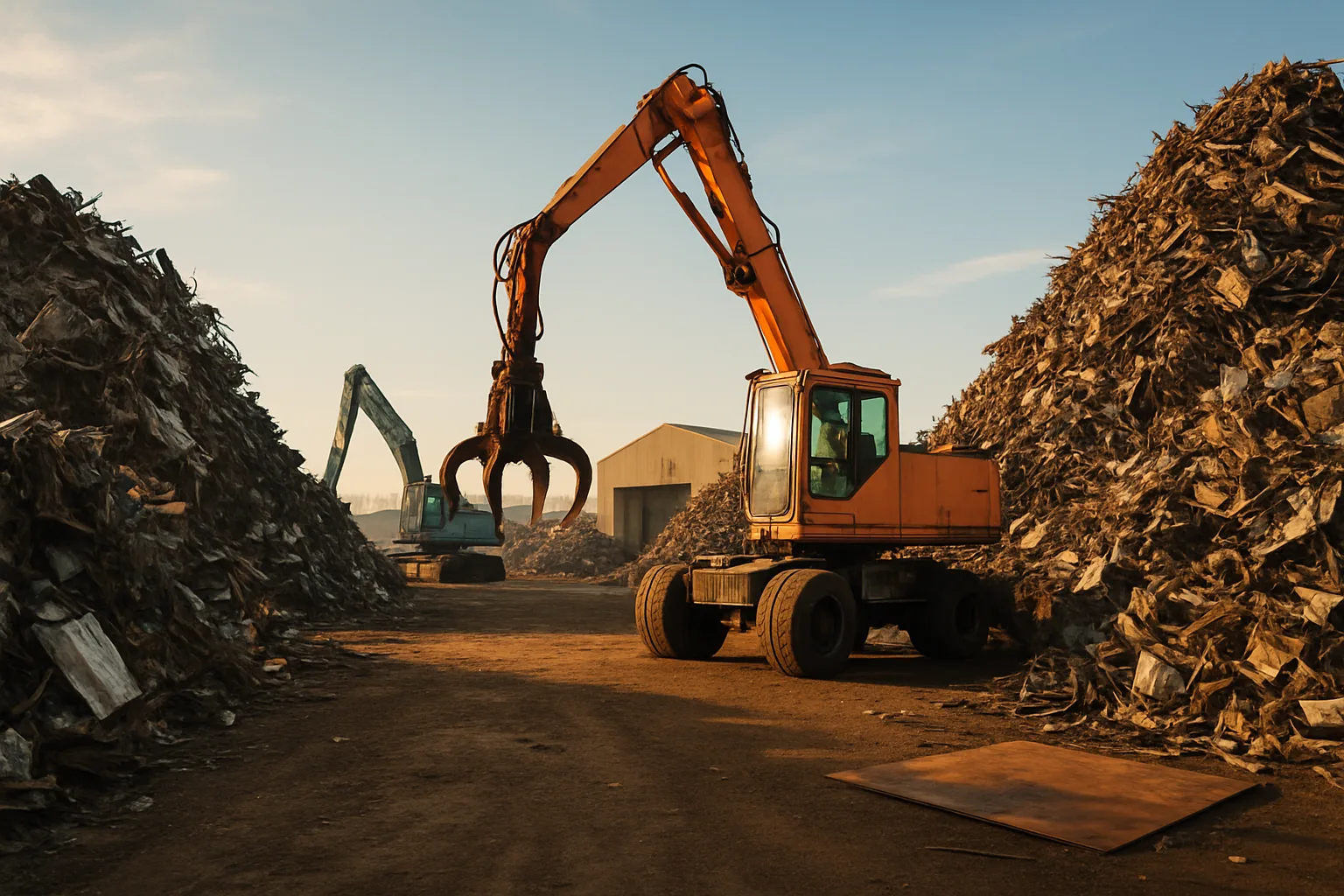
Ferrous metals — steel and iron — make up the bulk of most yards' volume. The processing chain for ferrous is heavy, loud, and mechanically intensive. Large yards use a combination of shredders, shears, balers, and magnetic separation systems to turn raw scrap into shippable product.
Here's the general flow for a typical ferrous load:
- Intake and weighing — Material gets weighed on a certified scale. Tare weight is subtracted.
- Pre-processing — Oversized pieces get torched or sheared down to feedable size.
- Shredding — Auto bodies and mixed steel go through a hammermill shredder, reducing material to fist-sized fragments.
- Magnetic separation — Steel fragments get pulled off the shredder output line by overhead magnets. Non-ferrous and fluff separate out.
- Downstream sorting — Eddy current separators pull aluminum from the non-ferrous stream. Heavy media systems separate zorba (mixed non-ferrous) into individual grades.
- Baling or loose shipping — Processed steel gets baled or loaded loose into rail cars or trucks headed to a steel mill or export terminal.
In Tampa and across Florida, proximity to port facilities makes export a real part of the commodity equation. Yards with rail or barge access can move bulk ferrous to international buyers — which creates a different pricing dynamic than a landlocked yard dependent on domestic mills.
Non-Ferrous Processing: Where the Real Value Lives
Non-ferrous metals — copper, aluminum, brass, stainless steel, lead, zinc — carry significantly higher per-pound values than steel. They also require more hands-on sorting, more specialized equipment, and more precise grading. A yard that handles non-ferrous well has a real competitive advantage.
Copper alone can trade in over a dozen distinct grades depending on purity and form: bare bright, #1 copper, #2 copper, insulated wire, copper-clad aluminum, burnt copper, and more. Each grade ships to a different buyer at a different price. The yard's sorting accuracy directly determines their margin — and yours.
Aluminum processing adds another layer of complexity. Automotive aluminum (cast versus sheet versus extrusion) trades differently. Turnings and borings from machine shops carry a different value than clean sheet. Contamination with iron or other alloys can drop a load from a premium grade to a discount grade instantly. Yards use spectrometers — handheld XRF analyzers — to verify alloy composition on borderline material. If you're selling a load of mixed aluminum, expect the buyer to test it.
For sellers looking to locate the closest scrap yard that handles non-ferrous properly, it's worth asking about their grading process before you drop. A yard with strong non-ferrous capability will grade your material more precisely — which generally means a more accurate (and often better) payout.
Catalytic Converter Processing: The Most Specialized Stream in the Yard
Catalytic converters are in a category of their own. They contain platinum group metals (PGMs) — platinum, palladium, and rhodium — which are among the most valuable metals traded anywhere. Processing cats is nothing like processing copper or steel. It requires assay, specialized refining, and a distinct supply chain.
Most scrap yards do not refine catalytic converters in-house. Instead, they accumulate lots and sell them to specialized processors or put them up for competitive bids. This is exactly where platforms built around a catalytic converter auction model add real value — multiple buyers competing for the same lot means better price discovery than a single phone call to one processor.
SMASH is built for exactly this kind of transaction. Instead of calling one buyer and hoping for a fair number, you post your cat lot with photos, serial tracking, and documented counts. Vetted buyers compete. You see real market bids — not guesses. For yards moving any meaningful volume of cats, the difference between a single-buyer deal and a competitive auction can be significant.
Proper documentation matters here. Serial numbers on converters are increasingly important for compliance and traceability — especially as state-level regulations on cat purchases have tightened across North America through 2025 and into 2026. Yards that photograph, log, and track their cat inventory are better positioned for both regulatory compliance and buyer confidence.
How Scrap Yard Prices Tampa Sellers See Are Actually Set
Pricing at a scrap yard isn't arbitrary. It's a margin calculation based on several real variables: commodity market price, processing cost, transportation to end buyer, and the yard's required margin to stay operational. When sellers ask why scrap yard prices Tampa differ between yards across Florida, those variables explain most of the gap.
A yard closer to a port or rail terminal has lower outbound freight costs — they can afford to pay slightly more per pound. A yard with newer, faster processing equipment has lower per-ton processing cost — same result. A yard that sells into a competitive buyer network versus a single long-term contract may capture more of the commodity upside during strong markets.
This is the argument for using competitive platforms like SMASH. Whether you're a yard selling a load of non-ferrous to downstream buyers, or a generator selling direct, get competitive bids for your scrap metal instead of accepting the first number you hear. Competition reveals the market. It doesn't guarantee the highest price — but it removes the guesswork.
For those tracking scrap yard near me Florida searches or looking for current pricing benchmarks, remember that prices shift daily based on LME (London Metal Exchange) movements, domestic mill demand, and freight conditions. Always verify current rates directly with the yard before you load a truck.
What Sellers Can Do to Get Better Outcomes at the Yard
The sorting work happens on both sides of the scale. Yards sort what comes in. But sellers who do basic prep before arrival consistently fare better. This isn't complicated — it's about giving the buyer fewer reasons to downgrade your material.
- Separate ferrous from non-ferrous — Don't mix copper and steel in the same bin. It slows intake and signals a messy load.
- Remove obvious contamination — Strip insulation where practical. Pull plastic fittings off copper pipe. Remove rubber hoses from aluminum radiators.
- Keep grades together — #1 copper and #2 copper pay differently. Mixing them gets you the lower rate on the whole load.
- Document your load — For higher-value material like cats, photos and serial records protect you and increase buyer confidence.
- Call ahead on large loads — Yards appreciate a heads-up. Some have daily limits on specific grades depending on their storage and downstream contracts.
If you're new to selling scrap or want to sharpen your process, read scrap yard guides and tips that break down what to expect at intake, how grading works, and how to maximize your payout across different material types.
Whether you're a first-time seller cleaning out a property in Tampa or a recycling operation managing weekly loads across Florida, understanding what happens to your metal after drop-off makes you a smarter seller. And smarter sellers get better outcomes. Platforms like SMASH exist to bring that same transparency to the buyer side of the transaction — no guessing, no single-call pricing, just documented material meeting vetted buyers in a competitive format.
When you're ready to move a load, Tampa scrap metal services are available to help you get started with local drop-off options and pricing information for the area.
Find the best scrap yard near you and take the guesswork out of your next load — check locations and resources at scrap-yard-near-me.com.
Frequently Asked Questions
Q: How do scrap yard prices in Tampa compare to other Florida cities?
Pricing varies by yard based on their processing costs, buyer relationships, and proximity to shipping infrastructure. Tampa yards benefit from Gulf Coast port access, which can affect outbound freight costs on bulk ferrous and non-ferrous loads. Call at least two or three local yards before committing to a drop — rates on the same grade can differ meaningfully across the metro area.
Q: What metals get the highest prices at a scrap yard near me in Florida?
Platinum group metals (found in catalytic converters) carry the highest per-ounce values, but copper and brass are typically the highest-volume, high-value materials most sellers encounter. Clean #1 copper consistently trades at a premium over mixed or insulated wire. Aluminum alloys, stainless steel, and lead round out the non-ferrous value ladder at most Florida yards.
Q: Is there a junkyard near me in Tampa that handles catalytic converter sales?
Most full-service yards in the Tampa area accept catalytic converters, but the pricing and process vary significantly. For higher-volume cat lots, consider using a competitive bid platform like SMASH rather than selling to the first buyer who quotes you. A catalytic converter auction format gives multiple vetted buyers visibility into your lot — which typically produces better price discovery than a single quote.
Q: How do I find a scrap yard near me open today in the Tampa area?
Hours vary widely — some yards operate Monday through Saturday with limited Sunday hours, while others are weekday-only. Call ahead before loading a truck, especially for large loads or specialty materials like catalytic converters or non-ferrous. The scrap-yard-near-me.com location tool can help you identify facilities in your area along with their current operating details.
Q: Do scrap metal prices today in Oklahoma or other states affect what Tampa yards pay?
Indirectly, yes. Most scrap metal pricing across North America is benchmarked to the same underlying commodity markets — LME spot prices, domestic mill indices, and regional demand signals. A price spike or drop in one region often reflects national or global conditions that affect Florida yards as well. Always check current rates directly with your local yard, as prices can shift day to day.
Disclaimer: Scrap metal prices fluctuate daily based on commodity markets, regional demand, and yard-specific conditions. All price references in this article are general in nature. Always verify current rates directly with your local scrap yard before delivering material.
Stay current on market shifts and industry news — follow SMASH on LinkedIn for scrap metal market insights and updates from across North America.
```