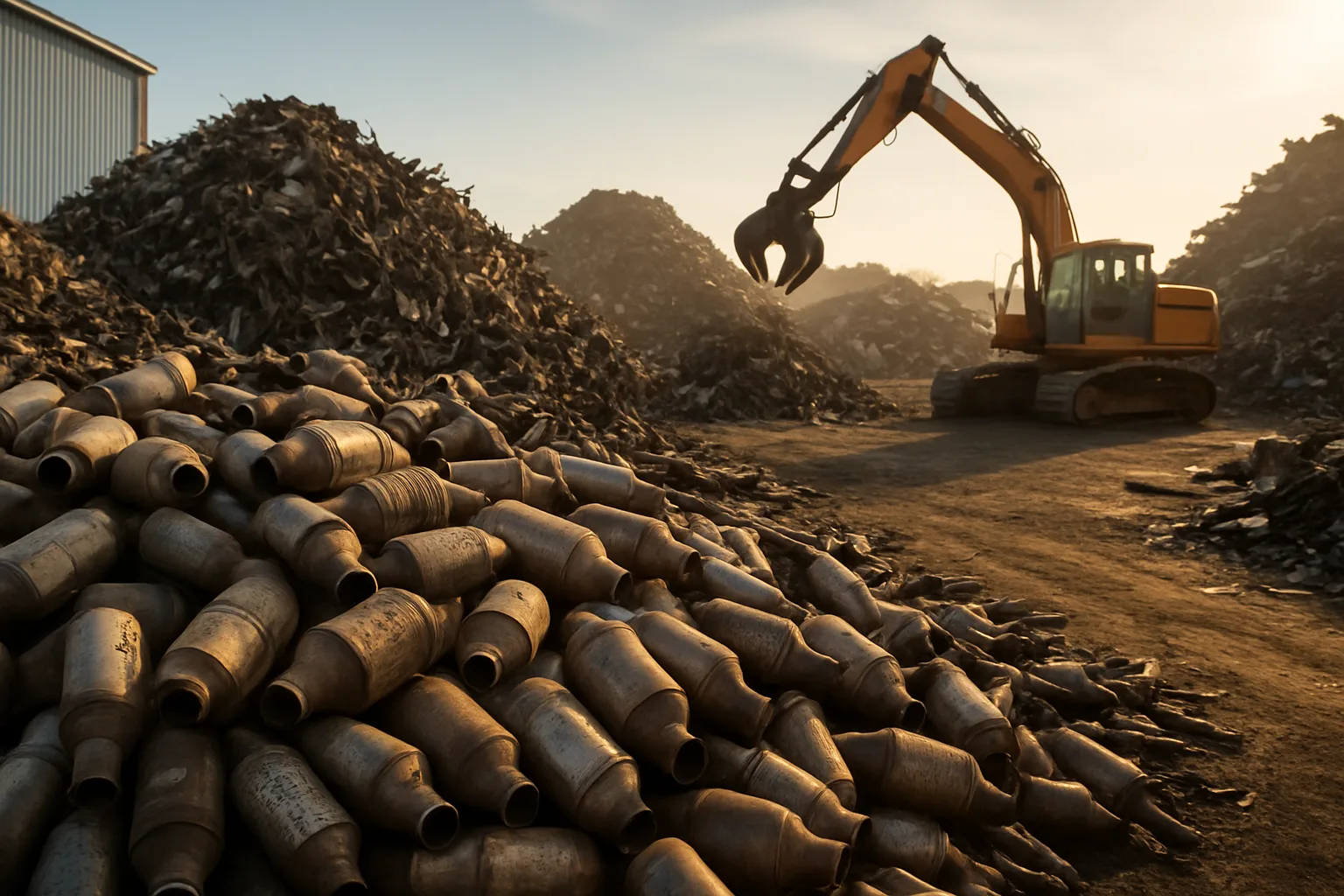
What Tacoma Scrap Yards Actually Do With Your Catalytic Converter
Your catalytic converter might be the most valuable thing under your car — and most people have no idea. A single cat from a late-model truck can carry more value than the rest of the vehicle combined. Yet sellers walk into yards every day and accept the first number they hear, not knowing what's actually inside that canister or how the pricing works.
If you're bringing a vehicle or loose cats to an auto recycling yard in Tacoma, understanding the process puts money in your pocket. This guide breaks down exactly how scrap yards process catalytic converters, why precious metal content drives the price, and how platforms like get competitive bids for your scrap metal are changing the game for sellers who want real market value.
Why Catalytic Converters Are Worth More Than Most Scrap Metal
A catalytic converter isn't just a chunk of metal. Inside the ceramic honeycomb substrate, refiners find platinum, palladium, and rhodium — three of the most valuable metals on the planet. These platinum group metals (PGMs) are what processors are actually bidding on when they quote your cat.
Prices for PGMs shift constantly. Rhodium in particular has seen dramatic swings over the past decade. The amount of PGM in any given converter depends on the vehicle make, model, year, and engine size. That's why a cat from a Ford F-250 diesel doesn't get quoted the same as one from a Honda Civic. Volume matters too — a full pallet of sorted, identified cores gets treated very differently than a single unit with no documentation.
- Platinum: Found in most diesel and older catalytic converters
- Palladium: More common in gasoline engine cats, especially post-2000 vehicles
- Rhodium: Present in smaller quantities but carries significant per-ounce value
- Substrate type: Ceramic vs. foil (metallic) substrates process differently and yield differently
When you bring a cat to a yard without knowing the make and model it came from, you're giving the buyer the advantage. They know what's inside. You're guessing. That information gap is exactly where sellers lose money.
How Auto Recycling Yards in Tacoma Process and Price Catalytic Converters
Walk into any auto recycling yard in Tacoma with a catalytic converter and the process usually looks like this: the buyer visually inspects the unit, checks it against a reference guide or app, and quotes you a number on the spot. Some yards have invested in XRF analyzers — handheld devices that can read PGM content directly — but not all of them use this technology at the point of purchase.
After purchase, the yard either sells the cats to a toll refiner or a processor that handles assay and settlement. That's where the real value gets confirmed. The yard is essentially acting as a middleman between the person who pulled the cat and the refinery that extracts the metals. Each layer in that chain takes a margin. The more layers, the less you see.
Here's what affects the price you're quoted at a Tacoma-area yard:
- Identification: Can you tell them exactly what vehicle it came from? Make, model, year, and engine size directly affect the quote.
- Condition: Cracked, damaged, or rattled-out substrates yield less PGM. Yards will discount heavily for damaged cats.
- Quantity: Selling one cat versus a pallet of 50 puts you in completely different pricing tiers.
- Current PGM spot prices: These move daily, sometimes hourly. A quote on Monday may not hold on Friday.
- Market access: Yards with direct refinery relationships often pay more than those going through secondary processors.
Washington state yards are also subject to strict documentation requirements around catalytic converter purchases — a direct response to the surge in converter theft that plagued the Pacific Northwest in the early 2020s. Expect to show ID and provide vehicle information. Legitimate yards require it, and it protects both parties.
The Documentation Problem — and Why It Costs Sellers Money
Scrap yards deal in volume. When a load of catalytic converters arrives without clean documentation — no VINs, no make/model records, no photos — processors treat it as unknown-grade material. Unknown-grade pays less. That's not opinion; it's how PGM processors calculate risk into their pricing.
The best scrap yard in Tacoma, or anywhere, will tell you the same thing: documented inventory moves faster and pays better. When a buyer knows exactly what they're bidding on, they can price with confidence instead of padding for uncertainty. More confidence from buyers means better price discovery for sellers.
This is where tools designed for professional recyclers make a real difference. Serial tracking, photo documentation, and VIN lookup features eliminate the guesswork. A converter tied to a specific vehicle record is a different product than a loose, unidentified unit. Platforms like SMASH are built around this exact principle — documented inventory attracts more buyers, and more buyers means better price discovery.
If you're a yard operator in the Tacoma area processing any volume of cats, the documentation workflow matters as much as the auction. Build the record at intake, not after the fact.
Selling Catalytic Converters Through an Auction Platform vs. One Buyer
Here's the old way: you call one buyer, they give you a number, you take it or leave it. You have no idea if that number reflects the actual market. You have no leverage. The buyer knows it.
The better way is competition. When multiple vetted buyers see the same documented load and bid against each other, the price reflects the actual market — not just what one buyer wants to pay that day. That's not a marketing claim. That's how auctions work.
SMASH operates as a scrap metal auction platform that connects yards and sellers with vetted buyers across North America. For catalytic converters specifically — where PGM values fluctuate and the spread between a low offer and a fair offer can be significant — running a competitive process instead of accepting the first call makes a real difference. No subscription fees. The platform only wins when the seller does.
For Tacoma sellers dealing with high-value loads of cats, this model is worth understanding. You don't have to guess whether you got a fair price. You let the market tell you. To explore what that looks like for your operation, you can find a scrap yard near you or connect directly with platforms running competitive buyer networks.
What to Know Before You Drop Off Catalytic Converters at a Scrap Yard Near Me in Washington
Washington state has some of the more detailed record-keeping requirements for catalytic converter transactions in the region. Before you load up and drive to a yard, make sure you're prepared:
- Bring valid ID. Every legitimate yard will require it. Some counties in Washington require yards to log seller information digitally and report it to law enforcement.
- Know your source. If the cats came off vehicles in your lot, have the VINs. If they're from a vehicle you own, bring the title or registration.
- Check if the yard is open. Hours vary, especially for specialty materials. Search "scrap yard open today near me" or call ahead — nothing worse than showing up with a truck full of cats to a locked gate.
- Get quotes before you go. Call two or three yards in the area. Prices on cats can vary meaningfully between buyers on the same day.
- Sort your material. Mixed, unsorted cats get quoted at the lowest common denominator. Sorted by type and vehicle source gets you a better conversation.
Tacoma sits in a strong industrial corridor with access to multiple processors and buyers. That's actually an advantage — there's competition in this market if you know how to access it. For help finding local options, read scrap yard guides and tips covering yards across Washington and beyond.
Looking for Tacoma scrap metal services specifically? Local yards in the area handle everything from full vehicle processing to loose converter cores — but volume, documentation, and timing all affect what you walk away with.
Getting the Most Out of Your Catalytic Converter Sale
The sellers who get the best outcomes on cats aren't the ones who got lucky. They're the ones who showed up prepared. They knew what they had, documented it properly, and didn't settle for the first number they heard.
If you're selling one or two cats from personal vehicles, a direct yard visit works fine — just call ahead, bring ID, and know your vehicle info. If you're a yard operator or a recycler moving volume, the math changes fast. The difference between a single-buyer quote and a competitive auction on a pallet of premium cats can be significant, and that adds up across a year of transactions.
Use every tool available. Document your inventory at intake. Compare buyers. Consider auction formats for high-value loads. And locate the closest scrap yard that actually specializes in catalytic converter processing — not every yard has the same buyer relationships or the same ability to move cats at top-tier pricing.
The market for PGMs is real and active. Make sure you're accessing it, not just settling for whatever's convenient.
Frequently Asked Questions
Q: How do I know if I'm getting a fair price for my catalytic converter at a Tacoma scrap yard?
The best way to benchmark your quote is to call multiple yards and compare. Prices on cats vary based on make, model, and current PGM spot prices. If you can provide the year, make, model, and engine size of the vehicle the converter came from, you'll get more accurate quotes. Platforms that run competitive bidding — like SMASH — take this a step further by letting multiple vetted buyers quote the same documented load.
Q: What ID and paperwork do I need to sell catalytic converters at an auto recycling yard in Tacoma?
Washington state requires scrap yards to collect seller identification for catalytic converter purchases. Bring a valid government-issued ID. If the converter came from a vehicle you own, have the title or registration available. For yard operators selling material removed during vehicle processing, having VIN records tied to each unit significantly helps with pricing and compliance.
Q: Does the condition of a catalytic converter affect its scrap value?
Yes — significantly. A cracked or rattled-out substrate yields less PGM than an intact one. Converters that have been damaged by heat, impact, or poor removal technique get discounted at purchase because the refinery will recover less material. Remove converters carefully and store them where they won't get damaged before sale.
Q: What's the difference between selling to a local scrap yard vs. using an auction platform for catalytic converters?
A local yard gives you a single offer. An auction platform puts your documented load in front of multiple vetted buyers who compete on price. For one or two units, a yard visit is usually the practical choice. For larger volumes, competitive bidding tends to produce better price discovery — competition reveals the market in a way that a single phone call can't.
Q: Are scrap yards in Washington open on weekends for catalytic converter drop-offs?
Many yards in the Washington area operate Saturday hours, but Sunday hours are less consistent. Always call ahead or check the yard's current schedule — especially for specialty materials like catalytic converters, which some yards only process during weekday business hours. Searching "scrap yard open today near me" will help surface current availability.
The right preparation turns a trip to a scrap yard into a real transaction with real value. If you're in the Tacoma area and ready to move catalytic converters or other metal, don't guess your way through it — find the best scrap yard near you and check current locations at scrap-yard-near-me.com.
Stay current on PGM markets, scrap pricing trends, and industry news by following SMASH on LinkedIn — regular updates for recyclers and yard operators who want to stay ahead of the market.