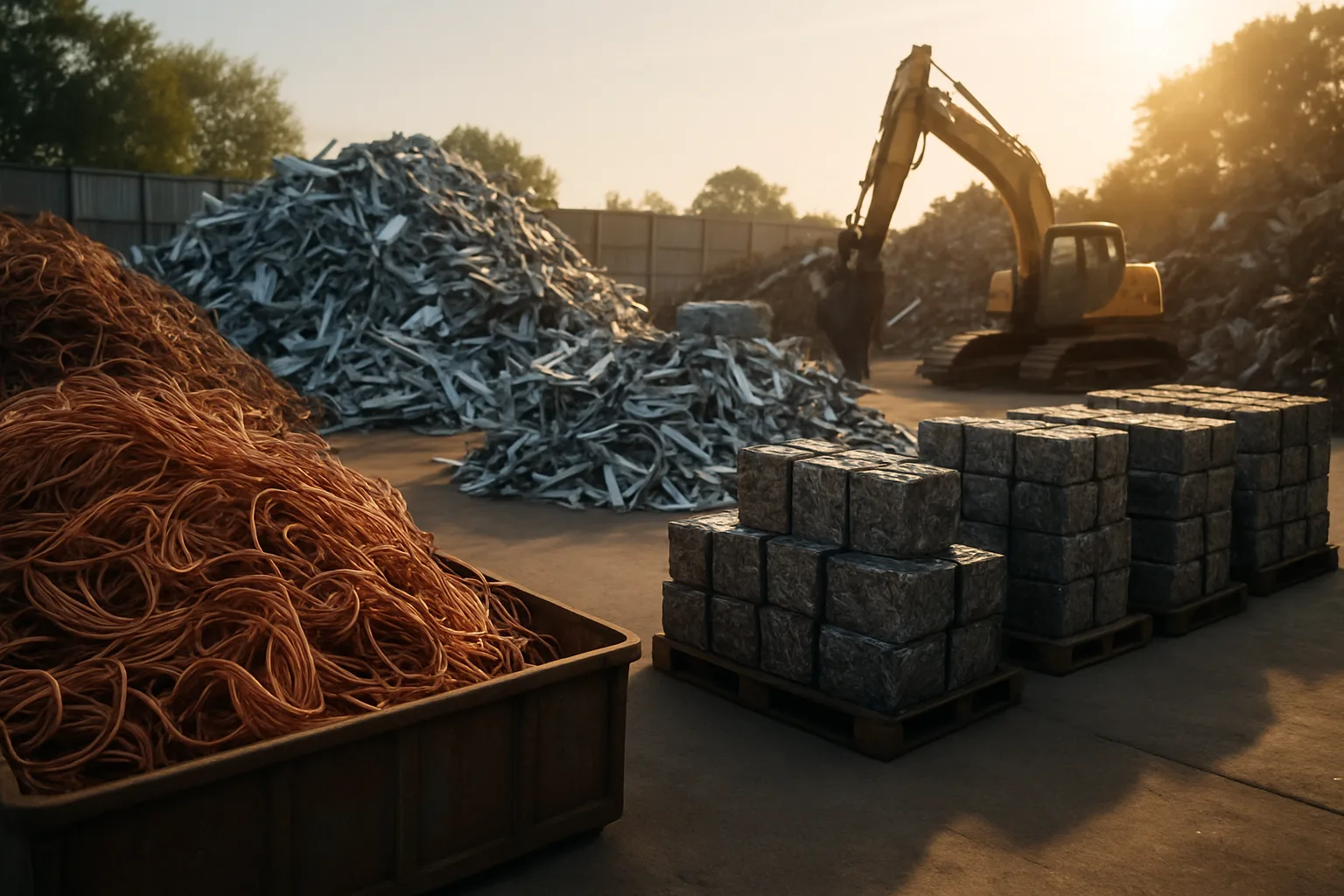
Your First Trip to a Scrap Metal Yard: What Actually Happens (And How to Get Paid Right)
Most people show up to a scrap metal yard for the first time with a truck bed full of metal and zero idea what to expect. That's not a knock — it's just the reality. The scrap industry has its own language, its own rules, and its own process. Walk in unprepared and you might leave money on the table. Walk in knowing what to expect and the whole thing takes 20 minutes.
Whether you're hauling a load of copper pipe, a few old car batteries, or a pile of mixed metals out of a renovation job, this guide walks you through exactly what happens when you pull up to a scrap metal yard in Allentown or anywhere else in Pennsylvania — from the scale to the payout window.
What You Need Before You Show Up
Don't roll up empty-handed on the paperwork side. Most scrap yards in the U.S. require a valid government-issued photo ID — a driver's license works fine. Pennsylvania yards are required by state law to log seller information for regulated materials like copper, aluminum, and catalytic converters. This isn't optional and it isn't personal — it's how the industry keeps stolen material out of the supply chain.
Here's what to have ready before you arrive:
- Valid photo ID — required at virtually every yard
- Vehicle title or documentation — required if you're scrapping a whole car or truck
- Proof of ownership for large loads or commercial materials
- Cash or payment preference info — some yards pay cash, some cut checks, some require bank transfers for larger loads
If you're bringing catalytic converters — which are heavily regulated in Pennsylvania and across the country in 2026 — expect additional documentation requirements. Yards take this seriously. Show up without the right paperwork and they may turn you away.
How the Weigh-In Process Works at a Local Scrap Yard in Allentown
Pull in and you'll see a large floor or truck scale near the entrance. This is the first stop. You'll drive your entire vehicle onto the scale — truck, trailer, load and all — and the yard will record your gross weight. Then you unload your metal, drive back over the scale, and the difference is your net weight of material. Simple math, but it's the foundation of your payout.
From there, the yard sorts and grades your material. This is where first-timers often get surprised. Not all metal is priced the same — not even the same type of metal. Copper #1 (clean, uncoated wire or pipe) pays more than copper #2 (painted, coated, or mixed). Aluminum from a window frame is a different grade than cast aluminum from an engine block. The yard will categorize what you brought and apply the corresponding rate to each category.
A few things to know about the sorting process:
- Pre-sort your load if you can. Mixing metals together slows things down and can get your load downgraded to a lower rate.
- Remove non-metal attachments. Plastic, rubber, insulation — these add weight but subtract value. Strip what you can before you arrive.
- Ask questions. If you don't understand how your load is being graded, ask the yard worker. A good yard will explain it.
- Know your materials. Showing up knowing whether you have #1 or #2 copper, bare bright wire, or insulated wire signals that you're not a first-timer — even if you are.
If you're in the Allentown area, the process at your local scrap yard follows this same basic structure. Procedures are consistent across most Pennsylvania yards, though individual yards set their own prices and grading standards.
Understanding Scrap Metal Prices Today
Here's the blunt truth: scrap metal prices today move with the commodity markets. Copper, aluminum, steel, and other metals are priced based on global supply and demand, and those numbers shift daily — sometimes hourly. What the yard pays you on a Tuesday might be different from what they pay on Friday.
Most yards post their prices on a whiteboard near the scale window or on their website. Don't be shy about checking those numbers before you commit. Scrap metal prices today in Pennsylvania vary by yard, by material, and by market conditions — which is exactly why selling to a single buyer without doing any comparison shopping can cost you real money.
Here's how most common materials break down in broad terms (always verify current rates directly with your yard):
- Copper — typically the highest-paying non-ferrous metal; grade matters significantly
- Aluminum — varies widely by form (sheet, cast, extrusion, cans)
- Stainless steel — higher than regular steel, grade-dependent
- Ferrous metals (iron, steel) — lower price per pound but high volume can add up fast
- Catalytic converters — priced by assay; serial number and VIN documentation matters
- Batteries — lead-acid batteries have a fairly stable market
Disclaimer: Metal prices fluctuate daily based on commodity markets. Always confirm current rates directly with your local scrap yard before making selling decisions.
This is where platforms like smashscrap.com come in. Instead of calling one yard and hoping their number is fair, SMASH puts your load in front of multiple vetted buyers at once. Competition is how you find the real market price — not a single quote from a single buyer with no accountability.
What to Expect From the Yard Staff and Environment
Scrap yards are industrial environments. They're loud, they're busy, and they're not set up for a leisurely browsing experience. That's fine — just know what you're walking into.
Expect forklifts moving, magnets swinging, and metal being dropped and sorted constantly. Safety is your responsibility as much as the yard's. Most yards require:
- Closed-toe shoes — steel-toed boots are ideal
- Staying in designated pedestrian zones
- Following staff directions about where to unload
- Not wandering through the yard unsupervised
Yard workers are usually direct and efficient — they process dozens of loads a day. Be ready to state clearly what you've got. "I've got about 200 pounds of mixed copper pipe and fittings, plus some aluminum extrusion" is a useful opener. "I've got some stuff in my truck" is not.
The transaction itself is usually quick. Once the load is weighed and graded, the yard generates a ticket — sometimes called a settlement sheet — that lists each material category, the weight, the price per pound, and the total. Review it before you sign. If something looks off, ask. Most discrepancies come from grading mismatches, not errors — but it's worth understanding every line on that ticket.
How Sellers Leave Money Behind — And How to Avoid It
The biggest mistake first-time scrap sellers make is treating the nearest yard as the only yard. Location matters for convenience, but if your load has real value — several hundred pounds of non-ferrous metal, a pile of catalytic converters, or a commercial quantity of copper — a few extra miles or one extra phone call can pay for itself fast.
The second mistake is not documenting loads properly. If you're selling regularly — from a renovation business, a demolition job, or an auto shop — inventory documentation isn't just paperwork. It's your negotiating power. A buyer who can see exactly what they're bidding on, with photos and weights and material grades, is a buyer who can make a stronger offer with confidence.
SMASH was built specifically for this problem. The platform includes inventory tools, photo documentation, serial tracking for cats and cores, and an auction format that puts your documented load in front of vetted buyers who compete for it. More buyers means better price discovery. That's not a marketing line — it's just how markets work.
If you're selling smaller loads as a homeowner or doing a one-time cleanout, your local find a scrap yard near you tool is your fastest path to getting paid. For larger or recurring loads, it's worth exploring whether an auction-based platform can deliver better results than a single-buyer relationship.
If you're based in Allentown or anywhere across Pennsylvania and want to locate the closest scrap yard before your first visit, use a yard-finder tool to confirm hours, accepted materials, and payment methods before you load the truck.
After Your First Visit: Building a Better Selling Strategy
One trip to a scrap yard teaches you a lot. You'll learn how your materials are graded, which metals are worth sorting separately, and how the pricing ticket works. Most people leave their first visit thinking "I should have separated that load better." That's a normal first reaction — and a useful one.
If you're a contractor, shop owner, or anyone who generates scrap regularly, the real opportunity isn't in optimizing one load — it's in building a system. Track your material. Know what you're accumulating. Document it before it leaves your facility. And when you're ready to sell, read scrap yard guides and tips to stay current on market conditions, compliance requirements, and best practices for maximizing return.
The scrap industry in Pennsylvania — and across North America — moves fast. Regulations change, prices shift, and buyer relationships evolve. Sellers who treat scrap as a commodity to be dumped at the nearest yard leave money behind. Sellers who treat it as an asset to be marketed, documented, and auctioned to the right buyer get paid accordingly.
Ready to do this right? Start by finding a trusted facility near you, get familiar with the process, and explore whether platforms like SMASH can work for your volume and material type. The first trip is the hardest one. After that, it's just business.
Find the best scrap yard near you — check locations and find a scrap yard near you at scrap-yard-near-me.com and get started with confidence.
Frequently Asked Questions
Q: What do I need to bring to a scrap metal yard in Allentown for the first time?
Bring a valid government-issued photo ID — this is required by Pennsylvania law for most regulated metals. If you're scrapping a vehicle, bring the title. For large commercial loads, proof of ownership is strongly recommended. Calling ahead to confirm specific yard requirements saves time.
Q: How do scrap metal prices today get determined at local yards?
Scrap metal prices today are tied to global commodity markets and change daily. Yards set their own buy rates based on current market conditions, material grade, and their own processing costs. Always confirm current prices directly with your yard before arriving — posted rates online may not reflect same-day pricing.
Q: Can I sell catalytic converters at a local scrap yard in Allentown?
Yes, but Pennsylvania has specific documentation requirements for selling catalytic converters in 2026. You'll need valid ID and documentation proving lawful ownership — including VIN information in many cases. Yards that take cats seriously will verify this before purchasing. Platforms like SMASH include serial tracking and documentation tools designed for exactly this type of regulated material.
Q: How long does a first visit to a scrap yard take?
For a typical personal load — a few hundred pounds of mixed metal — expect 20 to 45 minutes total. Larger commercial loads with multiple material types can take longer depending on sorting and grading. Pre-sorting your load before arrival is the single best way to speed up the process.
Q: Is it worth calling multiple scrap yards before selling?
Absolutely — especially for higher-value non-ferrous metals like copper, aluminum, and catalytic converters. A few phone calls or using an auction-based platform like SMASH can reveal meaningful price differences between buyers. For small loads of ferrous metal, the effort may not move the needle much. For anything with significant non-ferrous content, comparison shopping pays.
Stay current on scrap metal market trends, regulation updates, and industry news by following SMASH on LinkedIn — practical insights for yards and sellers across North America.