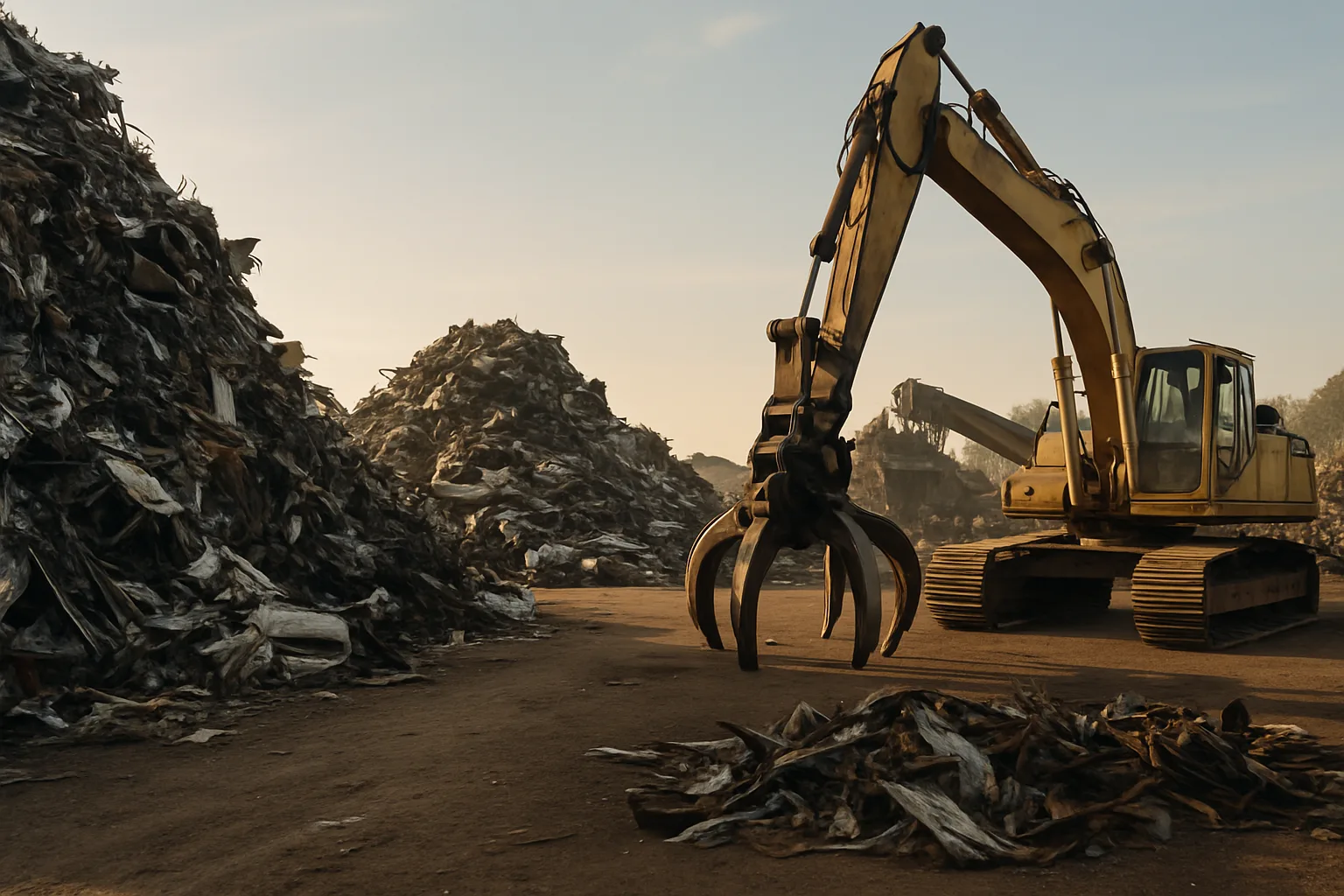
Most people picture a scrap yard as a dusty lot with a guy on a phone, scratching numbers on a notepad. That image is about ten years out of date — and if you're still operating or selling that way, you're leaving money on the table.
Technology is moving through the scrap and recycling industry faster than most yard operators expected. From digital inventory tools to online catalytic converter auctions, the gap between yards that adopt and yards that don't is widening fast. If you're looking for an auto recycling yard in Los Angeles — or trying to run one — here's what's actually changing in 2026 and why it matters to your bottom line.
The Old Way of Selling Scrap Is Broken
For decades, the process looked the same everywhere. You accumulate a load, call your one buyer, take whatever price they quote, and move on. No comparison. No competition. No documentation. Just a handshake and a wire transfer — if you were lucky.
That model worked when buyers had information advantages that sellers couldn't close. Today, those advantages are gone. Real-time data, digital photo documentation, VIN lookups, and serial tracking mean a buyer knows exactly what they're getting before they make a bid. The seller who can document their load properly now commands more confidence — and more competition — from the buyer side. More buyers means better price discovery. That's just math.
In a market as active as Los Angeles, where metal moves constantly and catalytic converter values shift week to week, relying on a single buyer call is the fastest way to underprice your material.
Digital Inventory Tools Are Changing How Yards Operate
Walk into a forward-thinking auto recycling yard in Los Angeles today and you're not going to see a clipboard on the front desk. You're going to see tablets, barcode scanners, and cloud-based inventory systems that log every incoming part, vehicle, and load in real time.
This matters for a few reasons:
- Accuracy: Documented inventory reduces disputes at the point of sale. Buyers know what they're buying. Sellers know what they have.
- Speed: Pulling a packing list or BOL used to take an hour. Digital systems generate them in minutes.
- Compliance: California has strict regulations around auto dismantling and parts tracking. Digital records make compliance audits manageable instead of painful.
- Valuation: When every part has a photo, a serial number, and a condition note, you have a defensible case for what it's worth — not just a guess.
Platforms like the SMASH scrap metal auction marketplace are built around this documentation-first approach. Photo documentation, VIN lookup, and serial tracking aren't optional extras — they're baked into how loads are listed and sold. Documented inventory gives buyers more confidence. Confident buyers bid higher.
Catalytic Converter Auctions Are the Clearest Example of What's Possible
No segment of the scrap world has been more disrupted by technology — or more in need of it — than catalytic converters. Cats carry real value because of the platinum group metals inside them: platinum, palladium, and rhodium. But pricing them accurately requires data most individual yards simply don't have access to.
The old way: a buyer quotes you a flat price per unit, you take it or leave it. You have no idea if that price reflects the actual PGM content, the current spot market, or just what that buyer thinks they can get away with offering.
The new way: a catalytic converter auction puts your cats in front of multiple vetted buyers who compete for them. Price discovery happens through competition, not negotiation. You see what the market actually thinks your material is worth.
For yards in Los Angeles and across California, this is a significant shift. The volume of cats moving through Southern California is substantial, and even small per-unit improvements in pricing add up quickly across a full load. If you haven't explored the auction model for your converters, you're essentially pricing in the dark.
Finding the Right Scrap Yard Near You Has Also Changed
Technology isn't just changing how yards operate internally — it's changing how sellers find them in the first place. A few years ago, "scrap yard near me" meant flipping through a phone book or asking around. In 2026, it means pulling up a search, reading reviews, checking hours, and comparing accepted materials — all before leaving the house.
If you're in California and need to find a scrap yard near you that's actually open and accepting the material you have, that information is now available in seconds. No more driving across town to find a closed gate or a yard that doesn't take what you brought.
This matters for first-timers especially. Someone hauling an old engine block or a pile of non-ferrous scrap doesn't want to guess — they want to know which yard is open, what they accept, and roughly what they'll pay. That's exactly what tools like scrap-yard-near-me.com are built to answer. You can locate the closest scrap yard quickly, check what materials they buy, and show up prepared.
For Los Angeles scrap metal services, that kind of upfront information saves time on both sides of the transaction — and it's becoming the expected standard, not a nice-to-have.
What the Best Scrap Yards in Los Angeles Are Doing Differently
The best scrap yards in Los Angeles right now aren't just the ones with the biggest lots or the longest operating history. They're the ones that have adapted to what buyers and sellers actually want in 2026: transparency, speed, and fair pricing.
Here's what separates the leaders from the laggards:
- They use digital scales and real-time pricing feeds. No more posting a whiteboard price from last week. Sellers see current rates tied to actual market data.
- They document everything. Photos, weights, condition notes, VINs on vehicles. This protects both sides and creates a paper trail that holds up.
- They're reachable. Updated hours online, a working phone number, and clear information about what they accept. If a seller can't figure out if you're open, they'll go somewhere else.
- They participate in competitive markets. Whether that's listing loads through auction platforms or benchmarking against broader market data, the best yards aren't operating in an information vacuum.
- They treat sellers like repeat customers. Because they are. A seller who gets a fair price comes back next month with the next load.
If your yard isn't doing these things, you're not just leaving sellers frustrated — you're leaving money on the table on both ends of every transaction. If you're a seller evaluating yards, these are the questions to ask before you commit to a buyer.
The Takeaway for Sellers in 2026
The technology shift in the scrap industry isn't some distant future development. It's happening now, and it favors sellers who are willing to do a little homework before they hand over a load.
Know what you have. Document it. Find yards and platforms that create real competition for your material. Don't accept the first price if you haven't tested the market. Competition can help reveal what your scrap is actually worth — and in a city like Los Angeles, where there's no shortage of buyers, there's no excuse for settling for less.
SMASH is built specifically for this. No subscription fees, no guessing. You only pay when a sale happens — which means the incentive is aligned with yours. Read scrap yard guides and tips to understand your material better before your next sale.
Whether you're cleaning out a fleet, processing a load of cores, or moving non-ferrous material from a job site, the tools exist to get you a better outcome than a single phone call to a single buyer. Use them.
Ready to move your material? Start by finding the right yard for what you have. Scrap-yard-near-me.com makes it easy to find the best option near you — check locations, hours, and accepted materials before you load the truck.
Frequently Asked Questions
Q: What is an auto recycling yard and how is it different from a regular junkyard?
An auto recycling yard focuses on dismantling end-of-life vehicles and reselling usable parts and scrap metal. A traditional junkyard may hold vehicles for self-service parts pulling, while auto recyclers often process and sort material more systematically. In Los Angeles, many facilities do both — check what the yard specializes in before you show up.
Q: How do I find a scrap yard open today near me in Los Angeles?
Search tools like scrap-yard-near-me.com let you filter by location and check hours so you know if a yard is open before you make the trip. Los Angeles has a large number of active scrap and auto recycling facilities, but hours vary — some yards close early on Saturdays and most are closed Sundays. Always verify before you haul.
Q: What are catalytic converters worth right now, and how do I get a fair price?
Catalytic converter values depend on the vehicle make, model, and the current spot price of platinum, palladium, and rhodium — all of which fluctuate. The best way to get a fair price is to have your cats assessed by multiple buyers, ideally through a competitive auction format. Platforms like SMASH allow vetted buyers to bid on converter loads so you see real market value rather than a single buyer's offer. Prices fluctuate — always check current rates before selling.
Q: Do I need documentation to sell scrap metal in California?
Yes. California has specific requirements for selling scrap metal, especially catalytic converters and automotive parts. Sellers typically need to provide a valid ID, and some materials require proof of ownership or a business license. Yards are required to keep records of purchases. Check with your specific yard before your first visit to make sure you have what you need.
Q: What metals get the best prices at a scrap yard near me in California?
Non-ferrous metals — copper, aluminum, brass, and stainless steel — typically return higher prices per pound than ferrous (iron and steel) materials. Catalytic converters are among the highest-value items by weight due to their PGM content. Prices change with the commodity market, so check current rates before your trip. A well-documented load with clear photos and weights will always attract more buyer confidence than an unsorted pile.
Follow SMASH on LinkedIn for weekly market insights, scrap pricing updates, and industry news across North America.