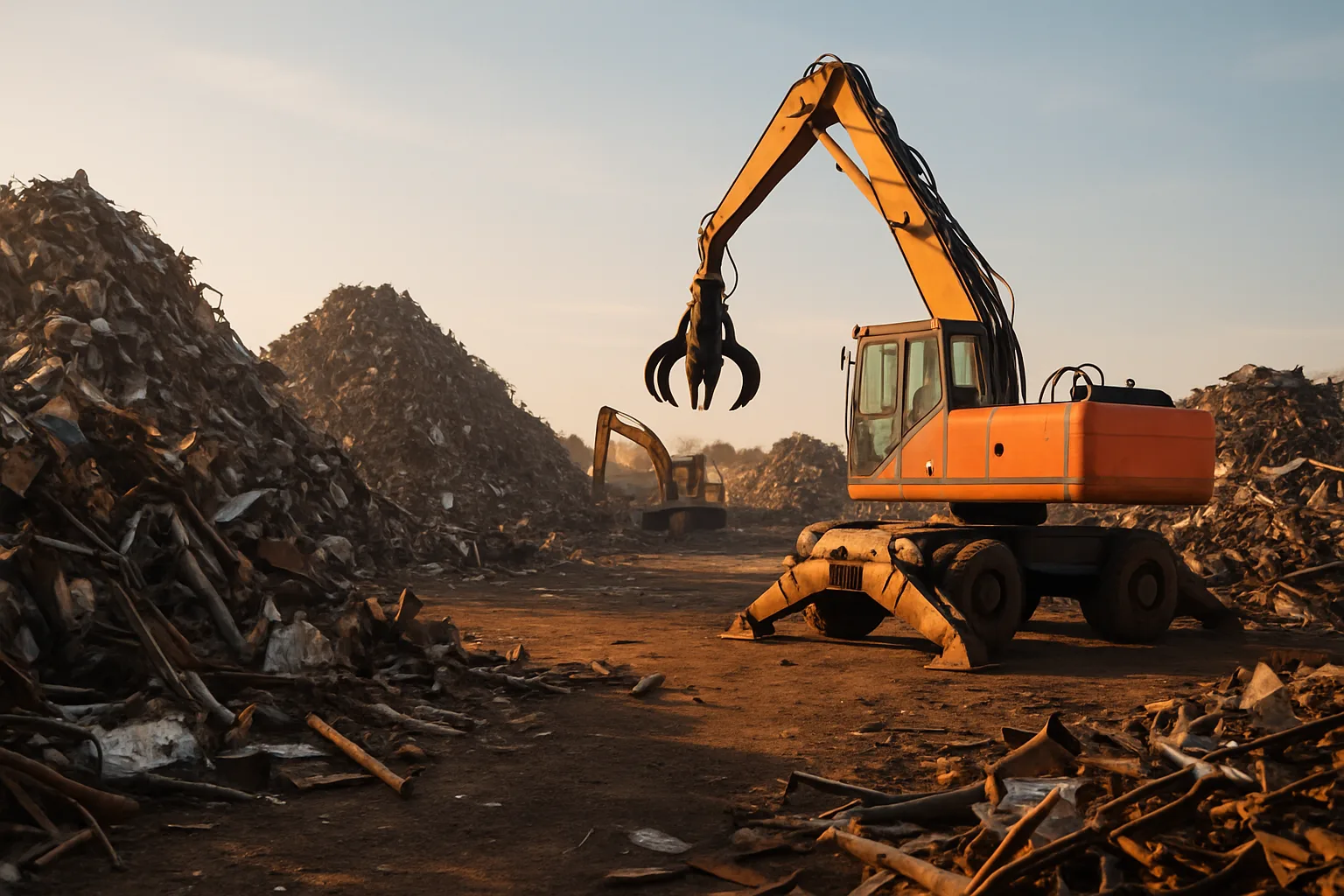
Most people treat their local scrap yard like a vending machine — show up, dump metal, take cash, leave. That approach works once. But the yards that consistently get top dollar, faster service, and first access to buying opportunities? They treat the yard like a business partner. If you're searching for a junkyard near me Indianapolis, you're already ahead of the curve — because Indianapolis has a competitive scrap market, and knowing how to work within it makes a real difference to your bottom line.
This isn't about schmoozing. It's about showing up prepared, being consistent, and making it easy for the yard to do business with you. That's what builds trust. And trust, in the scrap world, has dollar signs attached to it.
---Why Your Relationship With the Yard Matters More Than You Think
Scrap yards deal with dozens — sometimes hundreds — of sellers every week. Most of them show up with disorganized loads, misidentified materials, and zero documentation. The yards sort through everything, take on pricing risk, and deal with the paperwork themselves. It's a grind.
Now imagine a seller who shows up with a sorted load, knows what they've got, and doesn't waste the scale operator's time. That seller gets noticed. Over time, they get calls when the yard has buying interest. They get a little more flexibility on pricing negotiations. They get faster processing. None of this is guaranteed — but it's real, and it's earned.
Building that kind of relationship with an Indianapolis scrap metal services provider isn't complicated. It just takes consistency and a bit of preparation most sellers skip entirely.
---Start With Sorted, Documented Loads Every Time
Nothing tells a yard operator you're a serious seller faster than a well-sorted load. When you separate your ferrous from your non-ferrous, pull your copper out from your mixed metals, and keep your catalytic converters (cats) separate from your auto parts — the yard saves time and you eliminate pricing uncertainty on your end.
Mixed loads get priced at the lowest common denominator. That's how yards protect themselves when they can't quickly identify what they're buying. But a sorted load with clear materials lets the yard pay you more accurately — and it removes the reason to lowball you.
Documentation matters too, especially if you're moving cores, cats, or serialized parts. A simple packing list, even a handwritten one, shows you know what you brought. Platforms like sell your scrap metal on the SMASH marketplace take this further with built-in photo documentation, VIN lookup, and serial tracking — tools that give buyers real confidence in what they're purchasing. The same principle applies at the yard level. Document your loads. It pays.
- Separate ferrous and non-ferrous before you arrive — steel, iron, and mixed metals in one pile; copper, aluminum, brass, and stainless in another
- Pull cats and cores separately — these have their own pricing tiers and need to be counted and documented
- Photograph your load before you leave your facility — timestamps matter if there's ever a dispute
- Bring a basic packing list — material type, estimated weights, source if relevant
Yards in Indiana see a mix of individual sellers and commercial accounts. The commercial accounts that keep their documentation clean get treated differently. You can operate the same way even as a smaller seller — the approach scales down just fine.
---Show Up Consistently — Timing and Volume Signal Reliability
Scrap yards are running a business. Reliable sellers are valuable to them. If you're showing up once a quarter with a random load, you're a transaction. If you're showing up every two to three weeks with consistent volume, sorted, and on time — you're an account.
That distinction matters more than most sellers realize. Yards manage their buying budgets, their processing capacity, and their own downstream sales to processors and mills. A seller they can predict is a seller they can plan around. And sellers they plan around get better treatment at every level.
In Indianapolis, the scrap market moves with manufacturing cycles, construction activity, and automotive recycling volume. If you're pulling metal from job sites, auto recyclers, or industrial accounts, try to batch your loads on a consistent schedule. Even rough consistency — same general window each week or two — builds familiarity with the scale operators and buyers at the yard.
Communication matters here too. If you've got a larger load coming — say, a full truck of non-ferrous from a demo job — give the yard a heads-up. They may want to plan capacity or pull a buyer to the table. That kind of coordination is how smaller sellers start acting like commercial accounts, and getting treated like them.
---Ask Questions and Learn the Yard's Process
Most sellers never ask how the yard works. They take the price offered, pocket the cash, and leave. That's fine — but it's also a missed opportunity.
Spend five minutes asking the right questions. What materials are they buying most actively right now? Are there items they're overstocked on where the price is softer? Are there materials they're short on where they're willing to pay more? Are there times of day or days of the week that are less busy for faster processing?
These aren't pushy questions. Most yard operators and buyers will answer them straight. They're running a business too — they want the right materials, and they want sellers who understand their operation.
Understanding how the yard processes your material also helps you position your loads better. A yard that ships directly to a copper mill will price clean copper differently than one that runs it through a broker. Knowing the difference helps you negotiate — or at least understand what you're being offered and why.
If you're selling at volume, it's also worth asking about the yard's invoicing and documentation process. Some yards now integrate with scrap management platforms. Others still run on paper BOLs. Knowing what to expect speeds up your transactions and keeps your own records clean.
---Leverage Competitive Pricing — Without Burning Bridges
Loyalty has value at a scrap yard — but blind loyalty doesn't. The relationship you're building should benefit both sides. That means you stay informed on what the market is paying and you don't leave money on the table out of habit.
More buyers means better price discovery. That's not an attack on your local yard — it's just how markets work. When you know what the market is offering, you can have honest conversations with your yard about pricing without guessing. They know you know the market. That transparency usually leads to better outcomes for both sides.
This is where platforms like SMASH change the equation significantly. SMASH connects sellers with vetted buyers across North America through a competitive auction format. No subscription fees. No single-buyer guessing games. The auction format creates real competition, which helps reveal actual market value on your material. That's useful data whether you end up selling through SMASH or taking it to your local yard.
Use that market intelligence. If you're consistently getting strong bids on a specific material type through an auction platform, bring that context to your yard conversation. Most serious buyers — local yards included — respect a seller who knows their numbers.
The key is to be straight about it. Don't play games. Don't bluff. Just be honest: "I'm seeing stronger bids on this material elsewhere. Can you work with me on price?" That kind of direct conversation either moves the needle or tells you something useful about the relationship.
---Use Scrap Metal Inventory Management to Come in Prepared
If you're moving any real volume, sloppy inventory management is costing you money. Not just at the yard — in your own operation. Knowing what you have, what it weighs, and what it's worth before you show up means you're not making decisions under pressure at the scale window.
Good scrap metal inventory management doesn't need to be complicated. A basic spreadsheet tracking material type, weight, acquisition date, and any relevant documentation covers most sellers. If you're pulling serialized parts or high-value non-ferrous, add photo documentation and serial numbers. That level of detail supports better pricing conversations and protects you if questions come up later.
For sellers moving larger volumes through an auto recycling yard Indianapolis or commercial accounts, purpose-built tools make a bigger difference. SMASH's inventory platform includes photo documentation, VIN lookup, and serial tracking built specifically for scrap sellers. When you show up to a buyer — whether local or through an online auction — with a fully documented inventory, you give them confidence in what they're buying. Confidence moves pricing in your direction.
You can read scrap yard guides and tips to sharpen your approach further — from how to identify metals correctly to how to time your loads around market conditions.
Whether you're new to the scrap game or running a commercial recycling operation in Indiana, the fundamentals are the same: sort your load, document it, know your numbers, and show up consistently. If you need to find a scrap yard near you or locate the closest scrap yard in your area, start there and build from the first visit.
The yards worth working with long-term are the ones that treat you like an account — not just a transaction. Build that relationship from day one, and the returns compound over time. Ready to take your scrap selling further? Explore your options in Indianapolis and across Indiana at scrap-yard-near-me.com.
Note: Scrap metal prices fluctuate based on market conditions, material grade, and regional demand. Always check current rates before making selling decisions.
---Frequently Asked Questions
Q: How do I find a reliable junkyard near me in Indianapolis?
Start by checking scrap-yard-near-me.com for verified locations in Indianapolis and surrounding Indiana areas. Look for yards that are licensed, post pricing transparently, and have reviews from commercial sellers — not just casual one-time visitors. A yard that communicates clearly about what they buy and how they pay is a yard worth building a relationship with.
Q: What should I bring to a scrap yard on my first visit?
Bring a valid government-issued ID — most Indiana yards require it by law for scrap purchases. Bring your metal sorted by type if possible, and a basic list of what you've got. If you're selling catalytic converters, cores, or any serialized parts, have documentation ready. The more prepared you are, the smoother the transaction.
Q: Does sorting my scrap metal actually get me more money?
Yes — consistently. Mixed loads get priced conservatively because the yard takes on the sorting cost and the pricing risk. When you sort clean copper from your mixed non-ferrous, or separate your aluminum grades, the yard can price each material accurately. That almost always means more money in your pocket compared to dumping a mixed load.
Q: What is SMASH and how does it help scrap sellers?
SMASH is a scrap metal auction platform that connects sellers with vetted buyers across North America. Instead of calling one buyer and hoping for a fair price, you list your material and buyers compete. There are no subscription fees — SMASH only makes money when you make a sale. It's a useful tool for price discovery even if you also sell locally.
Q: How often should I sell to my local scrap yard to build a good relationship?
Consistency matters more than frequency. Showing up every two to three weeks with sorted, documented loads builds more trust than sporadic large drops. Yards value sellers they can plan around. Once you establish a rhythm, you become an account — not just a walk-in — and that status typically comes with better service and more flexibility on pricing conversations.
---Stay current on scrap market trends, pricing shifts, and industry news — follow SMASH on LinkedIn for regular updates and insights from inside the scrap metal industry.