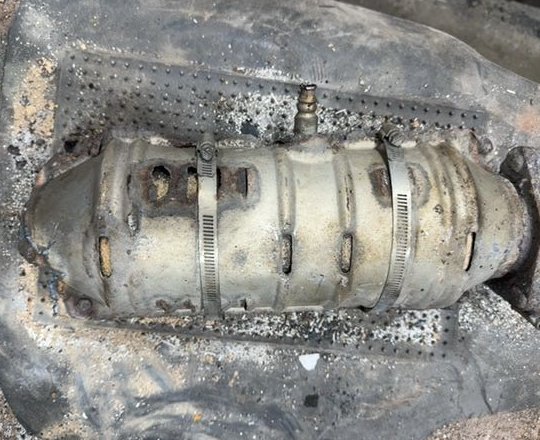
Your catalytic converter could be worth more than your entire engine — and most people selling scrap in St. Louis have no idea. These small components contain platinum, palladium, and rhodium, three of the most valuable metals on the planet. How a scrap yard handles them makes all the difference between a fair payout and leaving serious money on the table.
If you're searching for a scrap metal buyer near me St. Louis, understanding how cats are priced, documented, and sold puts you in a stronger position before you ever walk through the gate. This guide breaks down exactly what happens to catalytic converters and precious metals when they hit a scrap yard — and how to make sure you get paid what your material is actually worth.
What's Actually Inside a Catalytic Converter
Catalytic converters are emissions control devices bolted to your exhaust system. What makes them valuable isn't the steel shell — it's the ceramic honeycomb substrate coated with platinum group metals (PGMs): platinum, palladium, and rhodium. These metals act as catalysts, triggering chemical reactions that reduce harmful exhaust emissions before they leave the tailpipe.
Rhodium in particular commands prices that make most other scrap metals look like pocket change. The concentration of PGMs varies by vehicle make, model, year, and engine size. A cat from a large V8 pickup or a diesel vehicle can carry significantly more precious metal content than one from a small four-cylinder commuter car. Hybrid vehicles often carry cats with elevated PGM loading because their engines run intermittently and the converter has to work harder when it does fire.
- Platinum: Used in diesel converters primarily; also found in gasoline vehicles
- Palladium: Dominant metal in modern gasoline vehicle converters
- Rhodium: Found in smaller quantities but often the highest-value component
- Substrate material: Ceramic or metallic — ceramic is more common and contains higher PGM concentration
Knowing what's inside explains why cat theft has been a persistent problem across Missouri and the rest of the country. It also explains why reputable scrap yards have tightened their documentation requirements significantly heading into 2026.
How Scrap Yards Price Catalytic Converters — And Why It's Complicated
Unlike a ton of shredded steel or a bundle of copper wire, there's no simple posted price for a catalytic converter. Pricing depends on the specific make, model, and serial number of the unit. Most yards use a database — either proprietary or a third-party pricing guide — to look up individual cats by their serial number or by identifying the vehicle they came from using a VIN lookup.
This is where documentation matters. A yard that uses North America's B2B scrap metal auction platform like SMASH has the inventory infrastructure to track cats by serial number, attach photos, and document the full chain of custody. That documentation doesn't just protect the yard — it protects you as the seller, proving your material is legitimate and creating a paper trail for payout verification.
When you bring cats to a scrap yard, here's what typically happens:
- The yard identifies the unit by serial number or visual inspection
- They reference a pricing database to find the current assay value range
- They apply their margin and offer you a buy price
- They log the transaction with your ID, the unit description, and the agreed price
- Payment is issued — in St. Louis, most yards pay by check for high-value cats
The key variable you can't control day-to-day is the spot price of the underlying PGMs. Palladium and rhodium markets move fast. Scrap yard prices St. Louis for cats on a Monday may differ meaningfully from Friday of the same week. Always ask if the quote is good for the same day only.
Documentation Requirements for Selling Cats in Missouri
Missouri, like most states, has tightened regulations around catalytic converter sales in response to the ongoing theft epidemic. If you're selling cats to a scrap yard in St. Louis, expect to provide:
- A valid government-issued photo ID
- Proof of vehicle ownership (title, registration, or bill of sale) if selling detached units
- Business credentials if you're selling as a shop, dismantler, or fleet operator
- A signed seller declaration confirming lawful ownership
These aren't optional formalities. Yards that skip documentation are taking on legal exposure, and they're likely not the yards you want to do business with anyway. A well-run yard protects both parties. If you're a shop or recycler moving volume, working with a platform that handles serial tracking and photo documentation automatically saves time and creates the compliance record you need. St. Louis scrap metal services through vetted yards give you that paper trail built in.
For B2B sellers — auto recyclers, dismantlers, fleet operators — the documentation game is even more important. Buyers in a B2B scrap metal marketplace need confidence in the material they're bidding on. Documented cats with photos, serial numbers, and vehicle sourcing data consistently attract stronger bids than unmarked, undocumented inventory. That's not a theory. It's how commodity buyers manage risk.
How the Auction Model Changes the Equation for Precious Metal Recovery
The traditional way to sell a load of cats: call your one buyer, take their number, done. The problem is that one buyer has zero incentive to sharpen their pencil. They know you don't have a competing offer sitting in front of you. That's not a partnership — it's an information asymmetry that benefits them.
The SMASH auction model flips that dynamic. When your documented cat inventory goes in front of multiple vetted buyers simultaneously, competition can help reveal the actual market value. More buyers means better price discovery. That's not a sales pitch — it's how competitive markets work.
SMASH scrap metal auction infrastructure is built specifically for this. Inventory tools let you log cats with serial numbers and photos before the auction opens. Vetted buyers across North America can see exactly what's on offer. The auction format creates the pressure that a single phone call to your regular buyer never will. And because SMASH charges no subscription fees, you're not paying to access the platform — you only participate in the upside when a sale closes.
For shops and yards in Missouri moving consistent cat volume, this model is worth understanding. Even running a portion of your inventory through an auction format alongside your regular buyer relationships gives you a real-time benchmark. You'll know fast whether your standing offer reflects the market or just your buyer's preferred margin.
Finding a Scrap Metal Buyer Near Me in St. Louis Who Handles Cats Correctly
Not every yard in St. Louis handles catalytic converters the same way. Some specialize in non-ferrous and have dedicated cat buying operations with up-to-date assay data. Others treat cats as an afterthought, running quick visual IDs and offering flat rates that don't reflect actual PGM content. That difference in approach can translate directly into what lands in your pocket.
When you're trying to find a scrap yard near you that takes cats seriously, ask a few direct questions before you commit to the drive:
- Do you price cats by serial number or by unit type?
- What database or pricing source do you use?
- Do you require documentation for detached units?
- How do you handle payment — same day, check, or wire?
- Do you buy from businesses as well as individuals?
A yard that can answer those questions clearly is a yard that knows what they're doing. If you get vague answers or pushback on documentation questions, that's information too. For businesses with recurring volume, it's worth the time to locate the closest scrap yard that explicitly handles commercial cat purchases — your per-unit return will reflect the difference.
Need a deeper look at how the process works from intake to payout? Read scrap yard guides and tips that walk through the full selling process step by step, including what to expect at the scale and what documents to bring.
Precious Metals Beyond Cats — What Else Is Worth Tracking
Catalytic converters get most of the attention, but they're not the only precious metal source moving through scrap yards in St. Louis and across Missouri. Industrial operations, electronics recyclers, and specialized dismantlers regularly deal in materials that carry significant non-ferrous and precious metal value:
- Circuit boards and CPUs: Contain gold, silver, and palladium in recoverable quantities — typically handled by certified e-waste and precious metal refiners
- Oxygen sensors: Contain small amounts of platinum; usually aggregated into lots
- Diesel particulate filters (DPFs): Similar PGM profile to cats; increasingly relevant as diesel fleets age out
- Spark plug tips: Some premium plugs use platinum or iridium tips; value varies widely by quantity
- Industrial catalysts: Used in chemical processing and refining — extremely high PGM content in some cases
For high-volume or industrial material, the auction model matters even more. Buyers for industrial catalyst loads and large DPF inventories are specialized — not every general yard has the buyer network to get you a competitive number. That's exactly the gap a platform like SMASH closes. Connecting documented, verified inventory with vetted buyers who specialize in that material is what turns a decent offer into a market-price offer.
If you're moving volume in any of these categories, don't settle for the first number you hear. The market exists — you just need access to it.
Frequently Asked Questions
Q: How much is a catalytic converter worth at a scrap yard near me in St. Louis?
Values vary widely based on the vehicle make, model, year, and the specific precious metal content inside the unit. A common car's cat might be worth a modest amount, while a large truck or hybrid converter can command significantly more. Always get the unit priced by serial number, not just by visual category. Check current rates with local yards directly — PGM prices shift frequently.
Q: Do I need paperwork to sell a catalytic converter in Missouri?
Yes. Missouri regulations require sellers to provide a valid photo ID and, for detached units, documentation proving lawful ownership of the vehicle the cat came from. Business sellers — shops, dismantlers, recyclers — may need additional credentials. Reputable yards enforce these requirements. Bring your documentation before you make the trip.
Q: Can I sell catalytic converters directly to buyers without going through a local yard?
Businesses with consistent volume can use a B2B scrap metal marketplace like SMASH to connect with vetted buyers directly through an auction format. This creates competition for your inventory and can support better price discovery than a single negotiated offer. Individual sellers typically work through a licensed scrap yard or metal recycler.
Q: What is the best way to find a scrap metal buyer near me in St. Louis who buys cats?
Call ahead and ask specifically whether the yard handles catalytic converters and how they price them. Look for yards that use serial number databases and require proper documentation — those are the operations that take cat buying seriously. You can also check listings through scrap-yard-near-me.com to find verified buyers in the St. Louis area.
Q: Are scrap yard prices in St. Louis different from other cities?
Local market conditions, competition between yards, and individual business margins all affect what a specific yard offers. The underlying PGM spot prices are global, but what you're offered locally depends on the yard's buyer relationships and pricing model. Getting quotes from more than one buyer in St. Louis is always worth the time for high-value material like cats.
Knowing how scrap yards handle catalytic converters gives you leverage — whether you're an individual selling a single unit or a business moving loads every week. The more documented and organized your inventory, the better your position. If you're ready to find a buyer who knows what your material is actually worth, start by finding the right yard. Check locations, compare your options, and don't settle for the first number you hear. Find the best scrap yard near you — check locations at scrap-yard-near-me.com.
Stay current on scrap metal market trends and industry news by following SMASH on LinkedIn — practical updates for yards and buyers across North America.