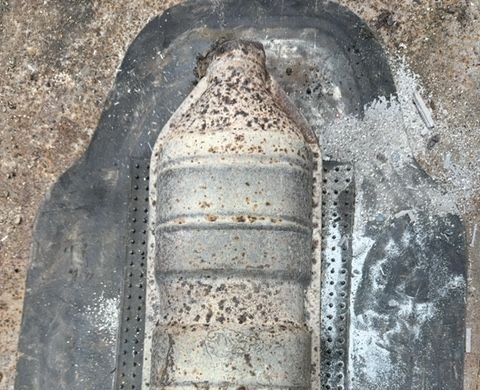
Your catalytic converter is worth more than you think — and most sellers leave real money on the table because they don't know how the system works.
Catalytic converters contain platinum, palladium, and rhodium — three precious metals that trade on global commodity markets. The difference between a good sale and a bad one often comes down to where you sell, how you sell, and whether anyone's actually competing for your load. If you're near a local scrap yard Aurora or anywhere across Illinois, understanding this process puts more money in your pocket.
Here's exactly how scrap yards handle cats, cores, and precious metals — and what you should demand from the process.
What's Actually Inside a Catalytic Converter (and Why It Matters)
Catalytic converters aren't just chunks of metal bolted to your exhaust. Inside each unit is a ceramic or metallic honeycomb substrate coated with platinum group metals (PGMs) — specifically platinum, palladium, and rhodium. These are the same metals used in electronics, medical devices, and industrial equipment. They don't corrode. They don't deplete. They get recovered, refined, and reused.
The PGM content in a single converter varies dramatically by vehicle make, model, year, and engine type. A compact car's cat might carry a fraction of what a diesel truck's catalytic system holds. Some aftermarket converters carry almost nothing worth recovering. This is exactly why serial numbers, VIN lookups, and photo documentation matter — the difference in value between a misidentified converter and a correctly graded one can be significant.
- Platinum: Used heavily in older diesel converters and standard gasoline cats.
- Palladium: Common in gasoline converters, especially post-1990s vehicles. Prices have been highly volatile.
- Rhodium: Found in smaller quantities but historically the most valuable of the three PGMs.
- Substrate condition: Cracked, broken, or flooded substrates reduce recovery yield — which affects what buyers will pay.
When you bring cats to a scrap yard, the yard doesn't typically refine them on-site. They consolidate loads and sell to processors or smelters who run the assay and extract the PGMs. That means the yard is essentially an intermediary — and their payout to you depends on what they can get upstream. Transparency in that chain makes a real difference.
How Local Scrap Yards in Aurora Price Catalytic Converters
Walk into most scrap yards in Aurora, Illinois, and you'll encounter one of two pricing methods: a flat-rate price list based on converter grade or type, or a quoted price based on the buyer's current book. Neither method is inherently dishonest, but both put the pricing power almost entirely in the yard's hands. You're accepting their number with little visibility into the market behind it.
The smarter approach — one that more sellers are using in 2026 — is to get competitive bids rather than accepting the first offer. Platforms like SMASH Scrap — where verified buyers bid on your metal bring multiple vetted buyers to the table. That competition helps reveal what the market actually says your load is worth, not just what one buyer is willing to pay today.
When evaluating a yard's pricing process, ask these questions:
- Do they use a recognized grading system or their own internal book?
- Can you see the grade assigned to each converter in your load?
- Do they photograph and document units before purchase?
- How do they handle disputed grades or damaged substrate units?
- What's the payment timeline, and is there a written record?
A yard that can't answer these questions clearly is a yard that controls all the information — and you have no leverage. If you're trying to find a scrap yard near you that handles cats with real transparency, documentation is the first thing to look for.
The Catalytic Converter Auction Advantage — Why Competition Changes Everything
The old way: call your one buyer, take their number, load your truck. The SMASH way: document your load, list it, let verified buyers compete. That gap in approach is exactly where the catalytic converter auction model earns its keep.
Auction-based selling for catalytic converters works because PGM pricing is dynamic — it moves with commodity markets, refinery demand, and regional supply. A buyer in one market might price your rhodium-heavy load differently than a buyer in another. Without competition, you never know the spread. With an auction format, the market tells you directly.
SMASH uses serial tracking and photo documentation to grade and list converter loads so buyers are bidding on real, verified information — not guessing. That documentation also protects sellers. If a buyer disputes a grade post-auction, the photos and serial records are already on file. No he-said-she-said. Just data.
This matters especially for yards and auto salvage operations that move volume. If you're pulling converters off vehicles regularly — say, from a steady stream of end-of-life cars — the difference between a single-buyer arrangement and a competitive bid process compounds over time. More buyers means better price discovery. That's not a slogan. It's how commodity markets work.
Who Do Scrap Yards Sell Metal To — And How That Affects Your Payout
This is the question most sellers never ask — and it's one of the most important ones. Who do scrap yards sell metal to? The answer directly affects what margin the yard takes and what's left for you.
For catalytic converters, the typical chain looks like this:
- Seller (you): Brings converters to a local yard or lists through a platform like SMASH.
- Local scrap yard or aggregator: Consolidates loads, grades material, and sells upstream.
- Processor/core buyer: Purchases consolidated lots, decans the substrate, and sends to refiners.
- Precious metal refinery: Runs fire assay or wet chemistry to recover PGMs.
- Commodity market: Refined PGMs are sold at spot or hedged prices.
Every step in that chain takes a cut. The question is: how far up the chain can you get? Platforms that connect sellers directly to vetted core buyers and processors — bypassing the local intermediary markup — can shift more value back to the original seller. That's the structural advantage of an auction model for high-value material like cats.
For non-ferrous metals — copper, aluminum, brass — the chain is similar but typically shorter. A local yard in Aurora, Illinois, will buy your non-ferrous load and sell it to a regional mill or broker. Knowing current commodity prices before you walk in gives you a baseline. Read scrap yard guides and tips to understand how pricing benchmarks work before your next sale.
Protecting Yourself When Selling Catalytic Converters
Catalytic converter theft has made regulators across Illinois and the rest of the country pay attention. As of 2026, most states — including Illinois — have tightened documentation requirements for converter sales. That means you need to be prepared before you show up at any yard.
Here's what most Illinois scrap buyers will require for catalytic converter transactions:
- Proof of ownership: Vehicle title, bill of sale, or business documentation for fleet operations.
- Valid ID: Government-issued photo ID matching the seller on record.
- VIN documentation: Many yards cross-reference converter serial numbers against vehicle VINs.
- Business license (for commercial sellers): Auto salvage yards, mechanics, and fleet operators may need additional documentation.
- Payment by check or electronic transfer: Cash transactions for converters face stricter limits under current Illinois regulations.
If you're running an auto salvage or dismantling operation in Aurora, documentation isn't just regulatory protection — it's a selling advantage. Buyers on platforms like SMASH bid with more confidence on documented, photo-verified loads. Documented inventory gives buyers more confidence, and that confidence shows up in bid prices.
Need to locate the closest scrap yard that handles catalytic converters and understands the documentation requirements? Start by confirming they know the current Illinois regulations and have a clear grading process.
5 Things to Compare Before You Sell Cats or Precious Metals Locally
Not all scrap yards in Aurora — or anywhere in Illinois — handle precious metal-bearing material the same way. Before you commit to a buyer, run through this comparison checklist:
- Grading transparency: Can they show you the grade assigned to each unit, or do you just get a total number?
- Price benchmark: Are they referencing a recognized pricing index, or is it purely internal?
- Documentation process: Do they photograph, serial-track, and generate a packing list for your load?
- Payment terms: Same-day payment? Net 7? Net 30? For high-value loads, payment speed matters.
- Competitive pricing: Is this one buyer's offer, or have multiple buyers seen this load? Competition matters.
The best outcome isn't always at the yard closest to you — it's with the buyer who has the most information, the most competition, and the clearest process. SMASH brings all three into one platform. No subscription fees. The platform only wins when you do.
If you're serious about maximizing what your converters and non-ferrous material are worth, the difference between the old way and the SMASH way is worth understanding. Start by comparing what's available. If you're in the Chicago suburbs or anywhere nearby, the right buyers for your load may not be the ones you've always called.
Find the best scrap yard near you — whether you're in Aurora, across Illinois, or anywhere in the US — and check locations at scrap-yard-near-me.com. The right information, the right documentation, and the right buyers make all the difference.
Disclaimer: Catalytic converter prices and precious metal values fluctuate with global commodity markets. Always check current rates before selling. The figures and market conditions described reflect general 2026 industry context and are not guaranteed price quotes.
Frequently Asked Questions
Q: What do local scrap yards in Aurora pay for catalytic converters?
Prices vary based on converter type, grade, PGM content, and current commodity market conditions. There's no fixed price — a converter from a diesel pickup truck will pay very differently than one from a compact sedan. Get multiple quotes or use a competitive bid platform before accepting any single offer.
Q: Do I need paperwork to sell a catalytic converter in Illinois?
Yes. Illinois regulations require sellers to provide proof of ownership (such as a vehicle title), valid government-issued ID, and in many cases VIN documentation. Commercial sellers — including auto salvage yards — may need additional business documentation. Requirements have tightened across the state as of 2026.
Q: How does a catalytic converter auction work?
A catalytic converter auction lists your documented load — including photos, serial numbers, and grading information — to multiple vetted buyers simultaneously. Those buyers submit competitive bids. The result is price discovery driven by real market demand rather than a single buyer's offer. SMASH operates exactly this way for scrap and converter loads across North America.
Q: Can I sell catalytic converters directly to a refinery instead of a local yard?
Some high-volume sellers do work directly with processors or refineries, but most individual sellers and smaller yards don't have the volume or relationships to access that channel. Platforms like SMASH bridge that gap by connecting sellers to vetted buyers who operate at the processor and core buyer level.
Q: What's the difference between a scrap yard and an auto salvage yard for selling cats?
Auto salvage yards typically remove converters as part of vehicle dismantling and may keep them for parts resale or sell them as cores. General scrap yards purchase converters by weight and grade for PGM recovery. Neither is automatically better — the key is transparency in pricing and documentation, regardless of which type of yard you use.
Follow SMASH on LinkedIn for industry updates, market insights, and scrap metal news delivered directly to your feed.