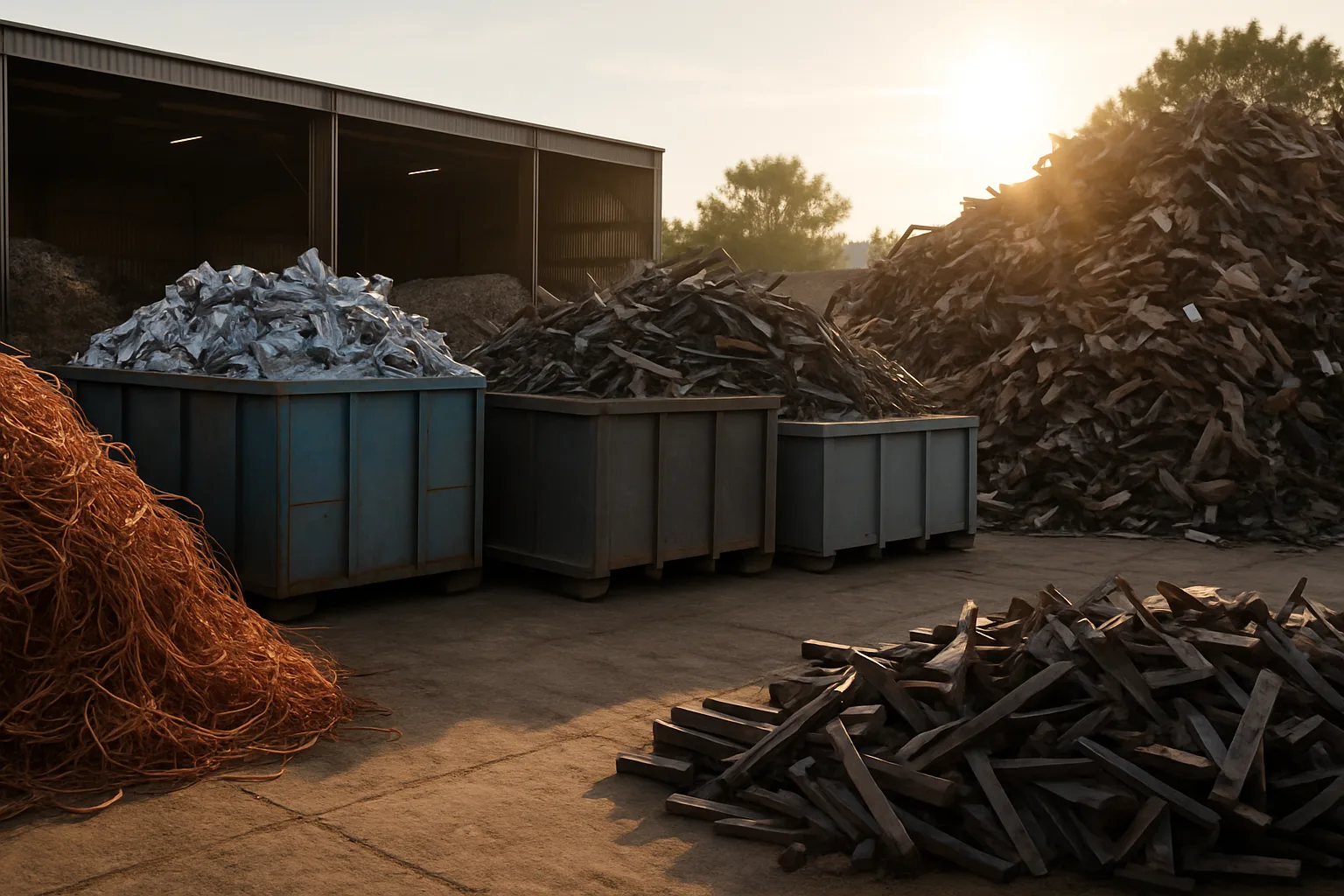
The metal in your car hood, your old HVAC unit, and that pile of copper pipe behind the shop doesn't disappear. It comes back. That's the circular economy in action — and scrap yards are the backbone of it.
Most people think of a scrap metal yard as a place to dump old junk. That's the wrong frame. A scrap yard is an entry point into a global supply chain that feeds steel mills, foundries, and manufacturers with raw material that didn't have to be mined. In 2026, that matters more than ever. Energy costs are up, virgin ore extraction is under regulatory pressure, and manufacturers are actively competing for quality recycled feedstock. The scrap metal yard sitting on the edge of Dallas is part of that system — whether it looks like it or not.
If you're looking to sell scrap locally, understanding how these facilities actually function can help you get more for your material. Let's break it down.
What a Scrap Metal Yard Actually Does in the Recycling Chain
A scrap yard isn't just a holding pen. It's a processing facility. Metal comes in from contractors, demo crews, auto salvage, manufacturing floors, and residential cleanouts. The yard sorts it, grades it, and prepares it for downstream buyers — typically mills and smelters that need consistent, contaminant-free feedstock.
That processing step is critical. Copper has to be separated from insulation. Steel has to be graded by alloy. Aluminum extrusion gets separated from cast. Non-ferrous material like brass, stainless, and carbide gets identified and priced differently from commodity steel. When yards do this well, everyone in the chain wins — including you as the seller.
Here's what typically happens when you bring a load in:
- Material is weighed on a certified scale at intake
- A yard rep grades and sorts by metal type and condition
- Pricing is applied based on current market rates for each grade
- You get paid — usually same day for walk-in transactions
- The yard consolidates loads and sells to mills or processors in bulk
The problem most sellers run into isn't the process — it's the price. When you sell to one buyer with no competition, you're taking whatever they offer. That's where the system starts to break down for the person on the selling side.
Dallas Scrap Yards and the Local Metal Recycling Ecosystem
Dallas is a heavy industrial market. Construction is constant. The DFW corridor runs major manufacturing, auto salvage, and commercial demolition activity year-round. That means there's a real volume of scrap moving through the region — and a real network of buyers who want it.
Texas as a whole generates significant ferrous and non-ferrous scrap from oilfield decommissioning, agriculture equipment, HVAC replacements, and infrastructure projects. Dallas sits at the center of that activity. If you're hauling loads in from the Metroplex, you're operating in one of the more active scrap markets in the country.
That also means competition among buyers should, in theory, work in your favor. But only if you're actually accessing multiple buyers — not just calling the same yard every time. Connecting with Dallas scrap metal services through a platform that aggregates buyer interest is one of the fastest ways to close that gap.
For businesses moving regular volume — auto recyclers, demolition contractors, HVAC shops — the difference between one buyer and three or four vetted buyers quoting your load isn't trivial. It's the difference between guessing your price and discovering it.
The B2B Scrap Metal Marketplace: Why Competition Changes Everything
Here's the old way: you call your guy, he gives you a number, you take it or you don't. No benchmark. No comparison. No leverage.
The B2B scrap metal marketplace model flips that. Instead of one call to one buyer, your load gets visibility with multiple vetted buyers who are actively competing for material. That competition is what drives price discovery. It's not magic — it's basic market mechanics applied to an industry that's been running on handshake deals for decades.
Platforms like smashscrap.com exist specifically to solve this problem for yards and sellers who are moving real volume. SMASH runs an auction-format marketplace where buyers bid on loads — catalytic converters, non-ferrous material, cores, full loads of prepared steel. Sellers list their inventory with photo documentation, serial tracking where applicable, and specs that give buyers enough confidence to bid competitively.
No subscription fees. SMASH only earns when the seller does. That alignment matters — it means the platform has a direct incentive to get you the best possible outcome on every load, not just to charge you for access.
More buyers means better price discovery. Documented inventory gives buyers more confidence. That confidence translates into stronger bids. It's not complicated, but most sellers in the scrap industry have never had access to a system that works this way.
How Scrap Yards Support Sustainability Goals in 2026
Recycled metal has a dramatically lower carbon footprint than primary production. Producing steel from scrap uses a fraction of the energy compared to processing iron ore through a blast furnace. Recycled aluminum saves roughly 90–95% of the energy required to produce primary aluminum. These aren't marketing numbers — they're well-documented metallurgical realities.
In 2026, manufacturers and large industrial buyers face increasing pressure from customers and regulators to document the recycled content in their products. That demand flows directly upstream to scrap processors. Yards that can document the origin, grade, and chain of custody of their material are better positioned to supply buyers who care about verified recycled content.
This is why features like photo documentation, serial tracking, and BOL management — built into platforms like SMASH — aren't just operational conveniences. They're part of how the scrap industry connects to broader sustainability commitments. A load of copper with clear documentation is worth more to a conscientious buyer than an undocumented pile of unknown origin.
If you're running a yard or selling regular volume, building documentation habits now puts you ahead of buyers who will increasingly require it. Read scrap yard guides and tips to stay current on best practices for prep, documentation, and pricing strategy.
What to Know Before You Sell Scrap Metal in Dallas
Whether you're dropping off a truck bed full of copper pipe or moving a commercial load of catalytic converters, a few basics make the process faster and more profitable.
Know your metal before you go. Yards price by grade. Copper #1 bare bright is not the same price as insulated wire. Aluminum extrusion prices differently than cast. If you mix your load without sorting, you often get priced at the lowest common denominator. Sort what you can before you haul.
Bring ID. Most Texas scrap yards require valid government ID for non-ferrous transactions. This is standard practice under state law to prevent metal theft. Don't show up without it.
Understand the pricing cycle. Scrap metal prices move with commodity markets — LME copper, steel futures, aluminum spot. Prices today are not prices next week. If you're timing a large load, it's worth watching the market. Check current rates directly with yards or through a platform before you commit.
Ask about load requirements. Some buyers have minimums. Others prefer specific grades or preps. Knowing what a buyer wants before you haul saves time and avoids rejected or downgraded loads at the gate.
Consider your volume. If you're selling occasionally, walking in to a local scrap yard near you is often the right move. If you're moving regular commercial volume, a marketplace approach with competitive bidding makes financial sense — and that's exactly what SMASH is built for.
Sellers moving consistent loads from the Dallas area — demolition debris, auto parts, industrial scrap — are exactly the kind of operators who benefit most from multi-buyer competition. Don't leave price discovery on the table because the old way felt easier.
Finding the Right Scrap Yard Near You in Texas
Not every yard is the right fit for every load. Some specialize in auto salvage and cores. Others focus on non-ferrous. Some handle full demolition loads; others are set up for smaller retail walk-ins. Matching your material to the right buyer is the difference between a fair price and a frustrating transaction.
If you're in the Dallas area and want to find a scrap yard near you, the goal is simple: get your material in front of buyers who actually want it, at a price that reflects current market conditions — not someone's best guess at what you'll accept.
The circular economy doesn't work without the yards, the haulers, the processors, and the platforms that connect them. Every load that gets properly graded, documented, and sold to the right buyer is a load that re-enters manufacturing rather than ending up in a landfill. That's not a feel-good talking point. It's a real economic and environmental outcome — and it starts at the scrap yard level.
When you're ready to sell, don't just call the closest number and hope for the best. Do a little homework. Sort your material. Locate the closest scrap yard that fits your load type, or use a platform like SMASH if you're moving commercial volume. The market is there. You just have to access it properly.
Disclaimer: Scrap metal prices fluctuate daily based on commodity markets. Always check current rates with your local yard or platform before selling.
Frequently Asked Questions
Q: What metals can I bring to a scrap metal yard in Dallas?
Most Dallas-area scrap yards accept a wide range of ferrous and non-ferrous metals — including steel, iron, copper, aluminum, brass, stainless steel, and catalytic converters. Some yards also buy whole vehicles or auto cores. Call ahead to confirm what a specific yard accepts and whether they have grade or quantity requirements for your material.
Q: How are scrap metal prices determined at a local scrap yard in Dallas?
Prices are tied to commodity markets like the London Metal Exchange (LME) for non-ferrous metals and domestic steel indices for ferrous material. Individual yards apply their own margin on top of those benchmarks. Prices shift daily or weekly, so what a yard pays today may differ from what they pay next week. Always confirm current rates before hauling a large load.
Q: Do I need an appointment to sell scrap at a yard near me?
Most retail scrap yards in Texas accept walk-in sellers during business hours without an appointment. However, if you're bringing a large commercial load — a full truck of prepared steel, a pallet of cats, or a bulk non-ferrous lot — calling ahead is smart. It lets the yard prepare for intake and can speed up your transaction significantly.
Q: What's the difference between a retail scrap yard and a B2B scrap metal marketplace?
A retail scrap yard serves individual sellers who walk in with smaller loads. A B2B scrap metal marketplace like SMASH is designed for commercial sellers — recycling yards, demolition contractors, auto recyclers — who move larger volumes and want competitive bidding from multiple vetted buyers rather than a single quoted price. The two models serve different seller profiles, and knowing which fits your volume can have a real impact on what you earn per load.
Q: Is it legal to sell catalytic converters at a scrap yard in Texas?
Yes, but Texas has specific regulations around catalytic converter transactions to combat theft. Sellers typically need to provide valid government-issued ID, proof of ownership or vehicle documentation, and in some cases business credentials if selling in commercial quantities. Requirements can vary by yard and county, so check current Texas state law and your local yard's policy before bringing cats in.
---The scrap industry is moving toward more transparency, better documentation, and real price competition. Whether you're a first-time seller clearing a job site or a yard operator handling volume week over week, the tools now exist to do this smarter. Find the best scrap yard near you — check locations at scrap-yard-near-me.com and connect with buyers who are actually competing for your material.
Stay sharp on market trends and industry news — follow SMASH on LinkedIn for regular scrap metal market insights and platform updates.