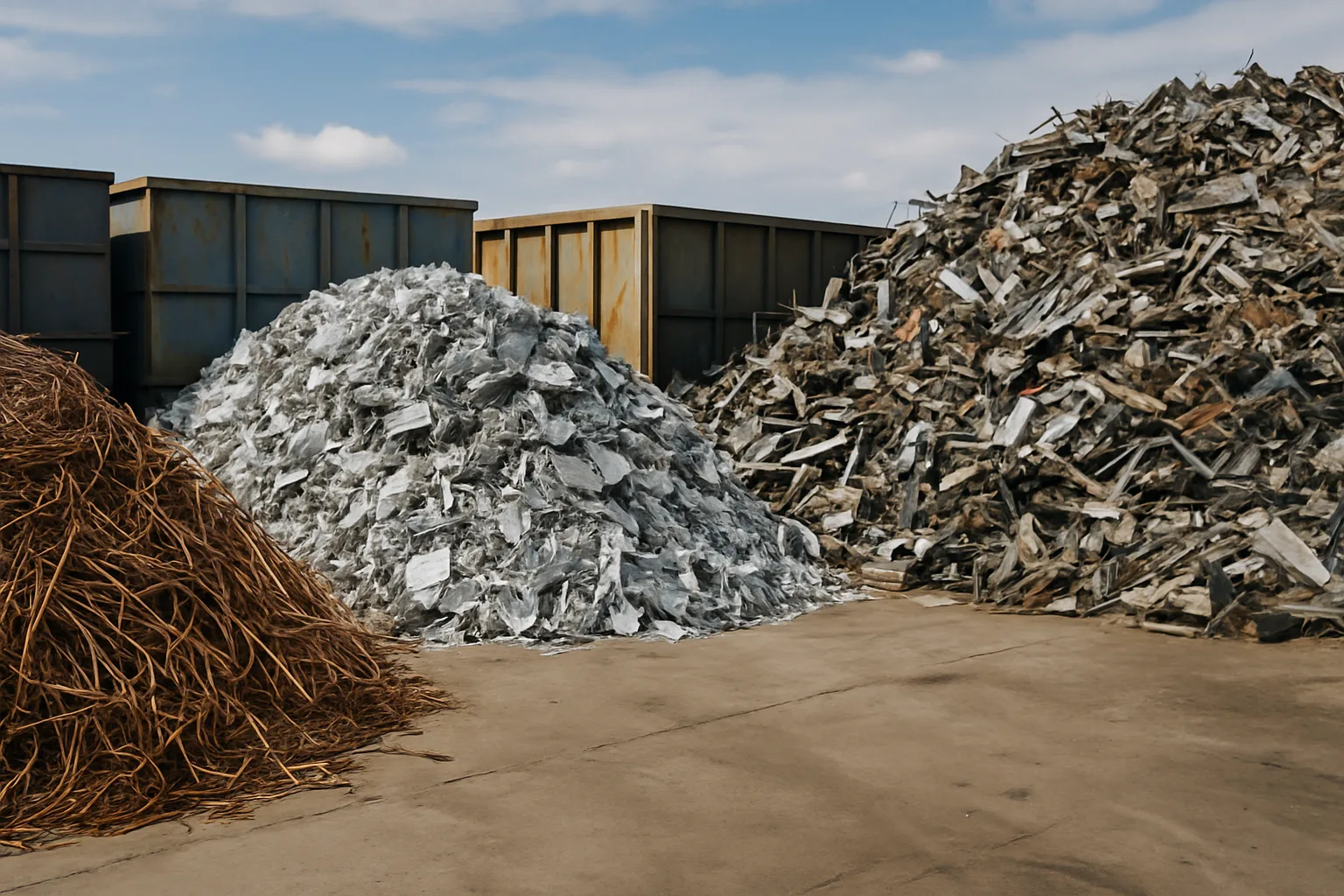
Most people use "junkyard," "salvage yard," and "scrap yard" like they mean the same thing. They don't. And mixing them up costs you time — sometimes money too. If you're sitting on a pile of old metal, a dead car, or a load of catalytic converters in Grand Forks and you walk into the wrong facility, you might leave empty-handed or dramatically underpaid.
This week's roundup breaks down the real differences between these three types of facilities, what each one buys, and how to find the right buyer for what you're actually selling. Whether you're a first-timer or a yard operator looking to sharpen your process, this is worth two minutes of your time.
Junkyard, Salvage Yard, Scrap Yard — Why the Terms Matter
These three terms feel interchangeable. They're not. Each facility operates under a different business model, serves a different customer, and values your material differently. Getting this wrong means you might bring a load of copper pipe to a place that only strips cars — or drop off a driveable parts car at a facility that crushes everything on arrival.
Here's the fast breakdown before we go deeper:
- Junkyard: Informal term. Often used loosely to describe any facility that handles old vehicles or waste material. No standard definition.
- Salvage yard: Focused on used auto parts. They pull, catalog, and resell working components from vehicles. Cars have value here beyond their weight in metal.
- Scrap yard: Buys metal by weight. Ferrous and non-ferrous. It doesn't care if the alternator still works — it cares how much it weighs and what alloy it is.
The overlap exists because many facilities operate more than one function under one roof. But their primary business model shapes how they price your material — and that gap can be significant on a full load.
What Is a Salvage Yard and Who Should Use One
A salvage yard's business is parts. They acquire vehicles — usually written-off, flood-damaged, or end-of-life — and they dismantle them systematically. Working components get cataloged and resold to repair shops, private buyers, and dealerships looking for affordable alternatives to new OEM parts.
If you have a vehicle with value left in its components, a salvage yard will typically pay you more than a scrap yard will. That's because they're not just buying metal weight — they're buying resellable inventory. A good transmission or a low-mileage engine block has a retail value on the parts market that far exceeds its scrap value per pound.
When does a salvage yard make sense for you?
- Your vehicle runs or has recently run
- Specific components (engine, transmission, doors, catalytic converter) are intact and functional
- You have a newer model year where parts are still in demand
- You want to negotiate part-by-part rather than selling by weight
The trade-off is time. Salvage yards often take a few days to assess a vehicle properly. If you need cash fast and the car is truly at end-of-life, a scrap yard is likely the faster path.
What a Scrap Yard Actually Buys — and How They Price It
A scrap metal buyer operates on commodity markets. They buy material by weight, grade it by alloy type, and aggregate it into loads for mills and smelters. The price you get is driven by metal markets, the grade of your material, and how well you've sorted it before you arrive.
Scrap yards deal in two main categories:
- Ferrous metals — iron and steel. Think appliances, car bodies, structural steel, rebar. Lower price per pound, but high volume.
- Non-ferrous metals — copper, aluminum, brass, stainless, lead, catalytic converters (cats). Higher price per pound. Non-ferrous is where most individual sellers focus their effort.
The difference between a prepared load and an unprepared one can be substantial. A sorted, clean load of copper wire versus a mixed pile of wire with insulation still on it — those price differently. Know what you're bringing, and prepare it if you can. Scrap yard prices in Grand Forks, like everywhere else, reflect both the commodity market and the labor the yard has to put into processing your material.
Looking for current rates? find a scrap yard near you and call ahead before you haul. Prices move with the market — sometimes week to week.
The "Junkyard" Label — What It Usually Means in Practice
Junkyard is the oldest of the three terms and the least precise. In practice, it usually refers to one of two things: a self-service salvage operation ("you-pull-it" yards), or an informal storage yard that hasn't fully committed to either the parts or the commodity model.
Self-service salvage yards are common across North Dakota and the rest of the country. You pay a small entry fee, walk the rows of vehicles, and pull the parts yourself with your own tools. You pay per part at the exit. These yards price parts much lower than full-service salvage yards because they've offloaded the labor to you. If you know what you're doing with a wrench, this is one of the best deals in the business.
For sellers, junkyards in the traditional sense rarely offer the best price on raw metal. They're buying vehicles, not metal loads. If you have loose scrap — copper wire, aluminum extrusion, stainless pipe — a dedicated scrap yard near me open to commercial sellers is almost always the better call.
Finding the Right Facility in Grand Forks, North Dakota
Grand Forks sits in a region with a strong agricultural and industrial base. That means a mix of scrap types — farm equipment, structural steel, non-ferrous from construction, and end-of-life vehicles coming off both personal use and fleet operations. The right facility depends entirely on what you're moving.
Here's a quick decision framework:
- Dead car with salvageable parts? Call a salvage yard first. Get a parts assessment before committing to scrap weight pricing.
- Clean non-ferrous load? A scrap yard will pay you on the commodity. Find one that handles your specific material (cats, copper, aluminum) rather than a general facility that may not grade it properly.
- Mixed load of ferrous and random metal? A full-service scrap yard is your best bet. They can sort and weigh on-site.
- Farm equipment, machinery, or large structural steel? Look for a yard with an industrial scale and equipment to handle oversized loads.
For Grand Forks scrap metal services, the facility matters as much as the price. A yard that doesn't specialize in your material type will undervalue it — or turn it away entirely.
If you're running a recycling business or moving consistent volume, the calculus changes further. A single buyer relationship — one phone call, one price — isn't giving you market. It's giving you that buyer's margin. That's where a B2B scrap metal marketplace changes the equation. Platforms like find the best price for your scrap on SMASH connect sellers to vetted buyers through an auction format, so competition does the pricing work instead of a handshake deal.
How the SMASH Auction Model Fits Into This Picture
If you're a yard operator or a business moving consistent scrap volume, the difference between a junkyard, salvage yard, and scrap yard becomes a sourcing question. You're not just selling — you're looking for price discovery on loads of cats, non-ferrous, or specialty alloys that a single local buyer may not value correctly.
The old model: one buyer, one call, one price. You take it or you don't. No way to know if the market would have paid more.
The SMASH model: post your load, vetted buyers compete, price reflects actual demand. The SMASH scrap metal auction format means your copper or your cats aren't priced by one buyer's margin — they're priced by competition. Documentation tools, VIN lookup, serial tracking, and photo documentation give buyers confidence in what they're bidding on. More confidence equals stronger bids.
No subscription fees. SMASH only wins when the seller wins. That's a different alignment than your current buyer relationship — and it's worth understanding before you commit another load to a single-call deal. Read scrap yard guides and tips to sharpen your approach before your next sale.
For those comparing options — whether you're in Grand Forks or anywhere across North Dakota — more buyers in the room means better price discovery. That's not a pitch. That's how markets work.
Ready to stop guessing and start selling with actual competition behind your prices? locate the closest scrap yard for your material type, and consider whether a single local relationship is really giving you market rate.
Find the best scrap yard near you for what you're actually selling — the right facility makes a real difference, and scrap-yard-near-me.com is built to help you narrow it down fast.
Frequently Asked Questions
Q: What's the difference between a salvage yard and a scrap yard near me in Grand Forks?
A salvage yard buys vehicles to resell working parts. A scrap yard buys metal by weight, regardless of whether components work. If your vehicle has functional parts worth reselling, a salvage yard will typically pay more. If the car is truly end-of-life or you have loose metal, a scrap yard is the right call.
Q: How do I find a scrap yard near me that's open and accepts walk-in sellers?
Most scrap yards in North Dakota accept walk-in sellers during business hours, but hours vary — especially on weekends. Call ahead before hauling a load. Some yards require appointments for large or specialty loads like catalytic converters or non-ferrous materials.
Q: What are scrap yard prices in Grand Forks based on?
Prices follow commodity markets for ferrous and non-ferrous metals. Copper, aluminum, and catalytic converters are priced daily based on exchange rates and regional demand. Sorted, clean material consistently grades higher than mixed or unprepared loads. Always confirm current rates before you haul — prices fluctuate and what you read online may not reflect today's market.
Q: Is SMASH only for large businesses, or can individual sellers use it too?
SMASH is built for yards and businesses moving consistent volume — loads of cats, non-ferrous, specialty alloys, and similar materials. If you're an individual with a single end-of-life vehicle or small amount of scrap, your best first step is a local scrap yard. If you're running a recycling operation or moving regular loads, SMASH's auction format is worth exploring.
Q: Can I sell a car to a scrap yard if it doesn't run?
Yes. Most scrap yards that handle vehicles will accept non-running cars. They'll weigh the vehicle and pay based on its metal content and current ferrous market rates. Some yards offer pickup for an additional fee or factor it into the price. Have your title ready — most facilities require proof of ownership to buy a vehicle.
Follow SMASH on LinkedIn for weekly scrap metal market insights, industry updates, and tips on getting better prices for your loads.
Disclaimer: Scrap metal prices fluctuate based on commodity markets and regional demand. Always confirm current rates directly with your local facility before hauling material.
```