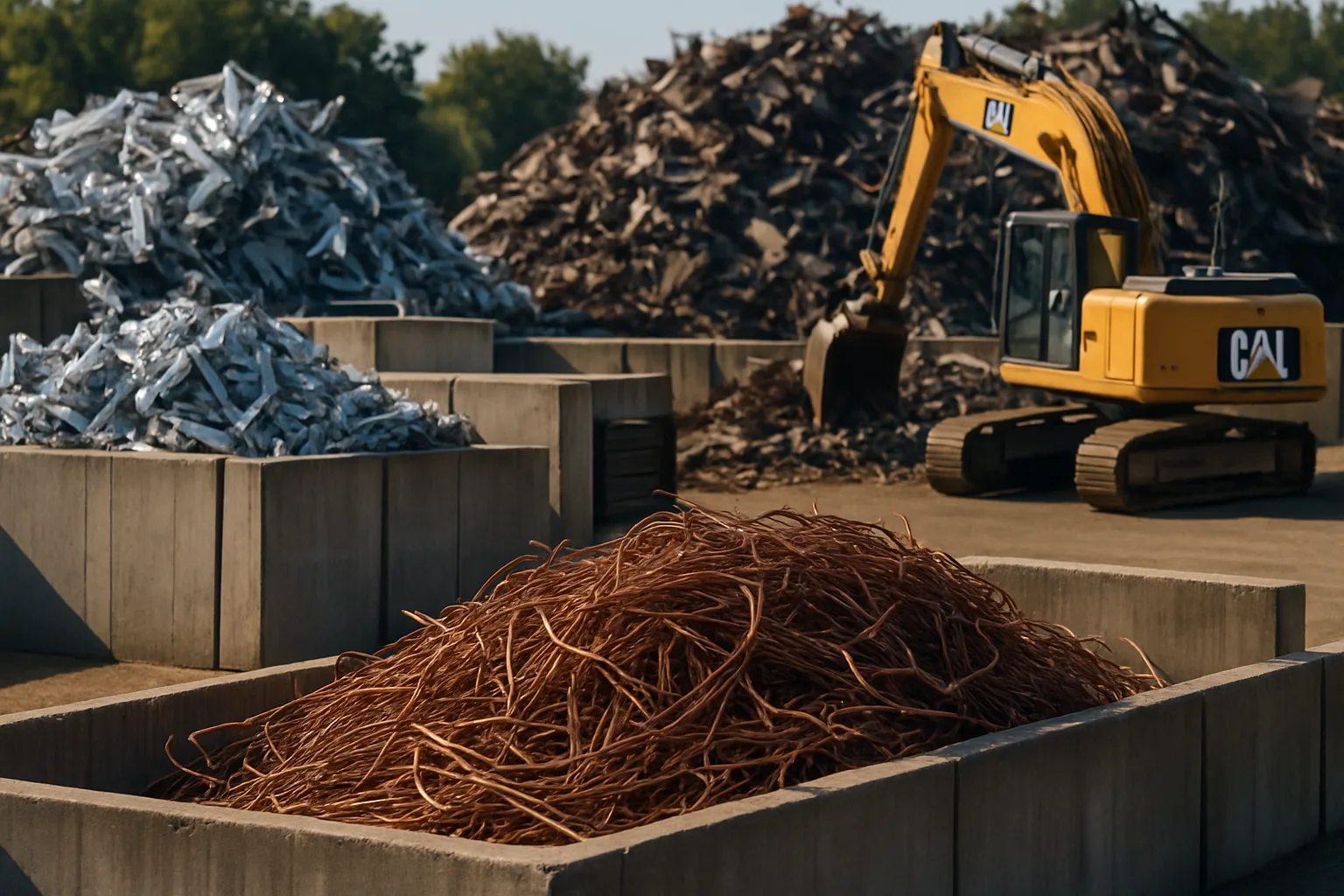
Junkyard, Salvage Yard, or Scrap Yard — They're Not the Same Thing
Most people use these three terms interchangeably. Most people leave money on the table because of it. If you've got a dead vehicle, a pile of copper wire, or a load of mixed metal sitting in your driveway, knowing where to take it — and why — can make a real difference in what you walk away with.
Whether you're searching for a scrap metal yard in Warren, hunting for a junkyard near me within 20 miles, or trying to figure out where your aluminum rims will get the best price, this guide breaks it all down. No fluff. Just the facts you need to make a smarter call.
What Is a Junkyard — and What Does It Actually Do?
A junkyard is primarily a vehicle storage facility. It takes in end-of-life cars, trucks, and vans — whole units — and stores them on a lot. The vehicles sit there until someone comes to buy parts off them. That's the business model.
If you need a used alternator, a side mirror, or a door panel, a junkyard is your destination. Prices for used parts are typically a fraction of dealer or aftermarket costs. You often pull the part yourself, which keeps overhead low and prices down. Some junkyards are full-service, meaning staff pull the part for you — expect to pay more for that convenience.
Key things to know about junkyards:
- They primarily deal in whole vehicles, not loose metal
- Revenue comes from selling used parts, not scrap weight
- Most require vehicles to be relatively intact to have part value
- They may pay you for your car — but usually less than a scrap yard, because they're speculating on part sales
- Searching junkyard near me within 20 mi will surface these facilities, but confirm they buy vehicles before you tow one in
If your car has valuable, undamaged parts — a low-mileage engine, intact interior, or newer body panels — a junkyard may offer you more than the straight scrap weight price. Do the comparison before you commit.
What Is a Salvage Yard — and How Is It Different?
A salvage yard sits between a junkyard and a scrap yard. It deals in vehicles and materials that have some remaining useful value — either as parts or as recoverable materials. Salvage yards often purchase vehicles that insurance companies have written off (total losses), strip the valuable components, and then sell the remaining shell for scrap weight.
Salvage yards are also common in the auto parts resale market. Many operate online inventories where you can search for specific parts by year, make, model, and VIN. This is where scrap metal inventory management starts to matter — facilities that track their stock digitally give buyers (and sellers) a clearer picture of what's available and what it's worth.
Here's how salvage yards typically operate:
- Purchase totaled or end-of-life vehicles from auctions, insurers, or private sellers
- Catalog and remove high-value parts (engines, transmissions, electronics)
- Sell parts through retail or wholesale channels
- Send the remaining hulk to a scrap yard or process it in-house for metal value
Salvage yards are a smart stop if you're buying parts. They're also worth a call if your vehicle has been in an accident but still has a solid drivetrain or undamaged components. The payout varies widely depending on the make, model, year, and current demand for that vehicle's parts.
What Is a Scrap Metal Yard — and Why It Matters Most for Sellers
A scrap yard — or scrap metal yard — is where metal goes to be processed, sorted, and sold to mills, smelters, and manufacturers. It doesn't care about parts value. It cares about weight, metal type, and grade.
If you're in Warren, Michigan and you've got a load of #1 copper, a pile of catalytic converters, or a truck full of mixed steel, a local scrap metal yard in Warren is where you take it. You get paid by the pound (or ton), based on current commodity prices and the grade of material you bring in.
Scrap yards handle a wide range of materials, including:
- Ferrous metals — steel, iron, cast iron
- Non-ferrous metals — copper, aluminum, brass, stainless steel, nickel
- Catalytic converters (cats) — priced by PGM content
- Cores — starters, alternators, radiators, electric motors
- Insulated wire — priced by copper recovery percentage
- Whole vehicles — priced by weight as shredder feed
Most scrap yards require some documentation — a valid ID, and for vehicles, a title or proof of ownership. Larger commercial loads often involve bills of lading (BOLs) and packing lists. Yards that use digital tools for scrap metal inventory management can process loads faster and give you a cleaner paper trail — which matters if you're running a business account.
The single biggest mistake sellers make: showing up to a scrap yard without knowing the current price for their material. Prices move daily with commodity markets. Call ahead, check online, or use a platform that gives you transparent pricing before you haul a load across town.
How to Choose the Right Facility in Warren and Surrounding Michigan
Warren, Michigan sits in the middle of one of the most metal-rich regions in the country. The auto industry has fed the local recycling ecosystem for decades. That means you've got options — but options require a strategy.
Here's how to pick the right facility for your specific situation:
- Selling a whole car with no valuable parts left? Go straight to a scrap yard. You'll get paid on weight. A junkyard or salvage yard won't offer more for a stripped shell.
- Selling a car that still runs or has good parts? Call a salvage yard first. You might get a better number if the drivetrain has value.
- Selling non-ferrous metals — copper, aluminum, brass, cats? A dedicated non-ferrous scrap yard will pay more than a general facility. Know your grade before you go.
- Selling a large commercial load? You need a buyer who can handle volume, verify documentation, and pay on accurate weight. This is where platforms like SMASH Scrap — where verified buyers bid on your metal change the equation. Instead of calling one buyer and taking whatever they offer, you put your load in front of multiple vetted buyers and let competition do the work.
- Not sure where to start? Use a directory to find a scrap yard near you and filter by material type and location.
If you're near a scrap yard downtown in Warren or working out of the greater metro area, proximity matters — especially for heavy loads where trucking costs eat into your margin. Run the math before you drive 45 minutes for a marginally better price per ton.
Scrap Metal Inventory Management: Why Documentation Changes Your Payout
Whether you're running a recycling business or cleaning out an estate, proper documentation of your scrap can directly affect what you get paid. A buyer who can see photos, weights, grades, and serial tracking for cats or cores has more confidence in the material — and that confidence shows up in the offer.
Facilities with strong scrap metal inventory management systems process loads more accurately. You get a cleaner ticket, a faster payment, and less room for disputes over weight or grade. If you're a yard operator, digital inventory tools also protect you — documented loads reduce liability and make compliance reporting easier.
Platforms built for scrap transactions take this further. SMASH, for example, uses photo documentation, VIN lookup, and serial tracking for cats to give buyers the information they need to bid confidently. More confidence from buyers means better price discovery on your load. That's not a guarantee of higher prices — it's how competitive markets are supposed to work.
If you're ready to explore how this works in practice, read scrap yard guides and tips that cover everything from preparing a load to understanding buyer tiers.
The Bottom Line: Know What You Have Before You Go
Here's the short version: junkyards want whole cars with sellable parts. Salvage yards want vehicles they can strip for value before scrapping the rest. Scrap yards want metal by weight, regardless of what it came from.
Match your material to the right facility, and you avoid showing up to the wrong place with the wrong expectations. In a market like Warren — where there are multiple facilities competing for loads — that knowledge is leverage.
The old model was simple and broken: call one buyer, take the price they quote, load up and go. No comparison. No competition. No transparency. Modern tools — from local directories to auction platforms like SMASH — exist to fix that. You don't have to guess what your load is worth. You can find out.
Ready to stop guessing and start selling smarter? Locate the closest scrap yard to your area, understand what type of facility fits your load, and go in prepared. The best scrap yard near you is the one that pays you a fair, documented price for what you're actually bringing in — check locations and options at scrap-yard-near-me.com.
Frequently Asked Questions
Q: What's the difference between a junkyard and a scrap yard near Warren, Michigan?
A junkyard focuses on vehicles with sellable used parts — you or their staff pull the components, and the yard profits from part sales. A scrap metal yard in Warren pays you based on the weight and grade of the metal you bring in, not on part value. If your vehicle is stripped or totaled beyond part use, the scrap yard is the right call.
Q: Can I sell a car without a title to a local scrap yard in Warren?
Most scrap yards in Michigan require a valid title or proof of ownership to accept a vehicle. This is a state requirement designed to prevent trafficking in stolen vehicles. If you've lost your title, contact the Michigan Secretary of State's office to request a replacement before you attempt to sell. Some yards may accept alternative documentation for very old vehicles — call ahead to confirm their policy.
Q: How do I know if my copper or aluminum is worth taking to a scrap metal yard?
Call the yard before you load up and ask for their current price per pound on your specific grade. Non-ferrous metals like copper, aluminum, and brass are priced differently based on cleanliness and alloy. A small amount of #1 bare bright copper can be worth the trip; a bag of mixed wire with insulation attached will get a lower recovery rate. Know your grade and confirm the price first.
Q: What is a salvage yard, and is it different from a junkyard near me within 20 miles?
Yes — though the terms overlap, a salvage yard typically operates more like a wholesale parts business. It buys total-loss vehicles, catalogs their components, and resells them. A traditional junkyard operates more as a self-serve or full-service lot. Some facilities do both. When searching, confirm what type of operation you're dealing with and whether they buy the type of material you're selling.
Q: How does SMASH help me sell scrap metal if I'm in Warren or the surrounding area?
SMASH is an auction platform that connects sellers with vetted buyers across North America. Instead of calling one local buyer and taking their price, you document your load — with photos, weights, and serial tracking where applicable — and let multiple buyers compete. It's designed for yards and businesses moving volume. More buyer competition means better price discovery on your material. There are no subscription fees; SMASH earns only when a deal closes.
Follow SMASH on LinkedIn for scrap metal market updates, industry insights, and platform news delivered straight to your feed.