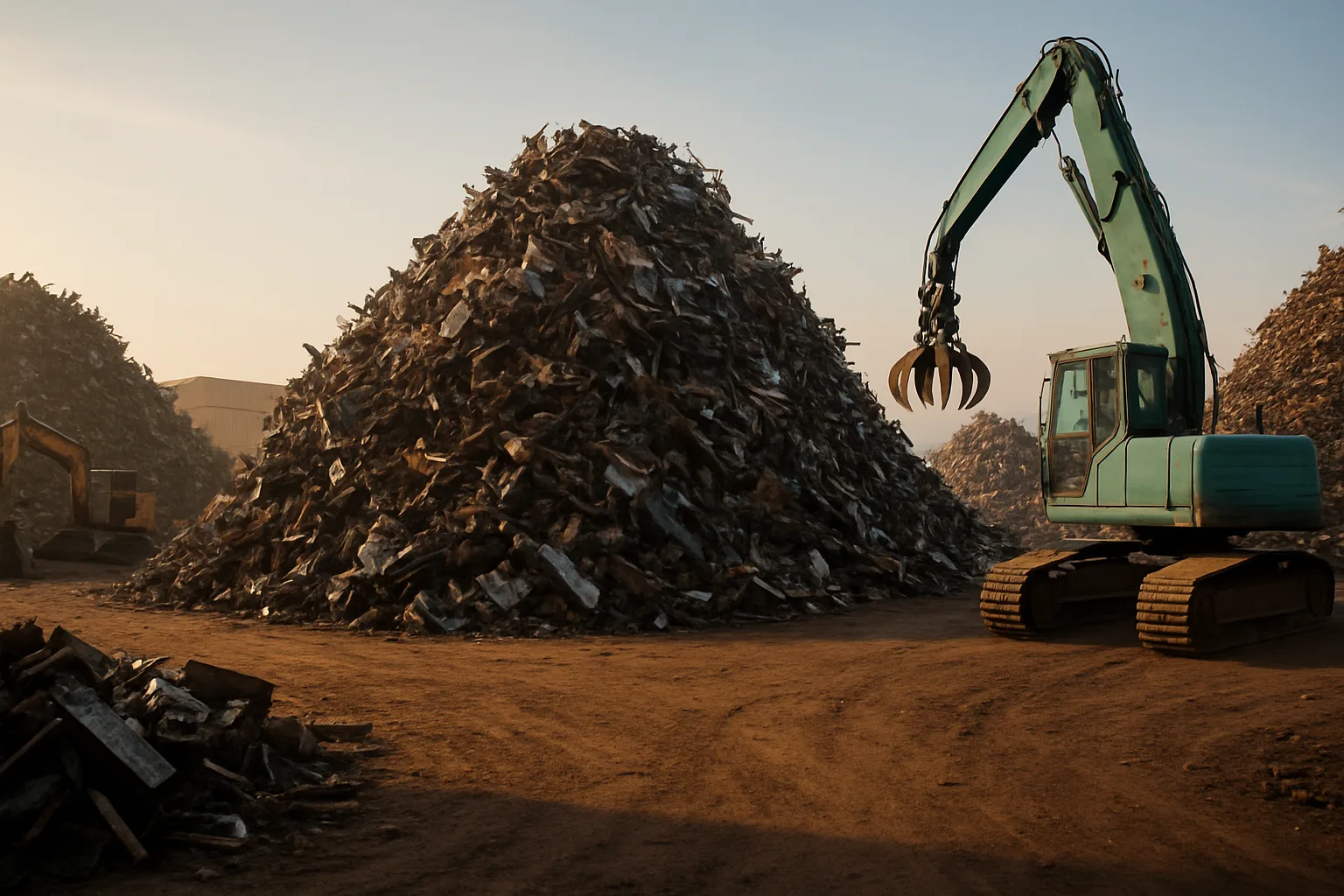
Most people drop off a load of scrap and never think twice about where it goes. You hand over your copper, your catalytic converters, your old radiators — and that's it. But understanding what happens next actually helps you negotiate better, pick the right yard, and time your sales smarter. If you're chasing the best scrap yard prices Kansas City has to offer, knowing the downstream process is a real edge.
This week's roundup breaks it all down — from the moment your metal leaves the scale to the time it ships overseas or heads to a domestic mill. We'll also cover how platforms like get competitive bids for your scrap metal are changing what sellers expect from the process.
From Your Truck to the Yard: The First Stop in the Metal Supply Chain
When you pull up to a scrap yard in Kansas City, the yard operator isn't your end buyer. They're a middleman — and a crucial one. Their job is to aggregate material, sort it, process it, and move it to mills, smelters, and foundries at volume. Your single load of non-ferrous copper or a pallet of catalytic converters becomes part of a much larger consolidated shipment.
Here's the basic flow after you leave the scale:
- Sorting and grading: Your material gets categorized by grade. Mixed copper becomes #1, #2, or bare bright. Steel gets sorted by type — HMS (heavy melting steel), shredded, or structural. Grades matter because mills pay differently for each.
- Processing: Shredders, balers, and shears reduce volume. A baled bundle of steel takes up far less space on a flatbed or railcar than loose pipe. This matters for freight economics.
- Staging for shipment: Processed material sits in designated piles or containers until there's enough volume to move it cost-effectively. Scrap doesn't ship in one-ton increments — it ships in truckloads, railcars, or containers.
None of this is visible to you as the seller. But it's the reason yards pay you less than spot price — they need margin to cover labor, processing equipment, freight, and their own risk on price movement before the material ships.
Where Does Scrap Metal Actually Go? Mills, Smelters, and Export Markets
Once processed, scrap metal in Missouri and across the Midwest moves in a few directions depending on the metal type and current market conditions.
Ferrous scrap (steel, iron) predominantly heads to electric arc furnace (EAF) mills. These mills use scrap as their primary feedstock instead of virgin ore. Major steel-producing regions throughout the U.S. pull heavily from Midwestern supply chains — Kansas City sits in good geographic position for both domestic mills and rail corridors heading east and west.
Non-ferrous metals — copper, aluminum, brass, stainless — take a different path:
- Copper scrap moves to copper rod mills or brass mills.
- Aluminum goes to secondary smelters that produce ingot or billet for manufacturers.
- Catalytic converters are a specialized stream — they go to PGM (platinum group metal) processors that recover platinum, palladium, and rhodium. These are high-value, tightly tracked materials. If you're looking to sell catalytic converters online, the platform and buyer you choose matters enormously — assay values vary and documentation is critical.
Export plays a massive role too. A significant portion of U.S. scrap — particularly non-ferrous — moves through ports to buyers in Asia and Europe. Exchange rates, overseas demand, and shipping costs all influence what your local yard offers you today. That's why scrap yard prices in Kansas City can shift week to week without any obvious local reason — the cause is often a demand signal from a mill or smelter on the other side of the world.
Why Scrap Yard Prices Kansas City Fluctuate — And What You Can Do About It
You've probably noticed that scrap yard prices Kansas City yards post can change without warning. That's not arbitrary. Yards are managing their own exposure to price risk between the time they buy from you and the time they sell to a mill. They buy low enough to protect that margin. In a falling market, they drop buy prices fast. In a rising market, they sometimes lag on the way up.
This is exactly the gap that competition closes. If you're calling one yard and taking their number, you have zero price discovery. You don't know if their posted price is fair or if they're padding their margin because they know you don't have another offer on the table.
A few things you can do right now:
- Check multiple yards before you commit. In the Kansas City metro, there are multiple buyers for most grades. Don't give the first yard your load by default.
- Document your material properly. Good photos, accurate weight estimates, and grade separation give buyers more confidence — and that confidence shows up in better offers.
- Use platforms that create competition. SMASH connects sellers with vetted buyers who compete for loads. More buyers means better price discovery. No subscription fees — SMASH only wins when you do.
- Time your sales. Scrap prices move in cycles. Selling into strength beats selling in a soft market if you have the storage capacity to wait.
If you're a recycler, yard operator, or fleet business in Missouri handling volume, the difference between one buyer and four buyers bidding on your load can be meaningful — especially on non-ferrous and cat converters where margins are tighter and grades vary more.
Catalytic Converters: The Most Documented Load in Scrap Metal Recycling
Catalytic converters deserve their own section because they're the most regulated and most scrutinized material in metal recycling Missouri — and across the country. Theft has driven legislation at the state level, and most states now require documentation when you sell cats to a scrap yard.
In Missouri, sellers of catalytic converters typically need to provide:
- Valid government-issued photo ID
- Vehicle title or proof of ownership when selling removed cats
- Transaction records that yards are required to maintain
Once purchased, catalytic converters don't stay at the local yard. They're consolidated and shipped to specialized processors — companies that run assays to determine the actual PGM content. The value of a cat is almost entirely in its platinum, palladium, and rhodium content, which varies by vehicle make, model, and year. This is why VIN lookup and serial tracking tools matter when you want to know what your converters are actually worth before you sell.
If you want to sell catalytic converters online with real transparency, look for buyers who offer documented pricing based on assay results or verified grade databases — not just a flat-rate guess. Platforms that provide serial tracking and photo documentation protect you and the buyer.
Finding Scrap Yards Open Today Near You in Kansas City
One of the most common searches people run before heading out is finding scrap yards open today near my location — because hours vary more than you'd expect. Some yards are weekday-only. Others run Saturday hours but close early. A few in the Kansas City area operate Monday through Saturday with consistent hours, but it's always worth confirming before you load up your truck.
When you find a scrap yard near you, look for these basics before you commit to a trip:
- Current hours — especially if you're going on a weekend or around a holiday.
- Material they accept — not every yard takes every grade. Some specialize in ferrous, others in non-ferrous, some in auto parts.
- Posted prices or willingness to quote — a yard that won't give you a ballpark before you arrive is a yard that may not be competitive.
- Licensing and compliance — for regulated materials like cats, make sure the yard operates legally and keeps proper records.
For Kansas City scrap metal services, the market is active enough that you have real choices. Use them. Don't default to the yard closest to you if their prices are consistently below market.
You can also locate the closest scrap yard with filters for material type and current operating status — which saves a wasted trip. And if you want to go deeper on how to maximize your returns, read scrap yard guides and tips that cover everything from sorting non-ferrous to understanding BOLs and packing lists.
The Bottom Line: Your Scrap Has a Long Journey After the Scale
That load of copper wire, those stainless steel offcuts, those cats from your fleet vehicles — they don't stop at the local yard. They move through a chain of processors, consolidators, mills, and sometimes international buyers before they become new raw material. Understanding that chain doesn't just make you more informed. It makes you a better seller.
Yards price based on what they expect to get downstream. If you know what your material is worth in that downstream market, you can push back on lowball offers and make smarter decisions about when and where to sell. That's true whether you're a one-truck operation in Missouri or running a recycling yard moving truckloads a week.
Competition is the fastest way to close the information gap. More buyers bidding on your load tells you more about true market value than any posted price on a yard's whiteboard. If you haven't explored what auction-format pricing looks like for your loads, it's worth a look — especially for high-value, variable-grade materials like non-ferrous and catalytic converters.
Ready to stop guessing and start getting real bids? Find the best scrap yard near you and explore your options at scrap-yard-near-me.com — and for volume loads where competitive pricing matters, see what SMASH can do for your bottom line.
Frequently Asked Questions
Q: How are scrap yard prices Kansas City set — and why do they change so often?
Scrap yard prices in Kansas City are tied to commodity markets, domestic mill demand, and export pricing. When overseas demand shifts or a major mill changes its buying position, local yards adjust their buy prices quickly to protect their own margins. Checking prices at multiple yards before selling is the most reliable way to know if a price is fair.
Q: What do I need to bring when I sell catalytic converters at a Kansas City yard?
Most Missouri yards require a valid photo ID and documentation proving you own the converters — typically a vehicle title or bill of sale. Regulations around catalytic converter sales have tightened significantly, and compliant yards will keep transaction records. If a yard doesn't ask for documentation, that's a red flag.
Q: How do I find scrap yards open today near my location in Kansas City?
Hours vary by yard and day, so confirming before you load up is always smart. Use scrap-yard-near-me.com to find current operating hours and material acceptance info for yards in your area. Calling ahead for large or specialty loads is still the fastest way to avoid surprises.
Q: Is it worth using an online platform to sell scrap metal instead of going directly to a yard?
For volume loads and high-value materials, yes — platforms that create buyer competition tend to produce better price discovery than a single-yard quote. SMASH connects sellers with vetted buyers who bid against each other, with no subscription fees. It works best for recyclers, fleet operators, and yard operators moving meaningful volume.
Q: What's the difference between selling to a local junkyard near me in Kansas City versus a metal recycler?
A junkyard typically buys whole vehicles or large auto parts and may resell usable components before scrapping the rest. A metal recycler or scrap yard focuses on material by grade and weight — copper, steel, aluminum, cats. For maximum return, knowing which type of facility best matches your material type saves time and usually gets you a better price.
Stay current on scrap metal market trends and recycling industry news — follow SMASH on LinkedIn for weekly insights, price movement commentary, and updates from across the North American scrap market.