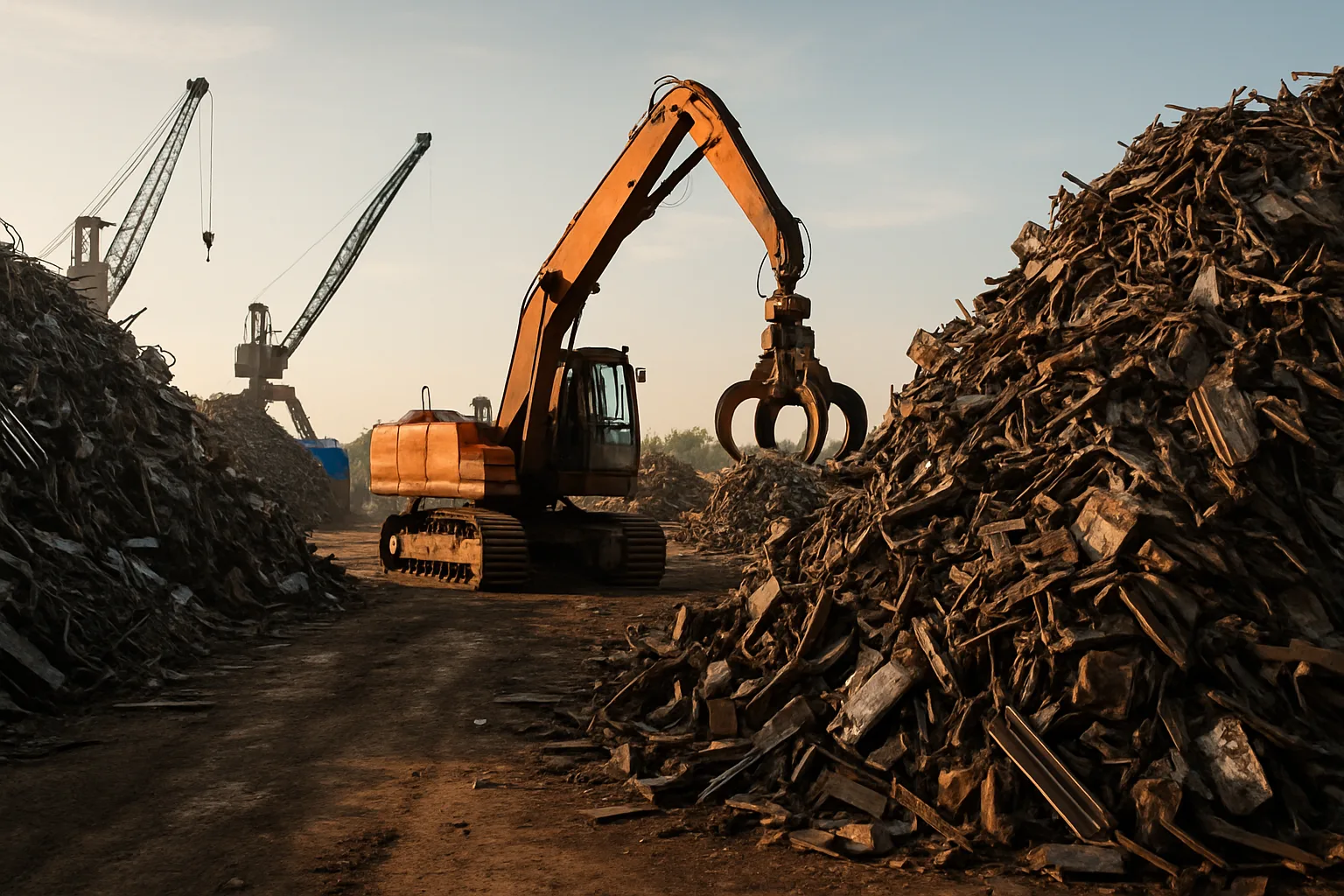
Most people think scrap yards are where old metal goes to die. They're wrong. Scrap yards are where old metal gets a second life — feeding back into manufacturing, construction, and industry at a fraction of the environmental cost of virgin material. If you're searching for metal recycling near me Akron, you're already participating in one of the most efficient industrial loops on the planet. You just might not realize how significant your role actually is.
The circular economy isn't a buzzword from a sustainability report. It's the operational reality of how modern metal supply chains function. Recycled steel uses roughly 74% less energy than producing new steel from iron ore. Recycled aluminum cuts energy consumption by close to 95% compared to primary smelting. Those numbers matter — but so does the local infrastructure that makes them possible. That infrastructure starts at your nearest scrap yard.
---What the Circular Economy Actually Means for Scrap Metal Yards
Strip away the corporate language and the circular economy comes down to one principle: nothing with value should end up in a landfill. For metal, that's especially true. Unlike organic materials, metals don't degrade through recycling. Steel, copper, aluminum, brass — they can be melted, refined, and reformed indefinitely without losing structural integrity. That's what makes a scrap yard so central to this system.
Every load that rolls through a yard gate — whether it's a bundle of #1 copper wire, a crushed vehicle, or a pallet of spent catalytic converters — enters a chain that connects your operation directly to foundries, mills, and manufacturers. The yard sorts, grades, and aggregates material. Mills and smelters buy that material to produce new metal products. Those products become vehicles, appliances, construction materials, and industrial equipment. Those items eventually come back to the yard. The loop closes.
What breaks this loop isn't a lack of recyclable metal. There's no shortage of that. What breaks it is friction — bad pricing information, single-buyer relationships, no documentation, no competitive pressure. That's the real problem the industry has been dealing with for decades.
---Why Akron Scrap Yards Matter to Ohio's Recycling Infrastructure
Akron sits at a geographic and industrial crossroads in Ohio that makes it disproportionately important to the state's recycling capacity. Positioned between Cleveland and Canton, with strong ties to rubber, polymer, and light manufacturing sectors that have evolved over generations, the region generates a consistent and diverse mix of ferrous and non-ferrous scrap. Auto parts, industrial equipment, demolition material, HVAC components — the variety is substantial.
Ohio as a whole is one of the top scrap-generating states in the Midwest. The density of manufacturing legacy here means scrap yards aren't just handling residential drop-offs. They're processing commercial accounts, contractor loads, and industrial volumes that require real infrastructure — floor scales, shredders, baling equipment, and buyers who can move bulk material consistently.
For anyone looking to Akron scrap metal services, understanding this regional context helps explain why pricing and buyer availability can vary so significantly. A well-connected yard with access to multiple buyers can offer better price discovery than one operating on a handshake deal with a single mill contact. That difference compounds over time — and over tonnage.
If you want to find a scrap yard near you in the Akron area, the infrastructure is there. The question is whether you're using it to your full advantage.
---The Old Way of Selling Scrap Is Costing You Money
Here's how most scrap transactions still happen: a yard operator calls one buyer, gets one number, and either takes it or sits on the load. There's no benchmark. There's no competition. There's no way to know if that price reflects the actual market or just what that one buyer felt like paying on a Tuesday afternoon.
That system works fine for the buyer. It doesn't work well for the seller. And it certainly doesn't serve the broader goal of an efficient circular economy, because mispriced material creates friction — yards sit on loads longer, buyers underinvest in relationships, and material flow slows down.
The alternative is competitive price discovery. When multiple vetted buyers see the same load at the same time and bid against each other, the market reveals what material is actually worth. That's not a radical idea — it's how every other commodity market operates. It just hasn't been standard practice in scrap. Until now.
Platforms like compare scrap metal bids from verified buyers through SMASH make competitive bidding accessible to yards of any size. You don't need a fleet of account managers or decades of broker relationships. You document your load, list it, and let the market work. More buyers means better price discovery. That's the core claim — and it's grounded in basic market mechanics, not hype.
---How Proper Documentation Strengthens Your Position as a Seller
One of the most underrated factors in getting strong bids on scrap is documentation. Buyers price in uncertainty. If they can't verify what they're buying — grade, weight, condition, photo evidence — they discount the offer to protect themselves. That discount comes out of your margin, not theirs.
This is where the operational side of platforms like SMASH makes a measurable difference. Features like photo documentation, serial tracking for cores and catalytic converters, VIN lookup for auto-related material, and clean packing lists give remote buyers the confidence to bid competitively. They're not pricing in a mystery load. They're pricing what they can actually see.
For yards handling regulated or high-value material — cats, cores, non-ferrous exotics — this documentation infrastructure isn't just useful for pricing. It's increasingly expected for compliance. Buyer requirements around BOLs and serial numbers have tightened across North America. Yards that build documentation habits now are ahead of yards that scramble to adapt later.
Want to sharpen your approach before your next load? Read scrap yard guides and tips to understand what buyers actually look for when evaluating a listing.
---What a Real Circular Economy Transaction Looks Like
Let's walk through what a well-executed scrap transaction looks like when the circular economy is actually functioning the way it should.
A commercial demolition crew in the Akron area pulls copper piping, aluminum conduit, and steel structural components from a building teardown. They bring it to a local yard. The yard weighs, photographs, and grades the material. Instead of calling one buyer, the yard lists the load on SMASH. Vetted buyers across the region — and beyond — see the listing, review the photos and specs, and submit bids within the auction window.
The yard accepts the strongest bid. Auto-invoicing handles the paperwork. The material ships directly to a processor or mill. That mill refines the metal and sells it back to manufacturers. Those manufacturers produce new building materials, wire, or structural components. Some of that ends up in construction projects in Ohio. Some of it may eventually come back through another demolition.
That's the loop. It's not theoretical. It happens every day when the transaction infrastructure is built to support it — not to bottleneck it.
- Faster material flow — documented loads move quicker through the supply chain
- Better pricing — competition reveals the real market, not a single buyer's daily mood
- Lower friction — auto-invoicing and paperwork tools reduce administrative drag
- Compliance confidence — serial tracking and photo docs satisfy buyer requirements
- No subscription fees — SMASH only wins when the seller wins
How to Start Selling Smarter — Whether You're New or Experienced
If you're new to scrap metal recycling, the process doesn't have to be intimidating. The core steps are consistent whether you're dropping off a trunk full of aluminum cans or moving a commercial load of industrial copper.
- Know what you have. Sort your material by type before you arrive at a yard. Mixed loads get lower grades. Clean, sorted material commands better pricing.
- Document it. Even basic photos and an accurate weight estimate help. Yards and buyers both respond better to sellers who come prepared.
- Get multiple opinions. Don't accept the first number you hear. Prices vary between buyers and can shift day to day based on market conditions.
- Use the right platforms. For larger loads, platforms like SMASH let you sell scrap metal online to a vetted buyer pool without cold-calling around.
- Understand the market cycle. Scrap prices fluctuate with global commodity trends, regional demand, and seasonal patterns. Timing matters on larger volumes.
Whether you're a first-timer or running a commercial account, the fundamentals are the same. More information, more competition, better outcomes. Locate the closest scrap yard and start building that knowledge from the ground up.
The scrap yards in Akron and across Ohio are part of an infrastructure that matters — economically and environmentally. How you engage with that infrastructure determines how much value you capture from the metal you bring in. The tools are there. Use them.
---Frequently Asked Questions
Q: How do I find a reliable metal recycling facility near me in Akron?
Start by searching for metal recycling near me Akron to pull up licensed, operating facilities in your area. Look for yards with floor scales, clear posted pricing or willingness to quote, and documented intake processes. Yards that ask for ID and document material are generally operating to a higher standard — and that protects you as a seller.
Q: What metals can I bring to a scrap yard in the Akron area?
Most yards in the Akron area accept a wide range: ferrous metals like steel and iron, non-ferrous metals like copper, aluminum, brass, and stainless steel, as well as auto parts, catalytic converters, and cores. Call ahead for specific grades or unusual materials — some yards specialize and may offer better rates on certain commodities.
Q: Can I sell scrap metal online instead of driving to a yard?
Yes — for larger loads, platforms like SMASH let you list material and receive competitive bids from vetted buyers without making cold calls or committing to a single buyer upfront. It's a practical option for yards and commercial sellers moving significant volume and wanting real price discovery.
Q: How often do scrap metal prices change in Ohio?
Scrap metal prices in Ohio can shift daily, driven by global commodity markets, regional mill demand, and currency movements. Copper, aluminum, and other non-ferrous metals tend to be more volatile than steel. Always check current rates before committing to a sale — don't assume last week's price is still accurate today.
Q: What is the circular economy and why does it matter for scrap metal recycling?
The circular economy is a system where materials are kept in use as long as possible through reuse, repair, and recycling — instead of being discarded after one use. For scrap metal, this means recycled material re-enters manufacturing instead of going to landfill. It reduces energy consumption, cuts carbon emissions, and keeps valuable commodities in circulation. Every load you bring to a yard is a direct contribution to that system.
---The scrap industry in Akron and across Ohio plays a bigger role in the broader economy than most people realize. If you're ready to put that role to work for you, start by finding the right yard and the right platform. Find the best scrap yard near you — check locations at scrap-yard-near-me.com and take the guesswork out of your next transaction.
Stay ahead of scrap metal market trends and industry insights — follow SMASH on LinkedIn for updates that matter to recyclers and buyers across North America.