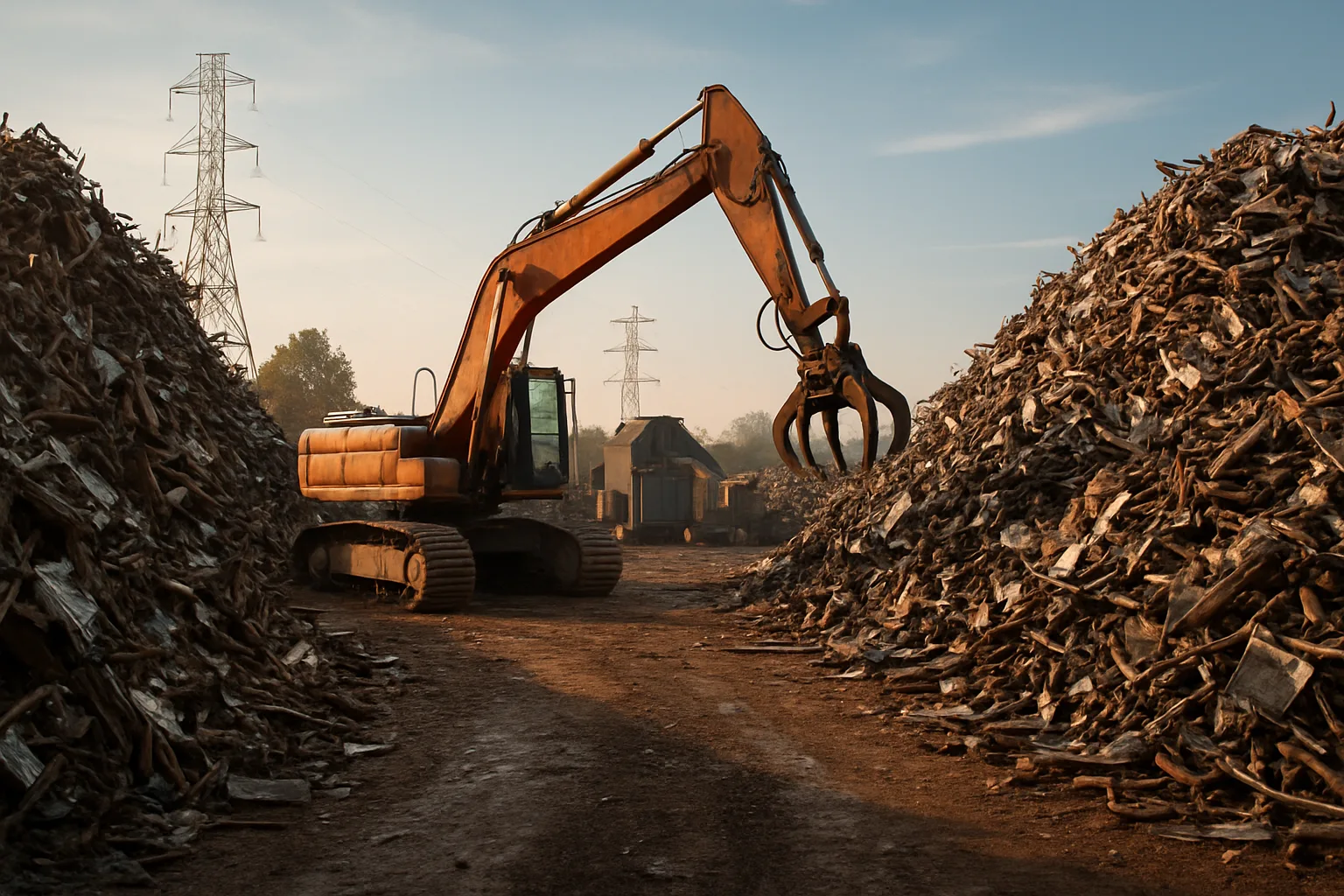
Most people use the words junkyard, salvage yard, and scrap yard like they mean the same thing. They don't. If you're trying to sell a transmission, strip a door panel, or unload a pile of copper pipe, going to the wrong type of facility can cost you time, money, and a wasted trip. If you're looking for a scrap metal buyer near me Pittsburgh, knowing the difference matters more than you think.
Pittsburgh has a long industrial history. Pennsylvania's steel legacy means there are more metal-related facilities in this region than most parts of the country. But not every yard does the same thing — and not every yard wants what you're hauling.
What Is a Junkyard?
A junkyard is a general catch-all term. Most people picture rows of crushed cars stacked on top of each other, rusting in an open lot. That's not entirely wrong. A junkyard typically accepts all kinds of discarded material — vehicles, appliances, furniture, general debris. The emphasis is usually on disposal, not resale or recycling.
Many junkyards are licensed waste facilities. They charge you to drop things off. They're not in the business of paying you. If someone tells you to "go to the junkyard," they often just mean a place that takes unwanted stuff. The value exchange is usually one-sided.
Some junkyards overlap with salvage yards or scrap yards in practice, which is why the terms get muddled. But if a place's primary service is taking waste off your hands for a fee, it's operating as a junkyard — regardless of what sign is on the gate.
What Is an Auto Salvage Yard? (And How Is It Different?)
An auto salvage yard — sometimes called a pull-it-yourself yard or wrecker — focuses specifically on end-of-life vehicles. The business model is built around usable parts, not bulk metal. Cars come in, they get inventoried, and buyers come to pull individual components: engines, transmissions, axles, mirrors, seats, electronics.
Salvage yards pay you for your vehicle. The price they offer is based on what usable parts remain and the rough scrap value of the remaining shell. A 2019 pickup with a solid engine is worth more at a salvage yard than at a scrap yard. A completely stripped shell with no salvageable parts is probably worth more by weight at a scrap yard.
Key things to know about salvage yards:
- They focus on parts resale, not bulk metal processing
- They usually want a title or proof of ownership for vehicles
- Prices vary widely depending on the vehicle make, model, year, and condition
- Some are "pull-it-yourself" (you bring tools, you pull the part), others are full-service
- They typically won't take loose non-ferrous metal, wire, or industrial scrap
In the Pittsburgh area and across Pennsylvania, auto salvage yards are regulated under state environmental rules. Fluids must be drained properly before crushing. Catalytic converters require documentation at most legitimate facilities. Know what you're walking in with before you go.
What Is a Scrap Yard — And What Does One Actually Buy?
A scrap yard is a metal recycling facility. That's the clearest way to put it. They buy ferrous metals (iron, steel) and non-ferrous metals (copper, aluminum, brass, stainless, lead) and sell them to mills and processors. They operate on commodity prices, not parts values.
Scrap yards are where you go when you have:
- Copper wire, pipe, or tubing
- Aluminum cans, extrusions, sheet, or castings
- Steel beams, rebar, or sheet metal
- Brass fittings or valves
- Cast iron radiators or engine blocks
- Stainless steel from commercial kitchen equipment or industrial piping
- Car bodies after usable parts have been stripped
- Catalytic converters (cats) — though documentation requirements are strict in 2026
Scrap metal prices fluctuate constantly based on global commodity markets. Copper might be up one week and down the next. Aluminum cans trade at completely different rates than aluminum extrusions. A good scrap yard gives you clear pricing on what they're buying and what grade they're paying for. A bad one talks around it.
If you want to find a scrap yard near you that buys the specific material you're hauling, check the facility's accepted materials list before you load your truck.
Pittsburgh Scrap Yard Prices and What Drives Them
Scrap yard prices in Pittsburgh follow the same commodity markets as everywhere else in the country. The local market adds its own wrinkle — freight costs, regional demand from nearby mills and foundries, and competition between buyers all influence what you actually get paid at the gate.
The difference between a well-informed seller and a first-time seller can be significant. If you don't know your grade, you'll get paid for the lowest grade. If you don't know that copper breakage (mixed copper with solder and fittings) pays less than bare bright, you'll leave money on the table.
A few things that affect scrap yard prices in Pittsburgh specifically:
- Material grade and contamination — clean copper pays more than mixed copper; sorted aluminum pays more than unsorted
- Load size — larger volumes often get better per-pound pricing; small loads may be handled differently
- Current commodity index — national prices move daily; ask what index the yard is using
- Buyer competition — yards with multiple buyers competing for material (through platforms like SMASH) tend to reflect more accurate market pricing
Disclaimer: Metal prices change daily. Always confirm current rates directly with your local yard or through a platform like SMASH before hauling a load.
For Pittsburgh scrap metal services, knowing exactly which type of facility you're dealing with — and what they're actually paying — is the first step to getting a fair price.
Which Type of Facility Do You Actually Need?
Here's the fast breakdown. If you're not sure where to go, match your material to the right facility type.
Go to a salvage yard if:
- You have a vehicle with working or sellable parts still on it
- You want to sell a specific used part (engine, axle, body panel)
- You're looking to buy used auto parts at a lower price
Go to a scrap yard if:
- You have bulk metal — copper, aluminum, steel, brass, or iron
- You have a stripped vehicle shell with no salvageable parts
- You run a business generating industrial or construction scrap
- You have catalytic converters with proper documentation
Consider a junkyard only if:
- You need to dispose of mixed debris or material that doesn't fit the above categories
- You're not expecting to be paid — you're paying for disposal
For businesses in Pittsburgh and across Pennsylvania generating regular scrap volume — demolition crews, HVAC contractors, electrical contractors, machine shops — the right answer is usually a scrap yard with a consistent relationship or a platform that gets your loads in front of multiple buyers at once.
That's exactly where smashscrap.com solves a real problem. Instead of calling one buyer and guessing whether you're getting a fair price, SMASH puts your load in front of vetted buyers who compete for it. More buyers means better price discovery. No subscription fees. You only pay when you sell.
How SMASH Helps Sellers Stop Guessing at Prices
The old way of selling scrap is a single phone call to a single buyer. You take whatever they offer or you don't sell. There's no way to know if that price is fair without calling six more yards and doing the math yourself. Most sellers don't have time for that.
SMASH is built for sellers who want real market competition without the runaround. You list your load — with photo documentation, serial tracking for cores and cats, and a clean inventory — and vetted buyers bid. The process is transparent. The paperwork is handled. Auto-invoicing means you're not chasing paper after the sale closes.
Whether you're a Pittsburgh-area recycler with a regular stream of non-ferrous material or a contractor clearing a demo site in Pennsylvania and hauling mixed metal, SMASH gives you a way to read scrap yard guides and tips and sell with confidence instead of guesswork.
If you're ready to locate the closest scrap yard or explore auction-based selling, the tools are there. You just have to use them.
Frequently Asked Questions
Q: What's the difference between a junkyard and a scrap yard near me in Pittsburgh?
A junkyard typically accepts waste for disposal and may charge a fee. A scrap yard buys metal by weight and pays you based on commodity prices. In Pittsburgh, most facilities that call themselves scrap yards are metal recycling operations — they want ferrous and non-ferrous metal, and they pay you for it.
Q: Do Pittsburgh scrap yards take cars without a title?
Most legitimate scrap yards and auto salvage yards in Pennsylvania require a title or proof of ownership before accepting a vehicle. State regulations are strict on this, especially for catalytic converters and vehicle identification. Always call ahead and confirm what documents you need to bring.
Q: How do I find the best scrap metal buyer near me in Pittsburgh?
Start by identifying what metal you have and in what volume. Then compare pricing at multiple yards — or better yet, use a platform like SMASH that puts your load in front of multiple vetted buyers who compete for it. Getting more than one offer is the fastest way to understand what the market actually looks like.
Q: Do scrap yard prices in Pittsburgh change often?
Yes. Scrap yard prices fluctuate based on global commodity markets, sometimes changing week to week or even daily. Copper, aluminum, and steel all move independently. Always confirm current rates before hauling a load, and ask the yard what pricing index they're using so you can compare apples to apples.
Q: Can businesses use SMASH to sell scrap metal in bulk?
Yes. SMASH is built for B2B sellers — recycling yards, contractors, demolition crews, and industrial operations that generate regular scrap volume. The platform handles inventory documentation, buyer vetting, auto-invoicing, and auction logistics. It's designed for sellers who move loads regularly and want consistent price discovery without the phone-call guessing game.
Whether you're clearing a job site in Pittsburgh, running a recycling operation in Pennsylvania, or just trying to figure out where to take a pile of copper and brass — the right facility and the right process make a real difference. Find the best scrap yard near you and check locations at scrap-yard-near-me.com.
Follow SMASH on LinkedIn for scrap metal market updates, industry news, and insights that keep you ahead of the market — not behind it.