What Actually Happens When You Pull Up to the Scale
Most people drive into a scrap yard expecting a fair deal. What they get instead is a number on a ticket they don't fully understand. If you've ever walked away from an auto recycling yard in Syracuse wondering whether you got a fair price, you're not alone — and the problem isn't the scale. It's that nobody explains the process.
This guide breaks down exactly how scrap yards weigh and price your metals, what affects the number you see on that ticket, and how to make sure you're not leaving money on the table. Whether you're dropping off a load of non-ferrous from a cleanout, scrapping a parts car, or selling catalytic converters, the math matters.
How the Weighing Process Works at a Scrap Yard
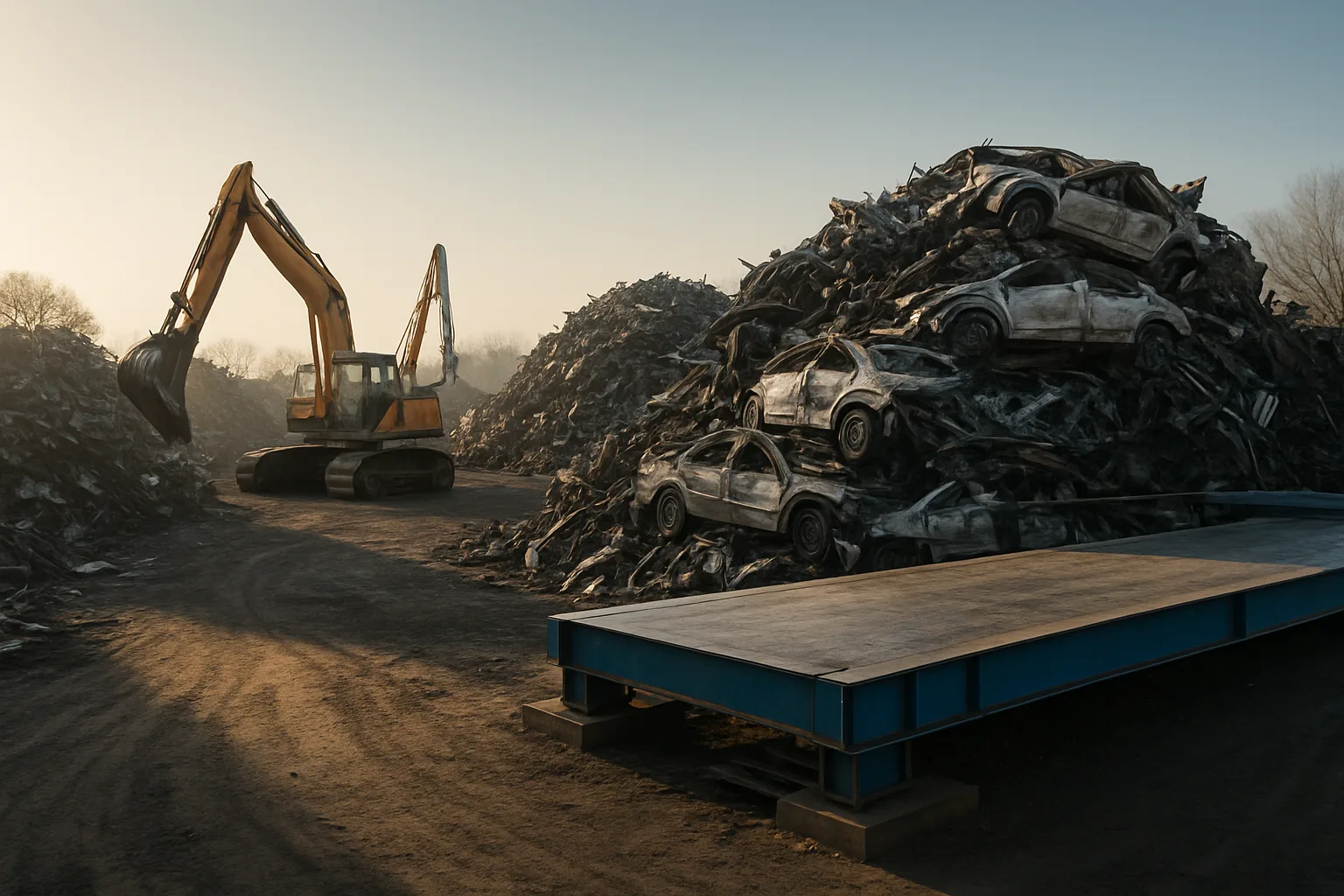
Most commercial scrap yards use a drive-on truck scale — also called a pit scale or platform scale. You pull your vehicle onto it loaded, get a gross weight, then unload your material and pull back across for the tare weight. The difference is your net scrap weight. Simple in theory. But the details change everything.
Here's where sellers get tripped up:
- Moisture and contamination: Wet cardboard, oil-soaked insulation, or loose dirt adds weight — but most yards will dock you for contaminated loads. A wet load of shredded steel isn't the same commodity as clean HMS.
- Sorting at the gate: If your load is mixed, the yard may sort it themselves and price each grade separately. You won't always see that breakdown unless you ask.
- Ticket accuracy: Always get a copy of your weight ticket. Scale operators are human. Errors happen.
- Vehicle weight variation: Fuel level, passengers, and how a vehicle sits on the scale can all affect tare readings. This matters more on smaller loads.
At a busy scrap yard in Syracuse, you might have five trucks in line ahead of you. That pressure to move fast is real — but don't let it rush you past a ticket you don't understand. Ask questions before you leave the scale house.
How Metal Grades Affect Your Price Per Pound
Not all steel is the same. Not all copper is the same. Scrap pricing is built around commodity grades, and what grade the yard assigns your material determines what you get paid. This is where knowing your load pays off — literally.
Common grades and what they mean in practice:
- HMS 1 & 2 (Heavy Melting Steel): Structural steel, thick plate, heavy beam. HMS 1 is cleaner and priced higher than HMS 2, which allows more mixed and lighter gauge material.
- Shredder scrap: Light iron, thin-gauge steel, auto body panels. Lower price per pound than HMS because mills need to process it more heavily.
- Copper grades: Bare bright copper commands top dollar. #1 copper (clean tubing, no fittings) sits just below. #2 copper allows for some solder and paint. Each step down drops your price per pound.
- Aluminum grades: Cast aluminum, extruded aluminum, and mixed aluminum are all priced differently. Clean extruded pays better than cast. Painted or coated aluminum pays less.
- Catalytic converters: These aren't priced by grade the same way — they're priced by the platinum group metals (PGMs) inside. We'll cover that separately below.
If you want to find a scrap yard near you that actually explains how they grade your load, ask before you unload. A yard with nothing to hide will walk you through their grading process. One that won't is worth noting.
The Real Story Behind Catalytic Converter Pricing
Catalytic converters are the most misunderstood commodity at any yard, and frankly, the most prone to pricing games. If you're trying to sell catalytic converters online or at a local yard, you need to know what drives the number.
Cats are priced based on the platinum group metals (PGMs) inside — platinum, palladium, and rhodium. The ratio and volume of PGMs depends on the specific converter, which is why identical-looking units from different vehicles can have wildly different values. Yards use assay data, serial databases, or third-party pricing systems to assess cats. Some use VIN lookup tools to identify the vehicle and cross-reference the OEM converter spec.
That's exactly why platforms like SMASH make it easier to find the best price for your scrap — especially on high-value items like cats. Instead of one buyer making a take-it-or-leave-it offer, competitive bidding lets the market tell you what your material is actually worth. More buyers means better price discovery. That's not a slogan. That's how markets work.
A few things to know before selling cats:
- Serial numbers and manufacturer markings matter. Don't clean them off — it reduces buyer confidence.
- Photos of the full unit, both ends, and any visible markings help buyers price accurately.
- Foil-type and bead-type converters have different PGM loadings. Know what you have.
- State and local regulations around catalytic converter sales have tightened significantly across the U.S. in 2026. Expect to provide documentation at most licensed yards.
What Sets the Price You See on the Board — and Why It Changes Daily
The number on the scrap yard's price board is not arbitrary. It's linked to commodity futures markets, mill buying programs, export demand, and the yard's own operational costs. Prices for steel track closely with the CME Group's busheling futures. Copper follows COMEX. Aluminum ties to LME pricing. But by the time those benchmarks filter down to the retail scrap buyer, the yard has already taken their margin.
In metal recycling across New York and throughout the Northeast, seasonal factors also play a role. Construction activity picks up in warmer months, increasing demand for certain grades. Auto recycling volumes spike in late winter and spring. And when global demand for steel shifts — as it has repeatedly in the mid-2020s — your local yard's board price moves with it.
This is why calling ahead matters. A yard that paid $0.14/lb for shredder steel on Monday might be at $0.12/lb by Thursday. Prices for non-ferrous move even faster. If you've got a significant load to sell, timing it well can meaningfully change what you receive. The best scrap yards — whether you're looking at the best scrap yard in Syracuse or comparing options in Phoenix — will give you a real quote over the phone before you load the truck.
For sellers who want to move beyond the board price and actually understand the market they're selling into, reading scrap yard guides and resources is the fastest way to build that knowledge. Information is margin.
How to Prepare Your Load to Get the Best Price
The single most common mistake sellers make is bringing in a mixed, unsorted load and hoping for the best. Yards will sort it — but you'll pay for that service through a lower price per pound. Sorting your own material before you arrive is one of the few free things you can do to increase your payout.
Here's a practical pre-load checklist:
- Separate ferrous from non-ferrous. Steel and iron go in one pile. Copper, aluminum, brass, and stainless go in separate containers.
- Strip wire where it makes sense. Insulated copper wire pays significantly less than bare bright. Stripping is labor, but on high volumes it's worth it.
- Remove attachments that contaminate grade. Steel fittings on copper pipe, rubber attached to aluminum, plastic components on electric motors — all of these pull your grade down.
- Document high-value items. Cats, copper coils, and cores should be photographed and counted before you arrive. If there's a dispute, you want a record.
- Know the weight before you drive. A household scale works for small loads. For larger loads, some transfer stations or agricultural co-ops have scales available. Showing up with your own weight gives you a data point to compare.
If you're not sure where to start or want to compare what multiple buyers will pay, locating the closest scrap yard is step one. But for loads with real value — non-ferrous, cats, or bulk steel — getting competing offers is almost always worth the extra hour it takes.
Why Competitive Bidding Changes What You Actually Earn
The old way of selling scrap is a phone call to one buyer. They name a price. You either take it or drive to the next yard. That model depends entirely on you not knowing what your material is worth to anyone else.
That's not how high-volume sellers operate, and it shouldn't be how you operate either. Whether you're running an auto recycling business, managing a cleanout job, or sitting on a consistent supply of non-ferrous, the answer is always the same: more buyers means better outcomes. Not guaranteed — but structurally more likely. Competition can help reveal the market. That's the whole point.
SMASH is built on exactly this. Vetted buyers, auction format, documented inventory, and no subscription fees. You only pay when you sell. For sellers in Syracuse, across New York, or anywhere in North America who want a legitimate market for their material instead of a board price and a take-it-or-leave-it offer, it's worth understanding how the platform works.
Disclaimer: Scrap metal prices fluctuate daily based on commodity markets, regional demand, and yard-specific buying programs. Always confirm current rates with your local yard or platform before committing to a sale.
Ready to stop guessing and start selling smarter? Find the best scrap yard near you — check locations and compare your options at scrap-yard-near-me.com.
Stay current on scrap metal markets and industry pricing trends by following SMASH on LinkedIn.
Frequently Asked Questions
Q: How does an auto recycling yard in Syracuse weigh my scrap metal?
Most auto recycling yards in Syracuse use a drive-on platform scale. Your vehicle is weighed loaded, then again after you unload — the difference is your net scrap weight. Always ask for a printed weight ticket before you leave the scale house.
Q: What's the best way to get a fair price at a scrap yard in Syracuse?
Sort your material by metal type before you arrive, call ahead to confirm current prices, and consider getting quotes from more than one buyer for high-value loads. For non-ferrous and catalytic converters specifically, competitive platforms can help you see what the market will actually pay.
Q: Why do catalytic converter prices vary so much between yards?
Cats are priced on the platinum group metals (PGMs) inside — platinum, palladium, and rhodium — which vary by make, model, and converter type. Yards using real assay data and serial tracking will price more accurately than those using flat-rate estimates. Documentation and photos of your units help buyers price with confidence.
Q: How often do scrap metal prices change in New York?
Scrap metal prices can change daily, and sometimes multiple times in a week, depending on commodity market movement. Non-ferrous metals like copper and aluminum tend to move faster than ferrous grades. Always call the yard or check their current board price the day you plan to sell.
Q: Do I need an appointment to sell scrap at a recycling yard near me?
Most scrap yards accept walk-in sellers during business hours, but larger commercial loads — especially auto cores, bulk steel, or high volumes of non-ferrous — may benefit from calling ahead. Some yards prioritize known sellers or require advance BOLs and packing lists for commercial transactions.
```