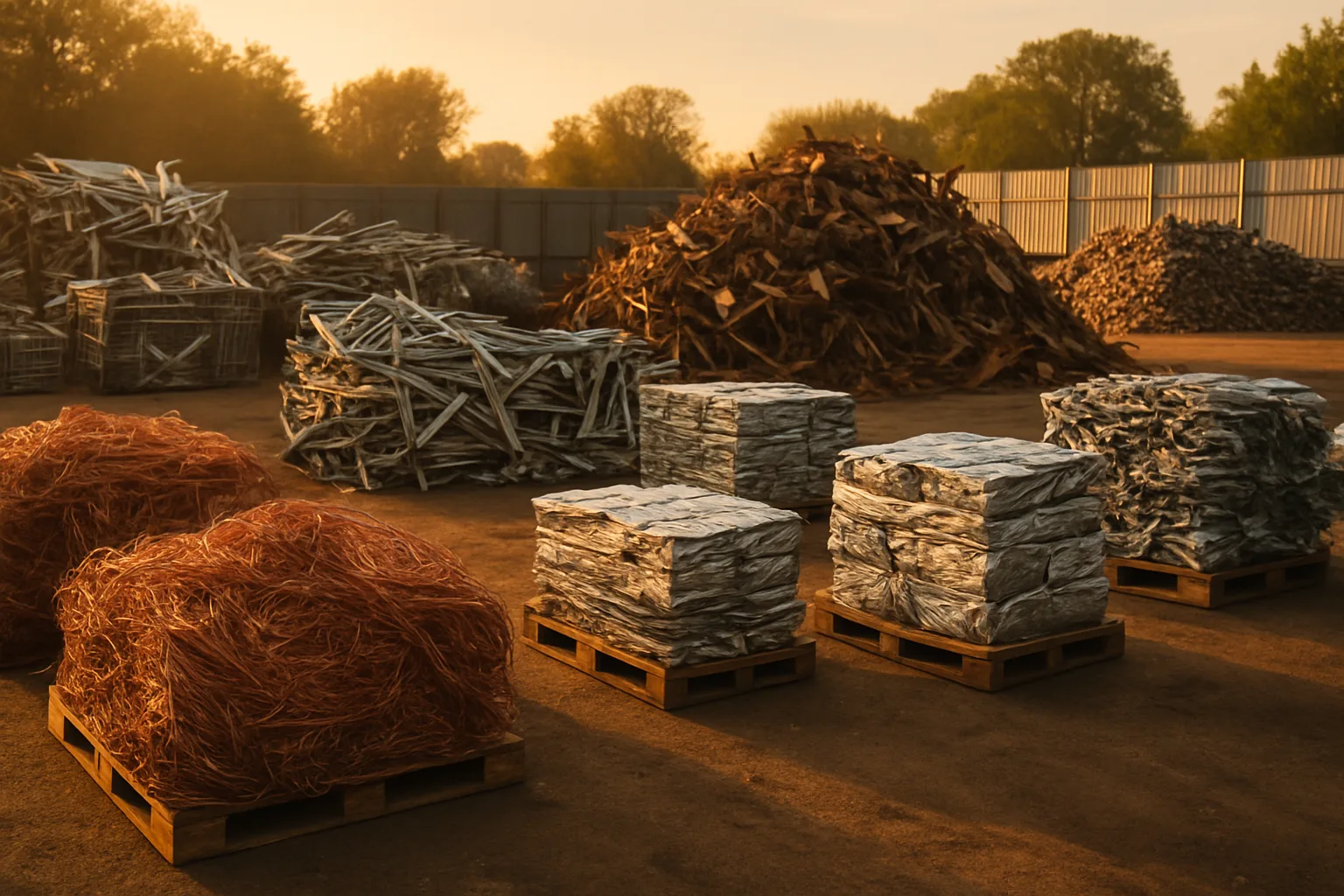
Most people don't think twice about the old copper wiring sitting in their garage or the junked-out truck rusting in the back lot. But that metal doesn't disappear — it feeds a system that recycles millions of tons of material every year across the U.S. If you're searching for a scrap yard near me Dallas, you're already part of something bigger than you might realize.
The circular economy isn't a buzzword. It's the reason scrap yards exist, and it's why the demand for recycled metal keeps climbing in 2026. Let's break down what's actually happening in the market — and how to make sure you're getting a fair deal when you sell.
What the Circular Economy Actually Means for Scrap Metal
The circular economy is simple in concept: materials get used, recovered, and put back into production instead of buried in a landfill. Scrap metal is one of the most successful examples of this model working at scale. Steel, aluminum, copper, and other non-ferrous metals can be melted down and remanufactured with a fraction of the energy it takes to produce virgin material.
Here's why that matters in 2026. Raw material extraction costs have risen significantly over the past several years. Manufacturers — from auto builders to appliance makers to construction contractors — increasingly rely on recycled feedstock to control costs and meet sustainability mandates. That creates consistent demand for scrap, which is good news if you're sitting on material and looking to find a scrap yard near you.
- Recycled steel requires roughly 74% less energy than virgin steel production
- Aluminum recycling uses approximately 95% less energy than smelting new aluminum from bauxite
- Copper is fully recyclable without losing conductivity or quality
- Scrap metal recycling diverts billions of pounds of material from U.S. landfills annually
Every load of mixed metal, every pile of copper pipe, every end-of-life vehicle that gets processed at a scrap yard keeps that cycle moving. The yard isn't just a place to dump unwanted material — it's the first stop in a global supply chain.
Scrap Metal Market Conditions in Texas — August 2026
Texas is one of the largest scrap metal markets in the country. The combination of heavy industrial activity, oil and gas infrastructure, construction, and automotive density means yards in Dallas and across the state handle enormous volume. The Dallas-Fort Worth metro alone generates significant ferrous and non-ferrous scrap from demolition, manufacturing, and end-of-life vehicles.
As of August 2026, the scrap metal market reflects a few clear trends. Ferrous prices remain under pressure from global steel overcapacity, particularly production volumes out of Asia. That said, domestic mills — several of which source Texas scrap — continue to run, keeping regional demand reasonably stable. Non-ferrous metals, especially copper and aluminum, have seen more volatility tied to energy sector activity and international demand.
Disclaimer: Scrap metal prices fluctuate daily based on commodity markets, regional supply, and buyer demand. Always check current rates directly with your local yard or through a verified buyer platform before making a decision to sell.
The key takeaway for anyone in Dallas or elsewhere in Texas looking to sell: the price you get depends heavily on who you're selling to and how much competition exists for your material. One buyer, one phone call, one price — that's a guess. Multiple vetted buyers bidding on the same load is actual market discovery. Platforms like SMASH Scrap — where verified buyers bid on your metal exist specifically to create that competition.
How Scrap Yards Fit Into the Metal Recycling Supply Chain in Texas
A scrap yard isn't the end of the line — it's a processing and aggregation point. When you drop off a load of copper wire, aluminum cans, or a complete vehicle, the yard sorts, grades, and packages that material to meet mill and foundry specifications. From there, it moves to secondary smelters, steel mills, copper refiners, or aluminum processors.
In Texas, that supply chain has local depth. Steel minimills in the region consume shredded ferrous scrap. Aluminum processors move non-ferrous material from Texas yards through both domestic and export channels. Understanding this helps you realize why documentation matters — grades, weights, and photos affect what a buyer will pay and how fast a deal closes.
If you're a business generating regular scrap — a contractor pulling copper from demo sites, a fleet operator retiring vehicles, an industrial facility with mixed metals — the volume and consistency of your loads directly affects your negotiating position. This is where having access to metal recycling Texas buyers through a transparent auction system changes the equation.
Proper inventory documentation isn't just paperwork. It signals to buyers that the load is real, graded, and ready. That confidence translates to stronger bids. Whether you use VIN lookup for vehicles, serial tracking for cores and cats, or photo documentation for mixed loads, documented material moves faster and commands better price discovery than a vague description over the phone.
Selling Scrap Metal Online vs. Walking Into a Yard — What's the Difference?
Walking into a local yard still makes sense for small loads, occasional cleanouts, or when speed matters more than price. But if you're selling regularly or dealing with significant volume — loads of catalytic converters, a batch of electric motors, a truck full of copper pipe — the traditional walk-in model leaves money on the table.
The ability to sell scrap metal online through an auction format means your load gets exposure to multiple buyers simultaneously. Instead of accepting whatever one local buyer offers on a given day, you get competing bids from vetted purchasers across the region. That's not theory — that's basic economics. More buyers bidding on the same material creates better price discovery.
Here's what online selling through SMASH actually looks like in practice:
- List your load — document the material with photos, weights, and specs using SMASH's inventory tool
- Vetted buyers see your listing — no tire-kickers, no unverified strangers, no cold calls
- Buyers bid competitively — the auction format does the price discovery for you
- Auto-invoicing handles the paperwork — BOLs, packing lists, and transaction records are generated automatically
- No subscription fees — SMASH only earns when the seller completes a sale
For anyone in Dallas looking at a meaningful load and wondering whether to call one buyer or create competition, the answer is clear. You can locate the closest scrap yard for drop-offs and small loads — and use an auction platform for loads that deserve real market exposure.
What to Know Before You Drop Off a Load at a Dallas Scrap Yard
If this is your first time selling scrap — or you're scaling up volume and want to do it right — a few basics will save you time and frustration. Yards in Dallas operate under Texas state regulations around material documentation, especially for items like catalytic converters, copper wire, and vehicles. Know the rules before you show up.
Here's what most yards will expect:
- Valid government-issued ID — required for virtually all transactions under Texas law
- Vehicle title — required if you're selling a complete vehicle or major components
- Material sorted by type — mixed loads often get downgraded; separate your ferrous, aluminum, copper, and other non-ferrous before you arrive
- Photos and weight estimates — if you're listing online, documentation upfront speeds the process
- Realistic expectations on price — market rates change daily; check current pricing before you make a trip
For Dallas scrap metal services, the local yard landscape ranges from small independent operations to large full-service facilities handling industrial volumes. Knowing which type matches your load size and material mix saves time. You can read scrap yard guides and tips to understand grading, sorting, and what to expect at the scale.
One thing that catches first-timers off guard: the price posted online or quoted on the phone is often for clean, sorted, high-grade material. Mixed, contaminated, or uncleaned loads — which is most loads — may grade lower. Sort your material, remove attachments where possible, and document what you have. That effort pays off in the offer you receive.
Why Transparency Is the Future of Scrap Metal Buying and Selling
The old model — one call, one price, take it or leave it — is being replaced. Not because yards are doing anything wrong, but because sellers now have access to better tools. Transparent pricing, documented inventory, and competitive bidding are becoming the standard, not the exception.
This shift matters for the circular economy, too. When sellers get fair prices, they're more motivated to bring material into the recycling stream rather than storing it, abandoning it, or letting it go to unregulated channels. Better prices mean more material recovered. More material recovered means the circular economy actually works as intended.
Platforms like SMASH are built on this logic. No guesswork, no cold calls, no wondering if you left money on the table. If you're generating consistent scrap volume in Dallas or anywhere else in Texas, competition among buyers is how you find out what your material is actually worth.
The market rewards sellers who show up prepared. Document your loads. Sort your material. Use the tools available. And when you're ready to find the right yard or buyer for what you've got, start by knowing your options — find the best scrap yard near you and check current locations at scrap-yard-near-me.com.
Frequently Asked Questions
Q: How do I find a scrap yard near me in Dallas that accepts walk-ins?
Most scrap yards in Dallas accept walk-in sellers during regular business hours, typically Monday through Friday and Saturday mornings. Bring a valid ID and call ahead if you have a large or unusual load. Some yards specialize in specific materials, so confirming they accept what you have before making a trip saves time.
Q: What scrap metal prices should I expect in Dallas today?
Scrap metal prices fluctuate daily based on commodity markets, global demand, and local supply. As of August 2026, copper and aluminum remain the most valuable non-ferrous metals, while ferrous (steel and iron) prices are more moderate. Always call your local Dallas yard or check a verified buyer platform for current rates before deciding to sell — never rely on prices posted weeks or months ago.
Q: Is there a junkyard near me within 5 miles of Dallas that buys cars?
Dallas has numerous auto salvage and scrap yards within the metro area that buy end-of-life vehicles. You'll typically need a clear title, valid ID, and the vehicle drained of fluids for drop-off. Some yards offer tow-and-buy services for vehicles that can't be driven in. Check local listings and confirm accepted vehicle types before you go.
Q: Can I sell scrap metal online instead of going to a yard in person?
Yes, and for larger loads it often makes sense. Online platforms like SMASH let you list documented loads — complete with photos, weights, and specs — and receive competitive bids from vetted buyers. This works especially well for non-ferrous metals, catalytic converters, cores, and industrial scrap where price differences between buyers can be significant.
Q: What metals are most commonly accepted at scrap yards in Texas?
Texas scrap yards typically accept ferrous metals (steel, iron, appliances, structural steel), non-ferrous metals (copper, aluminum, brass, stainless steel), catalytic converters, electric motors, batteries, and complete vehicles. What they pay and how they grade varies by yard and current market conditions. Sorting your material before arrival almost always results in a better offer.
---Stay current on scrap metal market trends, pricing insights, and industry news — follow SMASH on LinkedIn for regular updates from inside the recycling industry.