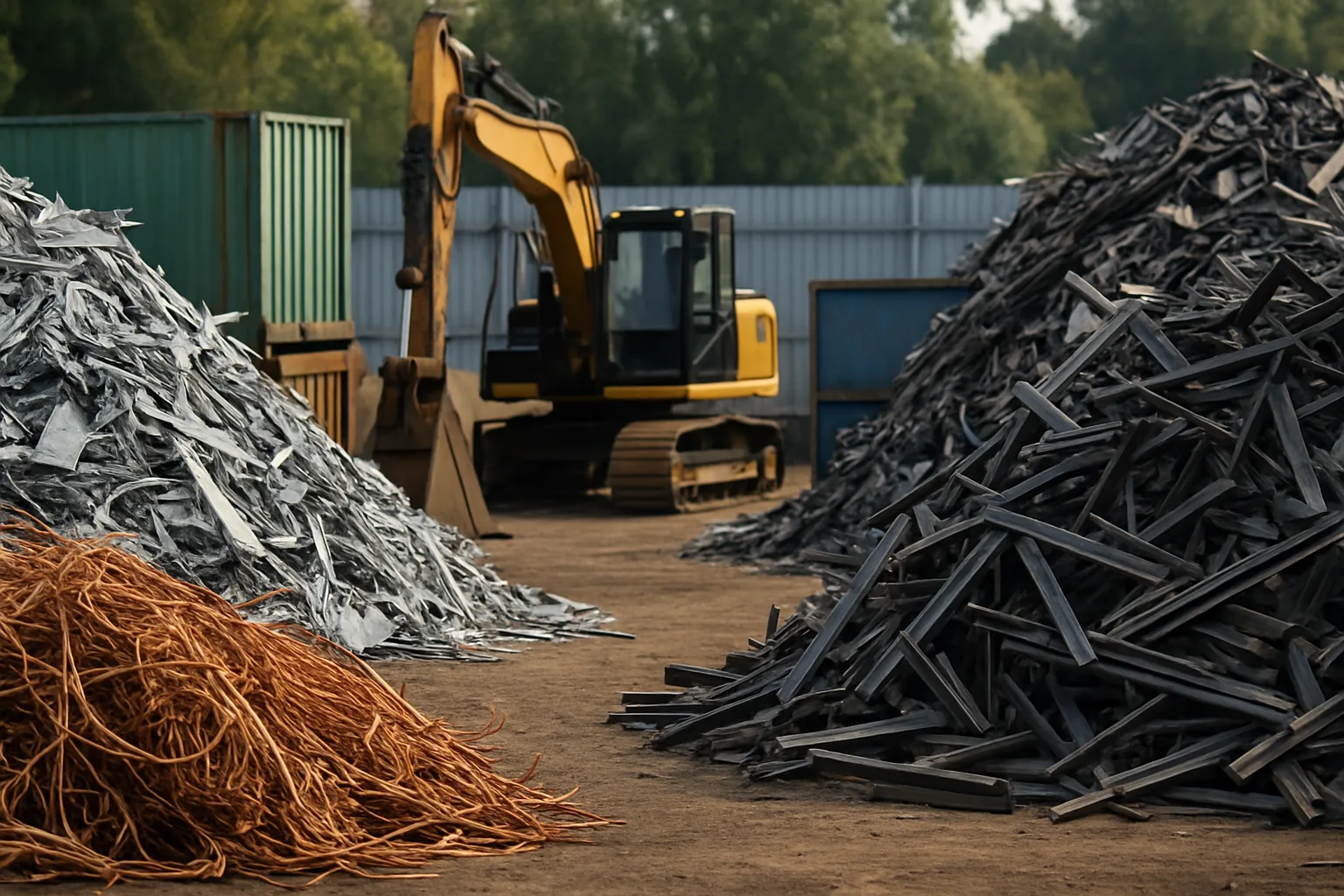
Most people hand over their scrap metal and walk away with cash — and that's the end of the story for them. But what happens next is actually worth knowing, especially if you're trying to get the best price from a scrap metal buyer near me Detroit search.
Understanding the chain from your yard to the mill changes how you negotiate. It changes what you ask for. And it explains why some buyers pay more than others for the exact same load.
Here's the full picture — no fluff, just what actually happens to your metal after it leaves your hands.
Step One: Sorting, Grading, and Weighing Your Load
The second your load hits the scale, the yard starts making decisions. They're not just buying "scrap metal." They're buying specific grades — and those grades determine what the material is worth downstream.
A mixed load of copper, for example, might contain bare bright wire, #1 copper, #2 copper, and flashing. Each grade trades at a different price. A yard that grades accurately and separates your load properly can extract more value — and pass some of that back to you, or keep it as margin. That's why sorting your metal before you arrive almost always pays off.
- Ferrous metals (iron, steel) get weighed and sorted by grade — HMS 1, HMS 2, shredded, busheling, turnings
- Non-ferrous metals (copper, aluminum, brass, stainless) get sorted by alloy and purity
- Catalytic converters (cats) get logged by serial number and assayed for platinum group metals
- Auto cores and other parts get checked against demand lists from remanufacturers
This is where documentation matters. Yards that track what they're buying — photo documentation, serial tracking, accurate weights — have cleaner loads to sell downstream. Cleaner loads command better prices at the next step.
The Processing Stage: Shredding, Baling, and Preparing for the Mill
Once sorted, your metal goes into the yard's inventory until they've accumulated enough volume to move it. Most yards don't sell pound by pound to a mill — they build loads. A full truckload of #1 copper. A container of shredded steel. A pallet of sorted cats.
Ferrous metal almost always goes through a shredder. Industrial shredders reduce cars, appliances, and structural steel into fist-sized chunks — clean, consistent material that's easy to melt. Bales of steel and aluminum get compressed for efficient shipping. Non-ferrous gets sorted into drums, gaylords, or bales depending on the buyer's requirements.
This is the stage where yards with better equipment extract more value. A yard running a modern shredder in the Detroit area or anywhere across Michigan can process more volume, hit higher purity targets, and build loads faster. That's not marketing — that's operational reality.
If you're curious how yards value different loads, read scrap yard guides and tips that break down the pricing mechanics by metal type.
Where Your Metal Actually Goes: Mills, Smelters, and Foundries
Processed scrap doesn't sit in a warehouse — it moves. The destination depends on the metal.
Steel and iron go to electric arc furnace (EAF) mills. These mills melt scrap directly — no iron ore required. EAF steel production is more energy-efficient than blast furnace production, which is a big reason scrap steel demand stays strong. Major steel-producing regions across the Midwest — including Michigan — have mills that consume enormous volumes of processed ferrous scrap every week.
Copper goes to smelters and wire rod mills. Bare bright copper wire gets pulled into new wire. #1 and #2 copper gets smelted into cathode, then drawn into rod. Your old plumbing copper is likely sitting inside a new building's electrical system within months.
Aluminum splits between automotive castings and new sheet. Secondary aluminum smelters produce alloys for die casting — a big market given how much automotive manufacturing still moves through the Midwest. Primary aluminum (like used beverage cans) goes back to sheet producers.
Catalytic converters take a different path. Cats get shipped to a processor who assays the platinum, palladium, and rhodium content. The PGMs get recovered through a smelting and refining process, then sold to automotive manufacturers and industrial users. The steel shell gets recycled separately.
This chain is global. Your scrap from a Detroit yard might end up in a mill across the country — or processed for export. Market conditions, shipping costs, and mill demand all influence where it ends up.
Why Scrap Yard Prices in Detroit Fluctuate — and How to Time It
Here's the part most sellers underestimate: scrap yard prices Detroit move with commodity markets, not with what you need to get paid this week.
Steel futures, copper spot prices, aluminum LME prices — these are the inputs. Mills set their buy prices based on what they need and what end-product demand looks like. Yards set their buy prices based on what they think they can get from the mill, minus margin and processing costs.
That's the chain. You're at the beginning of it. The further downstream, the more price transparency there is — which is why the seller at the start often gets the least information.
Disclaimer: Scrap metal prices fluctuate daily based on commodity markets, regional demand, and mill activity. Always confirm current rates directly with your yard or through a verified pricing platform before making selling decisions.
A few things that shift local prices right now in 2026:
- Automotive production cycles affect demand for specific alloys — particularly relevant across Michigan's manufacturing corridor
- Infrastructure spending drives steel demand for structural grades
- Energy costs affect smelter and mill operating margins, which trickle down to buy prices
- Export demand from overseas mills competes with domestic buyers — when exports are strong, domestic prices often rise to compete
- Seasonal construction slowdowns reduce non-ferrous generation in colder months
Knowing this doesn't just help you understand your payout — it helps you time when to sell and who to sell to. And that's exactly where competition between buyers becomes your biggest advantage.
Why Getting Multiple Bids Changes Everything
One phone call to one buyer is not a pricing strategy. It's a guess.
Yards in the same city don't all pay the same price on the same day. Their margins differ. Their downstream relationships differ. One yard might have a mill contract that prices out better this week for #2 copper. Another might be long on steel and not aggressively buying. You won't know any of this from a single call.
This is the core problem that platforms like SMASH scrap metal auction solve. Instead of calling one buyer and accepting whatever number they quote, you put your load in front of vetted buyers who compete. Competition can help reveal the market. More buyers means better price discovery — especially for non-ferrous loads, cats, and auto cores where the spread between buyers can be significant.
SMASH uses documented inventory — photos, weights, serial tracking — to give buyers confidence in what they're bidding on. A well-documented load is easier to price aggressively. A mystery load gets a conservative bid, every time.
Whether you're running a small operation or moving consistent volume, using a platform like SMASH alongside your local relationships is just smart selling. You'd find a scrap yard near you first, get a baseline, then let competition tell you if that baseline is actually the market.
What This Means for Sellers in Detroit and Across Michigan
Detroit's industrial history means the scrap pipeline here is deep. Auto industry scrap — stampings, turnings, cast aluminum, catalytic converters — flows through Michigan yards in volume. That generates real competition between buyers, which benefits sellers who know how to work it.
If you're selling regularly — whether it's post-demo ferrous, non-ferrous from a manufacturing run, or auto cores — you're not just a casual seller. You're a supply source. Act like one. Document your loads. Know your grades. Track prices over time. And don't let any single buyer be your only option.
You can explore Detroit scrap metal services to find local facilities and get a sense of the buyer landscape in your area. Pair that with a competitive bidding platform and you're making actual pricing decisions instead of just accepting whatever number lands in your lap.
When you understand that your load is part of a global supply chain — and that mills, smelters, and foundries are all competing for clean, consistent material — you start to see your scrap differently. It's not waste. It's feedstock. And feedstock with documentation, proper grading, and competitive bids commands better terms.
Ready to stop guessing and start comparing? Locate the closest scrap yard and put your loads in front of buyers who actually compete for your material. That's how you find out what your scrap is really worth — not what one buyer decided it was worth this morning.
Frequently Asked Questions
Q: How do I find a reliable scrap metal buyer near me in Detroit?
Start by searching for licensed, established yards in the Detroit area and checking what metals they actively buy. For non-ferrous loads, cats, or larger volumes, consider using a competitive bidding platform like SMASH to get multiple offers from vetted buyers rather than relying on a single yard's quote.
Q: Why do scrap yard prices in Detroit vary between locations?
Every yard has different downstream buyers, processing costs, and inventory positions. One yard might be actively buying copper this week because their mill contract is favorable — another might be overstocked. That's why getting quotes from more than one buyer matters, and why prices at the same grade can differ meaningfully across a single city.
Q: Does sorting my metal before I go to the yard actually make a difference?
Yes — consistently. Sorted, clean material is easier to grade, grade accurately, and sell downstream. Yards can pay better for a sorted load because they know exactly what they have. Mixed loads get conservative grades because the processor is absorbing uncertainty. Separate your copper from your aluminum, pull steel from non-ferrous, and keep cats in their own category.
Q: What happens to catalytic converters after a scrap yard buys them?
Cats go to a PGM processor who assays the platinum, palladium, and rhodium content. The precious metals get recovered and sold to manufacturers and industrial buyers. The steel shell is recycled separately. Because the PGM value varies by converter type, serial tracking and photo documentation significantly improve what buyers are willing to pay.
Q: How long does it take for scrap metal prices to change after commodity markets move?
Most yards adjust non-ferrous prices daily or every few days in response to LME and spot market moves. Ferrous prices tend to move more slowly — weekly or bi-weekly adjustments are common. If you see a sharp move in copper or aluminum futures, it's worth calling your yard the next day to confirm their current buy price before dropping a load.
Find the best scrap yard near you — when you're ready to move your next load, check locations and buyer options at scrap-yard-near-me.com and make sure you're working with a yard that competes for your material.
Stay current on scrap metal market movements and industry insights by following SMASH on LinkedIn — practical updates from inside the industry, not from a marketing department.