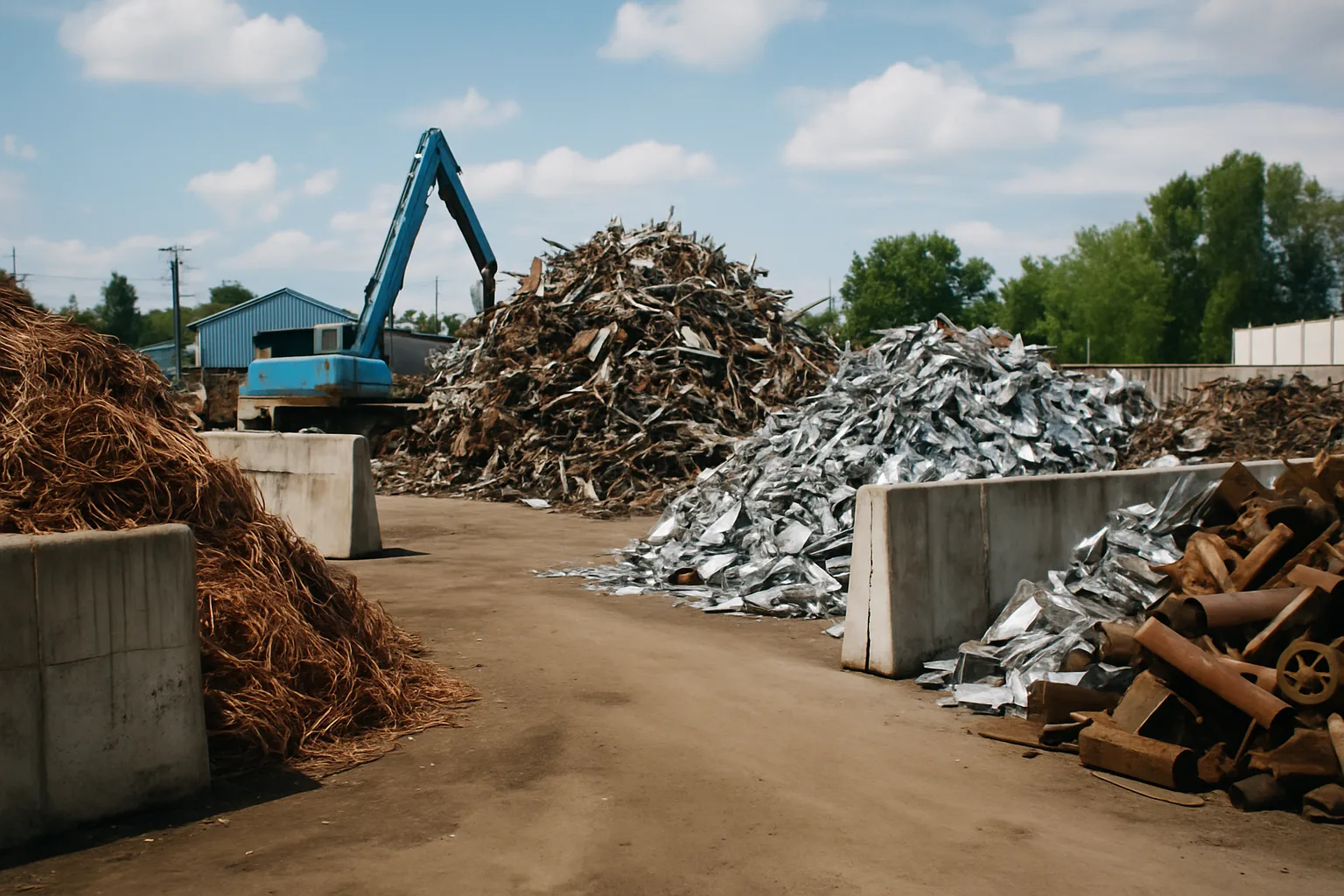
Full-Service vs. Self-Service Scrap Yards: Which One Actually Puts More Money in Your Pocket?
Most people assume a scrap yard is a scrap yard. You show up, drop off metal, get paid, leave. But that assumption can cost you real money — especially if you're hauling a load in Rochester, New York and you pick the wrong type of yard for what you've got. Full-service and self-service yards operate completely differently, and the right choice depends on what you're selling, how much effort you want to put in, and what you expect to walk away with.
This isn't a complicated decision once you understand the mechanics. Let's break it down.
What Is a Full-Service Scrap Yard?
A full-service yard does the heavy lifting. You drive in, the staff handles the unloading, sorting, and processing. They weigh your material, cut you a ticket, and you get paid. Simple. These yards typically accept everything from bulk ferrous loads — think crushed steel, cast iron, structural beams — to non-ferrous material like copper, aluminum, and brass. Many accept end-of-life vehicles, too.
Full-service yards are built for volume and speed. If you're a contractor, a demolition crew, or a recycling business moving consistent loads, a full-service yard fits your workflow. You're not there to dig or sort. You're there to offload and move on.
What you give up is the ability to handpick the value out of every load. The yard does the sorting. That efficiency comes at a cost — they price for the mix, not the cherry-picked top-grade material. If your load has a high percentage of clean copper or Grade 1 aluminum, you might leave money on the table.
What Is a Self-Service Junkyard? (And Who Is It Really For?)
Self-service yards — often called U-pull-it or pull-your-own-parts junkyards — work differently. You pay a small entry fee, grab your tools, walk the yard, and pull the parts you need yourself. Pricing is typically posted by part category, not by the pound. You're shopping a working inventory of donor vehicles.
If you're searching junkyard near me car parts, this is the model you're looking for. Self-service yards are popular with DIY mechanics, hobbyists, and small shops that need affordable OEM parts without the dealership markup. A used alternator from a self-service yard in Rochester might cost a fraction of what you'd pay new — and if you're willing to spend an hour with a wrench, the savings are real.
The tradeoff is obvious: you do the work. You need tools, time, and at least a basic mechanical understanding of what you're pulling and how to get it out without damaging it. Self-service yards don't babysit. You find the car on their lot map, you go pull the part, you pay at the gate.
- Best for: DIY mechanics, budget-conscious car owners, collectors looking for specific OEM parts
- Not ideal for: Large metal loads, bulk scrap, anyone without basic mechanical skills
- Entry fee: Usually a few dollars — often waived if you buy
- Inventory changes: Constantly. New vehicles come in weekly at most yards
Side-by-Side: Where Each Model Wins
The honest answer is that neither model is universally better. They serve different people with different goals. Here's where each one has a clear edge:
Full-Service Wins When:
- You have bulk ferrous or non-ferrous loads ready to move
- You're running a business and time is money
- You're scrapping an entire vehicle and don't need parts back
- You want fast turnaround — weigh in, get paid, leave
- You need BOLs or packing lists for commercial loads
Self-Service Wins When:
- You need a specific car part at a lower price than retail
- You're doing your own vehicle repairs and know what you're pulling
- You have time and enjoy the hunt
- You want to avoid dealership or aftermarket pricing
- You're sourcing parts for restoration or modification projects
There's also a middle ground. Some yards in New York operate hybrid models — a full-service counter for metal sales alongside a self-service pull zone for vehicles. If you can find a scrap yard near you that runs both operations, you get the flexibility to do either on the same trip.
Scrap Metal Inventory Management: Why It Matters More Than You Think
Whether you're selling to a full-service yard or pulling parts from a self-service lot, documentation matters. This is where a lot of sellers leave money behind — not because the yard is shady, but because they walked in unprepared.
On the selling side, knowing your material before you arrive gives you leverage. If you've got a mix of cats, cores, and non-ferrous, a yard that can see your inventory upfront will price it more accurately. Showing up with a mystery load gives the buyer more room to hedge their offer. Strong scrap metal inventory management — even something as basic as a photo log and rough weight estimate — puts you in a better position at the scale.
On the buying side at self-service yards, inventory management has gotten more sophisticated. Many yards now update their vehicle listings online, sometimes daily. VIN lookup tools let you cross-reference what's on the lot before you drive out. That's a real time-saver if you're hunting a specific part for a specific make and model.
For sellers moving serious volume, platforms like find the best price for your scrap on SMASH take this a step further. SMASH lets you document your inventory — including photo documentation, serial tracking, and VIN lookup for catalytic converters — before it ever goes to a buyer. That documentation creates competition among vetted buyers. More buyers bidding on a well-documented load means better price discovery. That's not a guess; it's how auctions work.
How the Best Scrap Yard Rochester Sellers Use Both Models Strategically
Experienced recyclers in Rochester don't pick a lane and stay in it. They match the model to the material. A smart seller might use a full-service yard for bulk shred and iron, a self-service yard to source cheap parts for a project vehicle, and a platform like SMASH to move high-value non-ferrous loads where competition among buyers actually moves the needle.
The best scrap yard Rochester option for you isn't necessarily the closest one. It's the one that fits your load type, your timeline, and your willingness to do prep work. A yard that specializes in non-ferrous material might pay significantly better for clean copper or aluminum than a general yard that takes everything. Knowing the difference before you load your truck is the whole game.
If you're newer to selling scrap in Rochester or anywhere in New York, take the time to read scrap yard guides and tips before your first visit. Understanding what grades of material you have — and what documentation helps — will make your first trip faster and more profitable.
For those hunting parts, check whether local self-service yards update their inventory online. Many Rochester-area yards post new vehicle arrivals on their websites or social channels. Getting there early after a fresh intake maximizes your chances of finding what you need before someone else pulls it.
What Transparent Pricing Actually Looks Like — and How SMASH Fits In
One of the biggest complaints about traditional scrap yards — full-service or self-service — is price opacity. You show up, they weigh your load, they tell you a number. You either take it or leave it. Most people take it because they've already driven there.
That's the old way. The single buyer, one phone call, guess-and-accept model. It's not inherently dishonest, but it's not competitive either. Competition is what reveals the actual market rate for your material.
SMASH is a scrap metal auction platform built around that principle. Vetted buyers bid on documented loads. No subscription fees — SMASH only wins when the seller wins. For yards or recyclers moving consistent volume, that structure changes the pricing dynamic entirely. You're not accepting an offer. You're watching the market tell you what your material is worth.
If you're a scrap yard near me Rochester searcher trying to figure out where to start, the answer is simple: locate the closest scrap yard for smaller or one-time loads, and explore auction-based platforms like SMASH for higher-value or recurring material. Both tools have a place in a smart recycler's strategy.
Finding the right fit doesn't have to be complicated. Start with what you've got, know what model serves it best, and don't settle for the first number someone offers you on a load worth shopping around.
Frequently Asked Questions
Q: What's the difference between a full-service scrap yard and a self-service junkyard near me?
A full-service scrap yard handles your load for you — staff unloads, sorts, and weighs your material. A self-service junkyard requires you to pull your own parts from donor vehicles on the lot. Full-service is better for bulk metal. Self-service is better for finding specific used car parts at lower prices.
Q: Is the best scrap yard Rochester option always the closest one?
Not necessarily. The best yard depends on your material type. A yard that specializes in non-ferrous metals may pay better for clean copper or aluminum than a general yard a few blocks closer. It's worth calling ahead or checking online before you load your truck.
Q: Can I sell catalytic converters at a full-service scrap yard in Rochester?
Most full-service yards accept catalytic converters, but pricing and documentation requirements vary. New York has identification and documentation rules around catalytic converter sales — bring your ID and be ready to provide vehicle information. Platforms like SMASH use VIN lookup and serial tracking to document cats properly, which can improve buyer confidence and pricing.
Q: How do I find out what's available at a self-service junkyard near me in Rochester?
Many self-service yards now list their vehicle inventory online, often updated daily or weekly. Search the yard's website for a VIN or make/model lookup tool. Calling ahead is also a reliable option — staff can usually confirm whether a specific vehicle or part is on the lot before you make the trip.
Q: Do I need an appointment to sell scrap metal at a full-service yard?
Most full-service yards accept walk-ins during business hours, but large loads — especially full vehicle loads or commercial quantities — may require scheduling. Call ahead if you're bringing more than a pickup truck's worth. Some yards in New York require advance notice for certain material types, including electronics and appliances.
Whether you're stripping a project car for parts or moving a load of non-ferrous off your lot, knowing which yard model fits your situation saves you time and gets you a fairer price. Start by figuring out what you have, then match it to the right service. Check locations at scrap-yard-near-me.com to find trusted yards in your area — and if you're moving volume worth shopping to multiple buyers, explore what SMASH can do for your next load.
Follow SMASH on LinkedIn for scrap metal market insights, industry updates, and auction news straight from the platform.