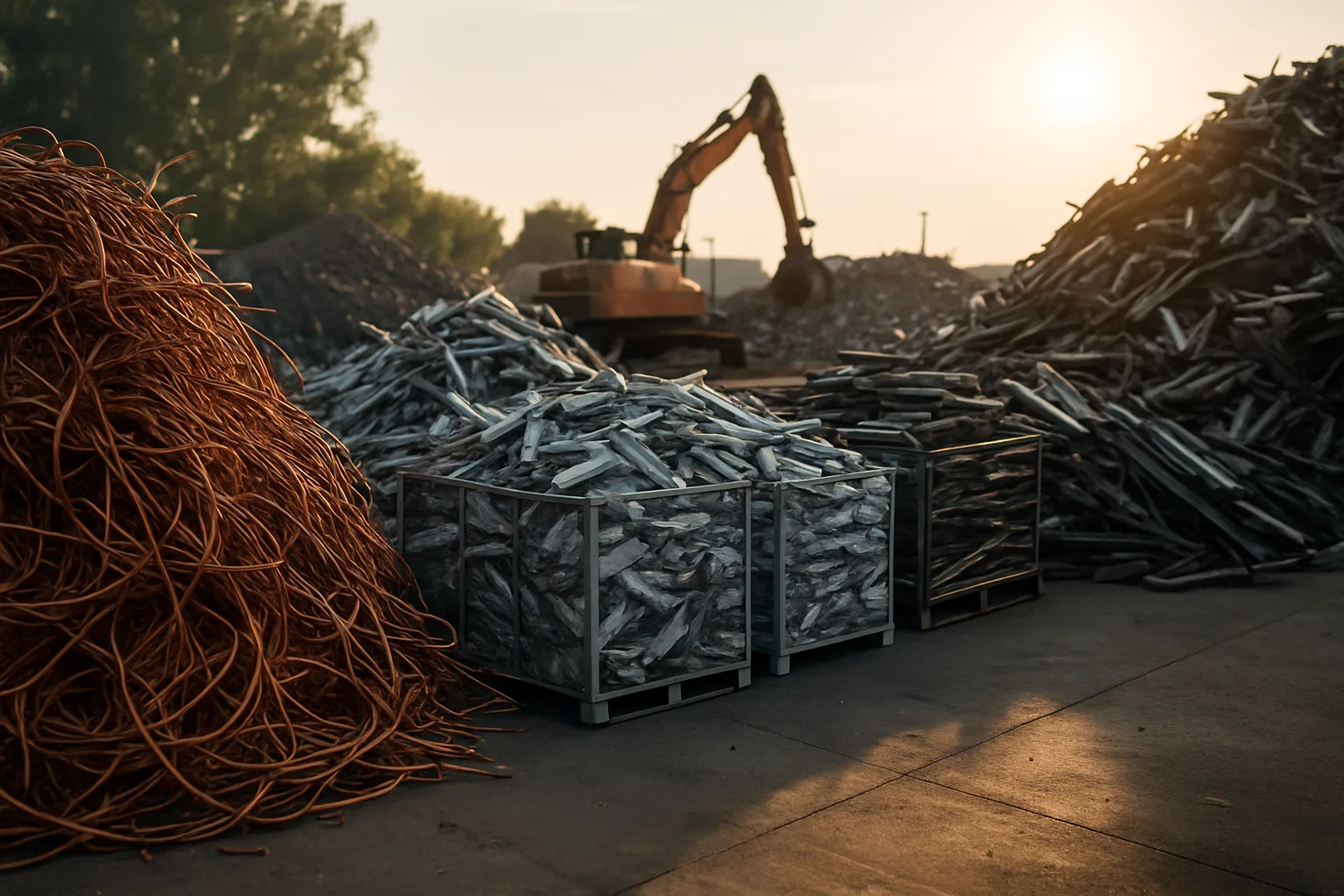
Most people still picture a scrap yard as a muddy lot with a guy on a phone, quoting you a price you can't verify. In Mesa, Arizona — and across the country — that picture is changing fast. Technology is rewriting how yards operate, how buyers compete, and how much money sellers actually walk away with.
If you've tried to find a scrap yard near you recently, you may have noticed the difference already. The process is cleaner, faster, and more competitive than it was even a few years ago. And for sellers — whether you're hauling in a load of non-ferrous or trying to move catalytic converters — that shift puts real money on the table.
Here's what's actually changing, what it means for you, and how to make it work in your favor.
The Old Way of Selling Scrap Was Broken — And Everybody Knew It
Walk into a local scrap yard Mesa style — no documentation, no photos, no price benchmarks — and you were at the mercy of whoever answered the phone. One buyer. One quote. No competition. You either took it or drove to the next yard and hoped for better.
The problem wasn't just convenience. It was transparency. Metal prices shift daily. Without access to real market data, sellers had no way to know if the price they received was fair. Buyers held all the leverage, and they knew it.
That dynamic is shifting. Digital platforms, inventory tools, and online auction formats are pulling price discovery into the open. Competition — not goodwill — is now setting the number.
How Digital Tools Are Transforming the Metal Recycling Arizona Market
Technology is hitting the scrap industry on multiple fronts at once. It's not one big change — it's a dozen smaller ones stacking up to completely reshape how yards operate and how sellers get paid.
Here's what's actively changing the game in 2026:
- Inventory and documentation tools — Yards can now photograph and catalog loads digitally. Serial tracking, VIN lookups, and itemized packing lists give remote buyers enough confidence to bid on material they've never physically seen.
- Online auction formats — Instead of calling one buyer, sellers can put a load in front of multiple vetted buyers simultaneously. Competition replaces guesswork. More buyers means better price discovery.
- Auto-invoicing and digital paperwork — Bills of lading, settlement documents, and payment records are generated automatically. No more chasing paper. No more disputes over what was agreed.
- VIN lookup for vehicle scrap — End-of-life vehicles used to require manual assessment. Now a VIN surfaces grade, weight class, and catalytic converter data almost instantly.
- Mobile accessibility — You don't need to be at a desk to run a load. Yard operators in Mesa are listing material, reviewing bids, and confirming sales from their phones on the floor.
None of this is theoretical. These tools are live, and sellers who use them are getting better outcomes than those still relying on cold calls and handshake deals.
Selling Catalytic Converters Online — Why It's Becoming the Standard
Catalytic converters — cats — are one of the most valuable items a scrap yard handles. They're also one of the most misquoted. The precious metal content inside (platinum, palladium, rhodium) fluctuates constantly. A buyer offering a flat rate on a cat is almost certainly pricing in their own margin at your expense.
The push to sell catalytic converters online through competitive platforms is a direct response to this. When multiple buyers bid on the same lot of cats, the price reflects actual market demand — not one buyer's best guess at what they can get away with.
Documentation matters here too. Photo evidence, serial numbers, and accurate unit counts give buyers the confidence to bid higher. A well-documented lot of cats will consistently outperform a vague "we have a bunch of converters" listing. That's not an opinion — it's how competitive markets work.
If you're moving cats out of a Mesa yard or anywhere in Arizona, putting them in front of multiple buyers isn't optional anymore. It's how you find out what they're actually worth.
How Platforms Like SMASH Are Changing Price Discovery for Sellers
This is where tools like SMASH come in. SMASH is a B2B scrap metal auction platform built around one idea: sellers deserve competition, not a single take-it-or-leave-it quote.
The model is straightforward. You document your load — non-ferrous, cats, cores, whatever you're moving. SMASH puts it in front of vetted buyers across North America. Those buyers compete. You see the bids. You decide.
There's no subscription fee. SMASH earns when you sell — not before. That alignment matters. A platform that only wins when the seller wins has every reason to work hard on your behalf.
The inventory tools handle the documentation side: photo uploads, serial tracking, VIN lookups, itemized lists. Buyers get real information. Real information drives real competition. Real competition can help reveal the actual market price for your material.
If you want to find the best price for your scrap on SMASH, the process starts with documenting your load. The platform walks you through it. It's built for yard operators — not tech teams.
What to Look For When You Find a Scrap Yard in Mesa Today
Technology has raised the bar for what a good scrap yard experience looks like. If you're trying to find scrap yard Mesa options that work for you in 2026, here's what separates a modern operation from an outdated one.
Signs a yard is keeping up with the industry:
- They use documented intake — photos, weights, item counts — not just verbal agreements
- They can give you a written or digital price breakdown, not just a total
- They accept multiple forms of ID and follow proper compliance for regulated materials (cats, cores)
- They have clear hours posted — so you know when they're open before you load a truck
- They can tell you how prices are set, not just what today's number is
Red flags to watch for:
- No documentation at intake — they just weigh it and hand you cash with no breakdown
- Flat-rate pricing on high-value items like cats, regardless of type or condition
- No posted hours or inconsistent availability
- Resistance to explaining how a price is calculated
Mesa has a range of recycling operations. Not all of them are running at the same level. Knowing what to look for helps you get to the right one faster — and avoid the ones that will cost you money.
Finding a Scrap Yard Near You in 2026 — What the Process Actually Looks Like Now
The days of driving around hoping to stumble onto a yard are over. If you need to locate the closest scrap yard in Mesa or anywhere in Arizona, the process starts online — and it's faster than most people expect.
Here's how a smart seller approaches it in 2026:
- Search with specifics. "Scrap yards open today near my location" tells you who's actually operating today — not just who has a listing. Hours matter. Don't waste a trip.
- Check what they accept. Not every yard handles every material. If you're bringing cats, cores, or specific non-ferrous metals, confirm before you load.
- Document before you go. Photos, weights, and item counts give you a baseline. You'll know immediately if the yard's quote matches what you expected.
- Compare quotes. One call to one yard is still the old way. Get at least two numbers. Better yet, use an auction format to let buyers compete.
- Know your compliance requirements. Arizona has regulations around catalytic converters and regulated scrap. Make sure the yard you use is current on those rules.
For deeper breakdowns on any of these steps, read scrap yard guides and tips that cover everything from pricing to paperwork to what to expect at the scale.
Technology hasn't made the scrap industry complicated. It's made it more legible. You can walk into a transaction in Mesa today with real information — and that's worth a lot more than a gut feel and a handshake.
The market is more transparent than it's ever been. Sellers who use that transparency get better outcomes. Those who don't are still leaving money in the yard. If you're ready to start getting fair value for your material, the tools are there. Use them.
Start by checking scrap-yard-near-me.com to find verified locations near you — and if you're ready to put your load in front of real buyers, SMASH is where that competition happens.
Frequently Asked Questions
Q: How do I find a local scrap yard in Mesa that's open today?
Search "scrap yards open today near my location" with your location enabled, or use a directory like scrap-yard-near-me.com to filter by hours and material type. Always call ahead before loading a truck — hours can vary and some yards have specific intake windows for certain materials.
Q: Can I sell catalytic converters online from Mesa, Arizona?
Yes. Platforms like SMASH allow you to document your cats and put them in front of multiple vetted buyers without leaving your yard. This is becoming standard practice for any volume seller because competitive bidding reveals actual market value — not a single buyer's floor price.
Q: What's the difference between a scrap yard and a junkyard in Mesa?
Scrap yards focus on metal by weight — non-ferrous, ferrous, cats, cores, and similar materials. Junkyards (auto salvage yards) typically deal in whole vehicles and resellable parts. Some operations do both. If you're selling metal, a dedicated scrap metal yard will usually give you a better rate than a general junkyard.
Q: Do I need to bring documentation when selling scrap in Arizona?
Yes. Arizona requires valid ID for regulated scrap sales, including catalytic converters. Many yards also require vehicle titles for end-of-life cars. Documentation of your material — photos, counts, weights — also helps you get more accurate quotes, especially on high-value items.
Q: How does SMASH work for scrap metal sellers in Mesa?
SMASH is a B2B auction platform where you document your load and vetted buyers compete for it. There are no subscription fees — SMASH earns only when a sale completes. It's built for yard operators moving volume, especially non-ferrous material and catalytic converters where price discovery matters most.
Stay sharp on scrap metal market trends and industry news — follow SMASH on LinkedIn for regular updates, pricing insights, and platform news.