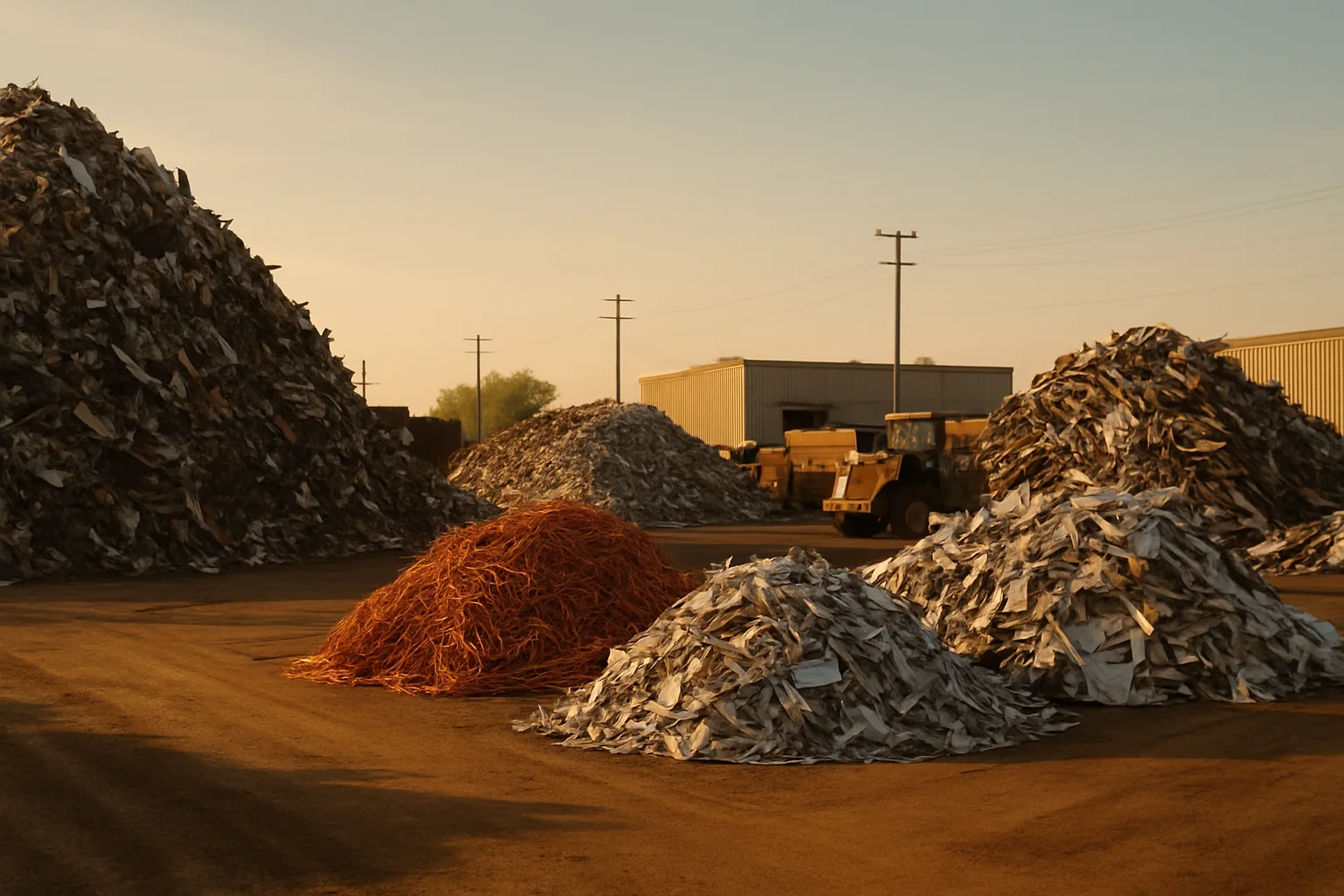
Loading Scrap Metal the Right Way Before You Hit the Road
Most people focus on the price per pound. Almost nobody thinks about how to get the metal there safely. That's backwards. A bad load can damage your vehicle, injure someone on the road, or get your haul rejected at the gate — and none of those outcomes help you get paid.
Whether you're hauling a truck bed full of old appliances, a few catalytic converters (cats), or a mixed load of non-ferrous material, the loading process matters as much as anything else. This guide covers what you need to know before you pull out of the driveway — from how to stack your load to what documentation to bring when you arrive at a scrap metal yard in Dearborn or anywhere else in Michigan.
Know Your Vehicle's Limits Before You Load a Single Piece
Scrap metal is heavy. That's obvious. What's less obvious is how quickly you can exceed your vehicle's payload rating without realizing it. A standard half-ton pickup has a payload capacity somewhere in the range of 1,500 to 2,000 pounds — and that includes the driver, passengers, fuel, and any toolboxes or equipment in the bed. Load it with a mix of cast iron and sheet steel, and you can hit that ceiling fast.
Check your owner's manual or the sticker inside your driver's door jamb for the exact payload rating. Don't guess. Overloading your suspension doesn't just wear out your truck — it affects your steering, braking distance, and tire integrity. On a highway, that's a serious risk to everyone around you.
- Half-ton trucks: 1,500–2,000 lb payload range (model-dependent)
- Three-quarter-ton trucks: Up to 3,000+ lbs, depending on configuration
- Trailers: Always check the Gross Vehicle Weight Rating (GVWR) — not just the trailer, but the tow rating for your specific vehicle
- Cargo vans: Useful for non-ferrous loads; check floor rating for concentrated point loads from heavy cores or blocks
If you're hauling regularly or moving serious volume, a flatbed trailer rated for your loads is the smarter long-term tool. Rent one if you don't own one. The cost is minor compared to a blown suspension or a roadside spill.
How to Stack, Secure, and Contain a Scrap Load Properly
Loose metal in a truck bed is a projectile. Sharp edges, shifting weight, and unsecured pieces create real danger — for your tailgate, for other drivers, and for the yard workers unloading your haul on the other end. A local scrap yard in Dearborn will turn away a load that arrives without proper containment, or dock you for the mess. Either way, you lose time and money.
Here's how to load it right:
- Heaviest material goes in first and lowest. Cast iron, thick plate, motors — these go directly on the truck bed floor, centered between the wheel wells. Low center of gravity reduces sway and improves handling.
- Lighter, flatter material goes on top. Sheet metal, tin, light gauge — stack it flat and stable over the heavier base layer.
- Separate your metals. Keeping ferrous and non-ferrous separate before you arrive saves sorting time at the yard. It may also affect how your load gets priced. Use marked bins or bags for cats, copper, aluminum, and other non-ferrous.
- Use ratchet straps — minimum two, crossed. One strap running front-to-back is not enough. Cross your straps diagonally to prevent lateral shifting. For tall loads, add a third strap horizontally.
- Cover the load. A tarp secured with bungee cords or rope keeps small pieces from flying out. In most U.S. states, including Michigan, you can be cited for an unsecured load. Don't risk the ticket or the liability.
- Check the tailgate. If the tailgate is closed, make sure the load isn't pushing against it with enough force to pop it open. If the load overhangs, it needs a red flag tied to the end — required by law if the overhang exceeds four feet.
Take five minutes to walk around your vehicle before you leave. Tug on the straps. Look for anything sticking out at an angle that could catch air at highway speed. It's a simple check that prevents serious problems.
Scrap Metal Inventory Management — Document Before You Drop Off
This step gets skipped constantly, especially by first-timers. You load up the truck, drive to the yard, and hand everything over without any record of what you brought. Then you get home and wonder if the weight they quoted was accurate — and you have no way to verify it.
Good scrap metal inventory management starts before you leave your facility or job site. It doesn't need to be complicated. A quick photo of the loaded truck and a written list of material types and estimated weights takes five minutes. That record becomes useful if there's a dispute at the scale, if you're tracking margins across multiple loads, or if you need documentation for tax or business purposes.
For businesses moving volume — demolition contractors, manufacturing facilities, auto dismantlers — this matters even more. Platforms like find the best price for your scrap on SMASH include inventory tools built specifically for this: photo documentation, serial tracking for identifiable parts like cats, and packing list generation that gives buyers confidence before they even bid. That documentation is part of what drives competitive pricing — buyers pay more when they know exactly what they're getting.
Even if you're a one-truck operation, get in the habit of photographing your load before and after the haul. It costs nothing and protects you.
What to Bring When You Arrive at the Scrap Yard
Scrap yards in Michigan — including the yards serving the Dearborn area — are required to comply with state and local regulations around metal purchasing. These rules exist to reduce theft and ensure traceability. Most yards require:
- Valid government-issued photo ID (driver's license or state ID)
- Vehicle registration for the vehicle used to transport the material
- Bill of Lading (BOL) or packing list if you're delivering on behalf of a business
- Title or documentation for catalytic converters if your yard requires it — regulations vary by location and material type
Call the yard before you make the drive. Confirm their hours, what materials they're currently accepting, and whether they need any specific documentation for your load type. A quick five-minute call saves you a wasted trip. When you find a scrap yard near you, look for yards that list their requirements clearly upfront — that transparency usually signals a professional operation.
Can You Sell a Safe for Scrap Metal?
This comes up more than you'd expect. People clearing out old properties, estates, or commercial spaces often have an old safe they can't open or don't want. The short answer: yes, you can sell a safe for scrap metal, but there are real complications.
Safes are heavy — a small residential fire safe can weigh 100–200 lbs, while commercial safes can exceed 1,000 lbs. That's useful raw weight, but the material mix is the issue. Safes typically contain a combination of steel outer casing, concrete or gypsum fill (used for fire resistance), glass wool insulation, and various locking mechanism metals. Most yards will accept the steel portion, but the interior fill is considered contamination and will need to be separated — either by the yard (at a cost to you) or by you before arrival.
A few things to do before hauling a safe to a scrap metal yard:
- Call the yard and describe what you have. Not every yard wants the work of processing a safe.
- Find out if they'll accept it whole or if they want it cut open first.
- Get a realistic weight estimate. The fill material doesn't add value — it adds weight that won't be paid out.
- If the safe is large, plan your transport carefully. A 500-lb safe on a residential floor requires equipment — a hand truck rated for the load, at minimum, plus ramps if it needs to go into a truck bed.
If you're unsure whether a local yard will take it or want to get a sense of what it might be worth competitively, SMASH connects sellers with vetted buyers across North America — including buyers who handle unusual or complex loads that not every local yard wants to touch.
Getting the Best Value When You Sell Metal at a Scrap Yard Near You
Once you've done the work of loading safely, documenting your inventory, and arriving with the right paperwork, the last step is making sure you're not leaving money on the table. The traditional model — drive to one yard, take whatever price they quote, walk away — works fine if the market is thin. But it doesn't give you any leverage, and it doesn't tell you whether that price was fair.
Competition changes that dynamic. When multiple buyers know what's in your load — and have to compete to win it — you get real price discovery instead of a single number someone handed you with no context. That's true whether you're hauling a pickup load of aluminum extrusions out of a Dearborn job site or moving a large lot of copper from a commercial demolition across Michigan.
For one-off loads, getting a second opinion from another local yard takes time but can be worth it. For volume sellers, a platform built around auction-format bidding takes the guesswork out entirely. To locate the closest scrap yard and compare your options in your area, start with a directory that covers verified locations. Then think about whether you want one buyer's number or several buyers competing for your load.
You've done the hard part — loading safely, driving carefully, and showing up prepared. Make sure the sale matches the effort. When you're ready to move material, read scrap yard guides and tips to stay sharp on pricing, documentation, and what buyers actually want.
The right yard is out there. So is the right price. Check locations and get started at scrap-yard-near-me.com — and make sure your next haul earns what it's worth.
Frequently Asked Questions
Q: What do I need to bring to a scrap metal yard in Dearborn?
Most yards in Dearborn and across Michigan require a valid government-issued photo ID and the registration for your delivery vehicle. If you're dropping off on behalf of a business, bring a Bill of Lading or packing list. For certain regulated materials like catalytic converters, some yards may ask for additional documentation — call ahead to confirm.
Q: How do I find a reliable local scrap yard in Dearborn?
Start by searching a verified scrap yard directory that covers the Dearborn area and surrounding Michigan communities. Look for yards that clearly list their accepted materials, hours, and documentation requirements. A yard that's upfront about its process is usually easier to work with and less likely to surprise you at the scale.
Q: Is it legal to haul scrap metal in a pickup truck?
Yes — but you need to stay within your vehicle's payload rating, secure the load properly with straps, and cover it to prevent debris from falling onto the road. In Michigan, driving with an unsecured load is a ticketable offense. If the load overhangs the bed by more than four feet, you're required to mark it with a red flag.
Q: Can you sell a safe for scrap metal at a Dearborn yard?
Most yards will accept a safe for scrap, but many require it to be opened or cut apart first so the non-metal fill material can be separated. The steel casing has value; the concrete or gypsum interior does not. Call the yard before you haul it — not every location wants the extra processing work, and you'll want to know what they'll actually pay per pound for the steel portion.
Q: How can I make sure I'm getting a fair price when I sell scrap near me?
The most reliable way is to introduce competition. One buyer gives you one number. Multiple buyers bidding on a documented load give you a market price. Document your material types and weights before you arrive, and consider platforms that connect sellers with multiple vetted buyers — that competitive pressure is where real price discovery happens.
Stay current on scrap metal market trends, yard tips, and industry news by following SMASH on LinkedIn.