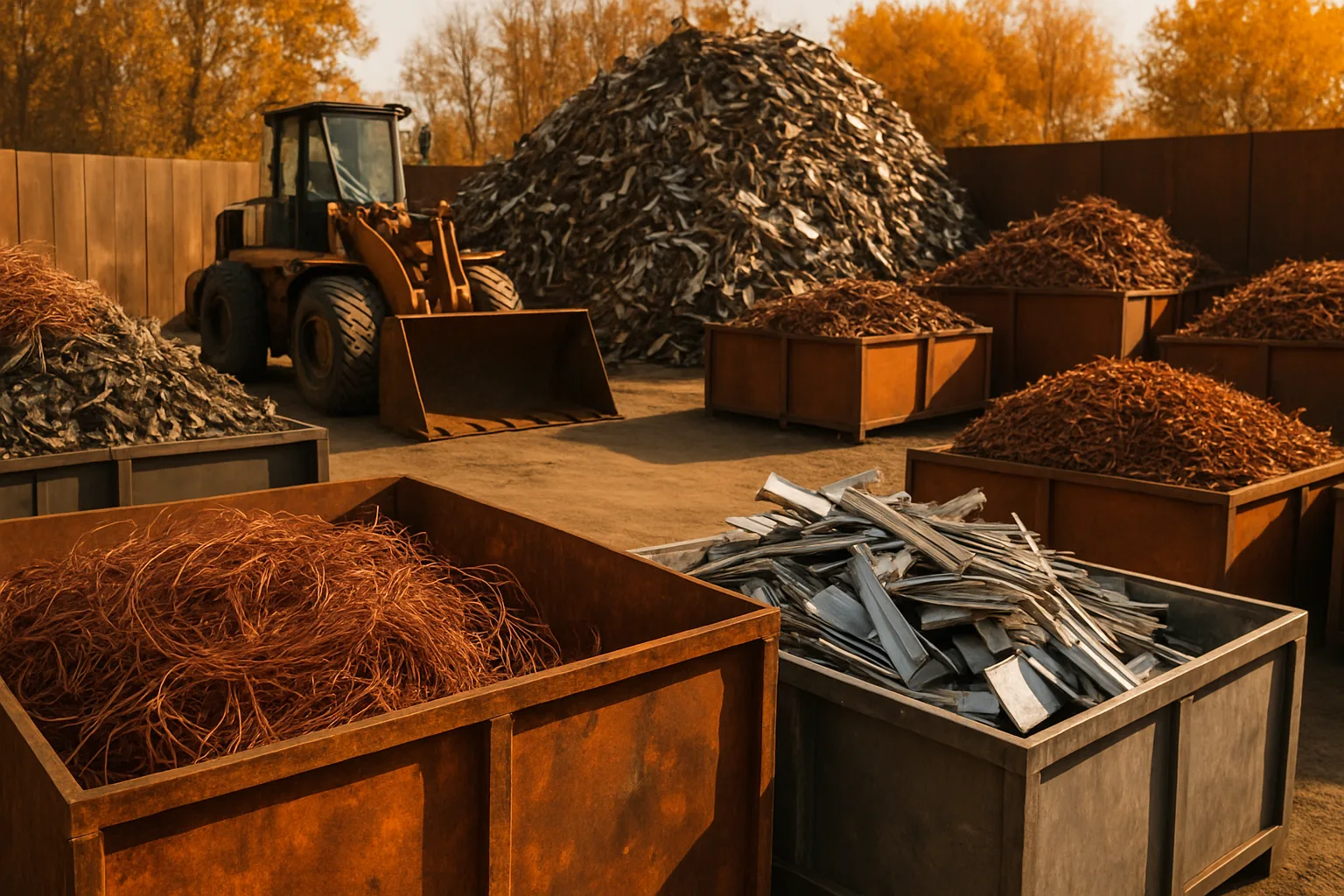
Not All Scrap Yards Are Equal — Here's How to Spot the Good Ones
You've got a pile of metal sitting in your garage, a junked-out truck, or a load of copper pipe from a renovation job. The question isn't whether to sell it — it's where. In a market where scrap metal prices today can swing significantly week to week, choosing the wrong yard can cost you real money. The difference between a yard that lowballs you and one that pays fair isn't always obvious from the road.
If you're in Spokane or anywhere across Washington state, you've got options. But more options also means more chances to leave money on the table. This guide breaks down exactly what to look for when you're trying to find the best scrap yard Spokane has to offer — and how to make sure you're getting treated fairly every step of the way.
What Makes a Scrap Yard Worth Your Time
The best scrap yards share a few things in common. They're transparent about pricing, they weigh your load on certified scales, and they can tell you what they're paying for different grades of metal without making you feel like you're pulling teeth. If a yard won't quote you a price over the phone or post its rates publicly, that's a red flag worth paying attention to.
Here's what to look for when you're evaluating a scrap yard near me Spokane-style search:
- Licensed and registered: Legitimate yards operate under state and local regulations. In Washington, metal dealers are required to maintain purchase records. If a yard skips paperwork, walk away.
- Certified weigh scales: Your payout is based on weight. Ask whether the scales are certified and calibrated. This isn't a rude question — it's a smart one.
- Clear grade separation: A good yard distinguishes between #1 copper, #2 copper, bare bright, and so on. Vague language like "copper pricing" without grade detail costs you money.
- Visible posted prices: Many reputable yards post daily or weekly rates. If pricing is a mystery until you're already unloaded, that's a problem.
- Professional staff who can answer questions: You should be able to ask what a load of prepared steel or a bundle of cats is worth and get a straight answer.
Spokane has a real industrial and construction economy, which means local yards see a steady variety of materials. That also means competition exists — use it to your advantage.
How to Compare Scrap Metal Prices Today Near You
One of the biggest mistakes sellers make is calling one yard, getting a quote, and accepting it. That's the old way — one buyer, one call, no leverage. Scrap metal prices today vary not just by market conditions, but by yard. The same load of number two copper can get you different payouts depending on who's buying and how hungry they are for material.
To get best scrap yard prices near me today, build a quick comparison habit:
- Sort your metal before you call — know your grades. Mixed loads almost always get downgraded.
- Call two or three yards with the same description of your material. Use consistent language so you're getting apples-to-apples quotes.
- Ask about any fees — some yards charge drop fees, separation fees, or deduct for contamination.
- Check if there's a minimum load size. Smaller loads sometimes get lower per-pound rates.
- Confirm payment method — check, cash, or electronic transfer. Some yards have limits on cash payouts, especially for higher-value loads.
Platforms like SMASH Scrap — where verified buyers bid on your metal take this comparison process to the next level. Instead of making calls and hoping for the best, SMASH puts your load in front of multiple vetted buyers who compete for it. That competition does the work of price discovery for you. More buyers means better price discovery — it's that simple.
Red Flags to Watch Out For at Any Scrap Yard
Finding a good yard also means knowing what bad looks like. Washington state has specific regulations around metal purchases — particularly for catalytic converters, copper, and other high-theft materials. Yards that aren't asking for ID, recording serial numbers on cats, or issuing proper receipts aren't just cutting corners on paperwork. They're exposing you to legal risk too.
Beyond compliance, watch for these warning signs:
- No written receipt: Every legitimate transaction should come with documentation showing weight, grade, price per pound, and total payout. No receipt means no recourse.
- Vague grading at the scale: If the yard worker suddenly reclassifies your material to a lower grade without explanation once you're unloaded, push back or walk.
- Pressure to accept fast: A fair yard doesn't need to rush you. Urgency tactics are designed to stop you from comparing.
- No visible licensing or business registration: In Washington, licensed metal dealers should be able to confirm their registration. Ask.
- Prices that seem dramatically higher than everywhere else: This sounds counterintuitive, but wildly inflated quotes that drop at the scale are a bait-and-switch. Know your ballpark before you go in.
If something feels off at a yard, trust that instinct. There are enough reputable options — especially in a market like Spokane — that you don't have to settle for questionable operations.
Using Technology to Find Verified Scrap Buyers Near You
Gone are the days when finding a scrap metal buyer meant flipping through a directory or relying on word of mouth. In 2026, you have tools that do the heavy lifting — locating nearby yards, comparing prices, and connecting you with buyers who are actually competing for your material.
Start with find a scrap yard near you to locate licensed, reputable facilities in your area. For Spokane residents, you can go directly to Spokane scrap metal services to see local options specific to your market. This cuts the guesswork out of driving around and helps you focus on the yards actually worth calling.
For larger loads — think full pallets of non-ferrous, a haul of catalytic converters, or a commercial demolition cleanup — SMASH is built for exactly that situation. SMASH connects sellers with vetted industrial buyers and runs a competitive auction format that creates real price pressure. Documented inventory, photo documentation, serial tracking for cats — it's the kind of transparency that gives buyers confidence and gives sellers better outcomes. No subscription fees. They only win when you win.
You can also read scrap yard guides and tips to learn how to sort, prepare, and present your material for the best possible outcome — whether you're selling a few hundred pounds of aluminum or clearing out a full yard of mixed ferrous.
Preparing Your Load Before You Sell
The yard pays for metal, not labor. If you show up with unseparated, contaminated, or unprocessed material, you're giving the yard room to downgrade your load. A little prep work on your end translates directly into more money at the scale.
Basic prep steps that make a real difference:
- Separate ferrous from non-ferrous: Steel and iron in one pile, aluminum, copper, and brass in another. Mixed loads get mixed (lower) prices.
- Strip insulation where it makes sense: Insulated copper wire often pays less per pound than bare bright. If you have large quantities, stripping can be worth the time. For small amounts, do the math first.
- Remove plastic, rubber, and non-metal attachments: Contamination gives yards justification to cut your price.
- Know your catalytic converter details: Serial numbers, vehicle make, and model year all affect cat pricing. Washington state has specific documentation requirements for cat sales — make sure you're compliant.
- Bundle or stack where possible: Makes weighing easier and signals that you're a serious seller, not an occasional drop-in.
When you locate the closest scrap yard to your location, call ahead to confirm what they accept and whether they have any prep requirements. Some yards don't take certain materials on certain days. A quick call saves you a wasted trip.
Why Local Market Conditions in Spokane Matter
Scrap metal is a commodity market — what happens in global manufacturing, steel production, and trade policy shows up in what a local yard in Spokane pays per pound. In 2026, supply chain dynamics continue to shape non-ferrous pricing in ways that ripple down to the local level. A yard that stays current on market conditions pays fairly. One that ignores them — or uses stale pricing to pad margins — costs you.
Washington state's construction sector, agricultural equipment market, and ongoing infrastructure projects all feed local scrap supply. That means Spokane yards are active buyers across a range of material types — from structural steel and rebar to equipment cores and wire bundles. Understanding your local market context helps you time your sales and set realistic price expectations.
The bottom line: the best scrap yard isn't just the closest one. It's the one that weighs honestly, grades accurately, pays promptly, and operates transparently. In Spokane and across Washington state, those yards exist — you just need to know what to look for.
Ready to start? Find the best scrap yard near you and make sure your next load gets the price it deserves — check locations at scrap-yard-near-me.com and let the right yard come to you.
Frequently Asked Questions
Q: How do I find the best scrap yard in Spokane for my type of metal?
Start by identifying what you're selling — ferrous, non-ferrous, catalytic converters, or mixed loads. Then call two or three local yards with a clear description of your material and ask for a price per pound by grade. Compare those quotes and factor in any fees or deductions. You can also use scrap-yard-near-me.com to filter by location and material type in the Spokane area.
Q: What should I bring when selling scrap metal at a yard in Washington?
Bring a valid government-issued photo ID — Washington state requires metal dealers to record seller information for most transactions, especially for non-ferrous metals and catalytic converters. If you're selling cats, have your vehicle documentation or serial number information ready. Some yards may also require a thumbprint or secondary ID for higher-value loads.
Q: How do scrap metal prices today get set, and how often do they change?
Scrap metal prices are tied to global commodity markets, manufacturing demand, and regional supply levels. Prices can shift daily for non-ferrous metals like copper and aluminum, while ferrous pricing tends to move on a weekly or monthly basis. Always call ahead or check a yard's posted rates on the day you plan to sell — prices from earlier in the week may not apply.
Q: Is it worth sorting my scrap before going to the yard?
Absolutely. Separated, clean material almost always gets a better per-pound price than mixed or contaminated loads. Yards that have to do the sorting themselves either charge for it or build that cost into a lower price. Ten minutes of prep on your end can make a meaningful difference in your payout, especially on larger loads.
Q: Can I sell a small amount of scrap metal, or do yards have minimums?
Most yards accept small loads, though some have minimum weights or charge drop fees for very small quantities. It's worth calling ahead to confirm. If you have a small amount of high-value non-ferrous material like copper or brass, it's usually worth selling regardless of quantity. For larger commercial loads, platforms like SMASH can help you access competitive bids from vetted buyers across the region.
Stay current on scrap metal market trends and industry news — follow SMASH on LinkedIn for regular updates, pricing insights, and tips for getting more from your next load.
```