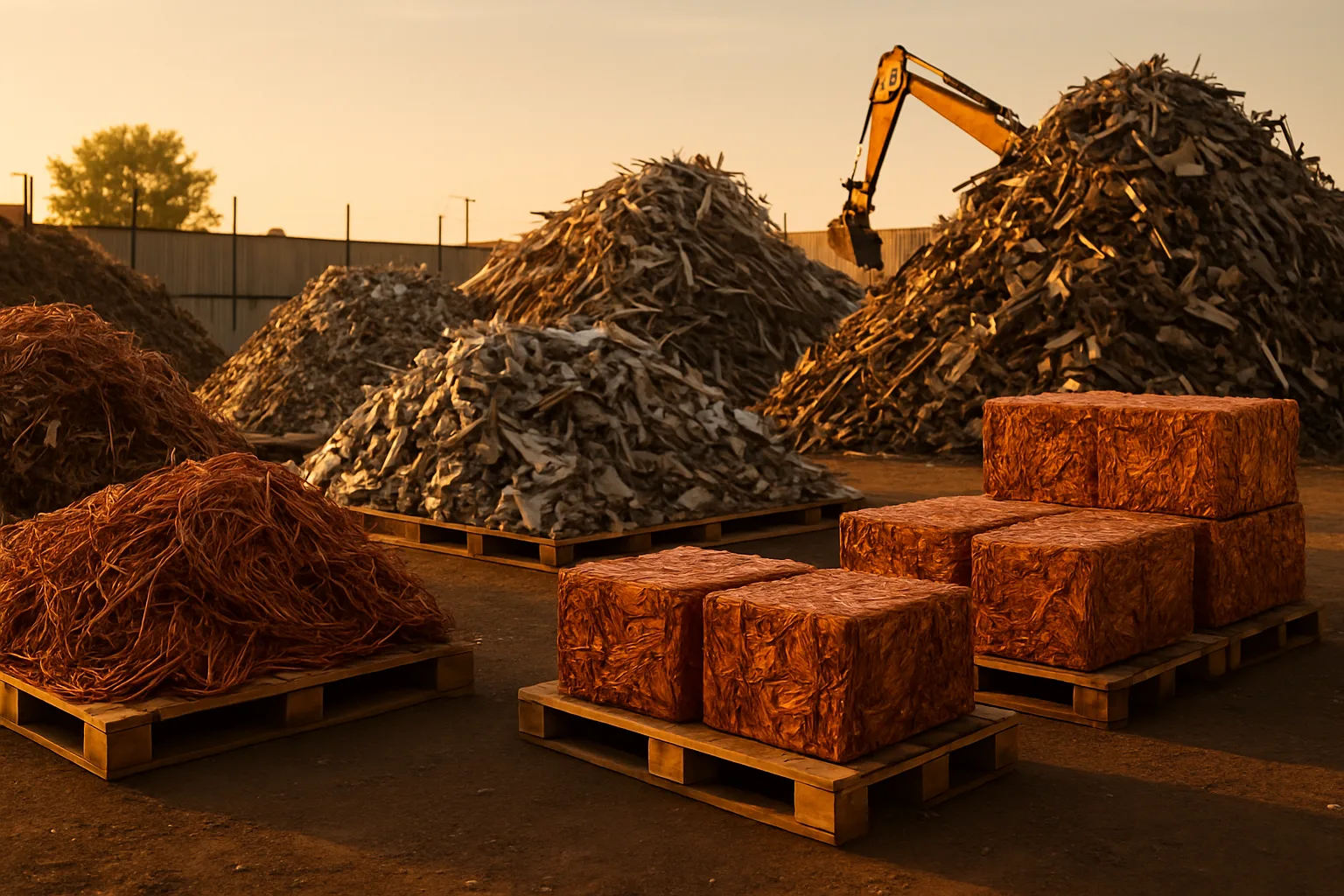
Most people show up to a scrap yard for the first time with a truck bed full of metal and absolutely no idea what happens next. That's a problem — because what you don't know costs you money.
If you're in Long Beach or anywhere else in California, scrap yards are busy, competitive, and staffed by people who've done this thousands of times. You haven't. That gap shows up in the price you walk away with. This guide closes that gap. We'll walk you through exactly what to expect, what to bring, and how to make sure you're not leaving cash on the table when you visit a scrap yard for the first time.
Whether you're hauling in a catalytic converter, a pile of copper wire, or a wrecked vehicle, the process is more structured than most first-timers expect — and more profitable when you understand it.
What Actually Happens When You Pull Into a Scrap Yard
Here's what first-timers don't realize: a scrap yard isn't a flea market. You don't browse prices on a board and negotiate on the spot. There's a process, and it moves fast.
When you pull in, you'll typically drive onto a scale — called a drive-on or truck scale — before you unload anything. The yard weighs your vehicle loaded, then weighs it again after you unload. That difference is the weight of your scrap. Most yards require a valid government-issued ID before they'll do anything. In California, this is a legal requirement, not just a preference. The California Department of Justice mandates ID collection and reporting for certain materials, especially non-ferrous metals and catalytic converters.
After weighing, a yard worker grades your material. Grading matters. Two piles of copper aren't always the same — bare bright copper wire fetches a different price than insulated copper or dirty copper mixed with other material. Same logic applies to aluminum, stainless, and ferrous loads. Know what you have before you show up, because grading is where the price gets set.
What to Bring — and What to Leave at Home
Walking in unprepared slows you down and can cost you the transaction entirely. Here's what you need:
- Government-issued photo ID — required in California and most U.S. states for metal sales, especially non-ferrous. No ID, no sale.
- Vehicle title or bill of sale — if you're selling a vehicle or parts from one, you'll need documentation proving you own it. This is non-negotiable at legitimate yards.
- VIN information — if you're selling catalytic converters or auto parts, many yards now track VINs. Platforms like sell your scrap metal on the SMASH marketplace use VIN lookup and serial tracking to document parts and build buyer confidence.
- Photos of your load — not required at walk-in yards, but if you're selling online or through an auction platform, photo documentation significantly improves your price discovery.
- A basic understanding of your material — know if you have ferrous (iron, steel) or non-ferrous (copper, aluminum, brass). Yards pay very different rates for each.
Leave the mixed, unsorted loads at home if you can help it. Sorting your metal before you arrive gets you better grades and better prices. A yard worker sorting your pile on the clock isn't going to give you the benefit of the doubt on grading. You will.
Scrap Yard Prices Long Beach: How Pricing Actually Works
This is the section most first-timers skip — and it's the most important one. Scrap yard prices Long Beach aren't fixed numbers posted on a website that stay the same week to week. Metal prices fluctuate daily based on commodity markets, global demand, and local supply. What copper pays today in Long Beach might be meaningfully different from what it pays next Thursday.
Here's the basic hierarchy of who gets what price:
- Walk-in retail sellers — you, the first-timer — typically get the lowest price tier. You're an unknown quantity, you're bringing an unknown load, and the yard is absorbing all the risk.
- Regular accounts — businesses and contractors who bring consistent volume get better pricing. Yards reward predictability.
- Competitive bids — when multiple buyers compete for your load, prices move up. This is how auction platforms work, and it's why more buyers consistently improve price discovery.
The practical takeaway: if you're selling a single load as a one-time thing, you're probably at the bottom of the pricing tier. If you're a yard operator or business with volume, you have leverage — but only if you use it. That means calling multiple buyers, not just the one closest to your facility.
Prices fluctuate constantly. Always verify current rates directly with your local yard or buyer before making decisions based on any published figure. For the most accurate current rates, find a scrap yard near you and call ahead to confirm what they're paying today.
Catalytic Converters, Cores, and High-Value Non-Ferrous: The Rules Are Different
If you're bringing in catalytic converters, prepare for extra scrutiny. This isn't personal — it's the reality of the market in 2026. Catalytic converter theft is a well-documented problem, and California has some of the strictest tracking requirements in the country. Yards are required to verify ownership, record serial numbers, and in many cases hold payment for a waiting period.
What this means practically:
- You'll need to show the vehicle title or VIN documentation matching the converter
- Some yards photograph serial numbers and cross-reference against stolen property databases
- Payment may not be immediate — some yards issue checks rather than cash for converter transactions
- Converters are graded by type (small foreign, large foreign, domestic, diesel) and precious metal content — the price range is wide
If you're handling volume — a fleet, a shop, or a recycling operation — the catalytic converter auction model often gets significantly better results than walking into a single yard. When buyers compete for your cores, you see actual market value rather than one yard's margin-protected offer. Platforms like SMASH connect vetted buyers to sellers with documented inventory, which means better price discovery without the cold-call guessing game.
Want to understand more about how scrap yards work across different material types? Read scrap yard guides and tips covering everything from copper to cars to catalytic converters.
5 Mistakes First-Timers Make at Scrap Yards (and How to Avoid Them)
Experience is expensive. Here are the most common first-timer mistakes and the straightforward fixes:
- Showing up without ID. Especially in California, no ID means no transaction. Bring a valid, government-issued photo ID every single time.
- Not calling ahead on prices. Scrap yard prices change. The price posted on a website or quoted last week may not reflect today's market. Call the yard before you load your truck.
- Mixing materials in one pile. Mixed loads get graded at the lowest value material in the pile. Sort your copper from your aluminum from your steel before you arrive. Every category sorted separately is money back in your pocket.
- Going to the first yard you find. One price quote is not a market. The difference between what one yard offers and what another pays can be meaningful, especially on larger loads. Use a resource like locate the closest scrap yard to compare options near you — not just the one off the highway.
- Selling high-value materials (cats, copper, aluminum) without competition. A single buyer with no competition has no incentive to give you the best price. More buyers means better price discovery. This is the whole reason auction-style platforms exist.
The pattern here is the same in Long Beach as it is anywhere else in California: preparation and competition are your two biggest levers. The yard has done this thousands of times. Matching their knowledge level — even partially — changes the transaction in your favor.
When to Go Beyond the Walk-In Yard
Walk-in scrap yards serve a purpose. They're fast, they're local, and for small loads of common material, they're often the right call. But they have a ceiling. That ceiling shows up when:
- Your load is large enough that the per-pound difference in price adds up to real money
- You're selling specialty material — cats, non-ferrous, cores — where the price range between buyers is wide
- You're running a business and selling regularly, which means you're leaving cumulative money on the table every time you take whatever one yard offers
- You want documented transactions — BOLs, packing lists, auto-invoicing — that a handshake deal at a walk-in yard won't give you
This is where SMASH changes the equation. SMASH is a scrap metal auction platform that connects vetted buyers across North America with sellers who have real inventory to move. No subscription fees. No guessing. Competition drives the price, and documentation protects the transaction. If you're past the walk-in stage, sell your scrap metal on the SMASH marketplace and see what actual market competition looks like.
Ready to find your options? Start by checking what's near you — scrap-yard-near-me.com helps you locate trusted yards across the U.S. so you can compare, call ahead, and show up prepared.
Frequently Asked Questions
Q: What do I need to bring to a scrap yard in Long Beach for the first time?
Bring a valid government-issued photo ID — it's legally required in California for metal sales. If you're selling a vehicle, parts, or catalytic converters, bring the vehicle title or bill of sale. For converters, VIN documentation is increasingly required to verify ownership.
Q: How are scrap yard prices Long Beach determined?
Prices are based on commodity markets and change daily. The type of metal, the grade, and the volume you're bringing all affect what you're offered. Sorted, clean material gets better grades than mixed loads. Always call ahead to confirm current rates — posted prices online may not reflect today's market.
Q: Can I sell a catalytic converter at a junkyard near me in Long Beach?
Yes, but expect extra documentation requirements. California law requires yards to verify ownership, record serial numbers, and in many cases delay payment. Bring your vehicle title and be prepared to have the converter photographed and logged. For volume sellers, a catalytic converter auction platform like SMASH often delivers better pricing through buyer competition.
Q: Is it worth calling multiple scrap yards before selling?
Yes — especially for larger loads or non-ferrous material. One price quote is not a market. Calling two or three yards near you before loading up can reveal meaningful price differences. For regular sellers with volume, an auction platform removes the phone-call guessing game entirely.
Q: What's the best way to get the best scrap yard prices near me today?
Sort your material before you arrive, call ahead to confirm current rates, and bring all required documentation. For high-value loads or specialty material like catalytic converters and non-ferrous metals, consider a platform like SMASH where vetted buyers compete — that competition is the most direct path to accurate price discovery.
Stay current on scrap metal market trends and industry insights by following SMASH on LinkedIn — it's where the industry conversation happens.